Showing posts with label foods that help you sleep. Show all posts

Tuesday, June 25, 2013

Having Trouble Sleeping? Try These Deep Sleep Snoozing Tips

This time of year I often seem to struggle with getting a good night's sleep. I'm not alone - with the long daylight hours, lots of activities going on, and hot muggy nights, summer is one of the times when many have problems getting enough rest. If you're like me, this week I'll share some tips on getting a proper night's sleep - naturally and without resorting to drugs that are potentially addictive or have harmful side effects.

sleep
 (Photo credit: Sean MacEntee)
Sleep is an important part of the body’s repair cycle. If you are not getting the right type of sleep, then you may not be resting as you should. This can lead to increased stress and health issues like a lowered immune system. Here are some tips to help you snooze better.

People don’t realize how much sleep they need. If you miss a few hours during the week then you can make it up on the weekend, right? Wrong! Catching up on sleep is a hard thing to do. Because we are often neglecting sleep for other activities, your deficit can be so large at the end of the week that you’d have to sleep all weekend to make it up.

The better idea is to get the sleep you need each night. There are different levels of sleep. The deepest level is REM (rapid eye movement) sleep. This is when you begin to dream. It takes about an hour and a half for you to reach this stage. If you are tossing and turning it can be hard to get to this level.

During this stage, the eyes move back and forth. Muscles get most of the blood flow (besides the brain) for repair. All unneeded systems are shut down or kept to a minimum. Breathing is shallow.

But, reaching this level is hard for many people. You can help yourself out with a few tips.

Falling into Deep Sleep

* Eat nuts before bed – We have all heard about tryptophan and its effects. You don’t have to have a turkey dinner to get tryptophan - eating walnuts has the same effect. They are a healthy superfood. One serving can help you to begin to feel sleepy.

* Use natural scents – Essential oils like lavender and chamomile can help get you in the mood to sleep. Try misting your pillow with an essential oil spray, or just spraying the air so the scent lingers. This can help you get ready for bed each night.

* Take a bath – If it works for your baby, it will work for you. A warm bath can help the body to relax and the muscles to unknot from the day.

* Adjust the temperature in your bedroom – Some people sleep better when the room is a bit warm. If needed, open the window if it's warm outside, or place your comforter or blanket in the dryer for a few minutes to warm it up. I am the opposite, and I don't sleep well when it's hot - I sleep best in a cool room with a light blanket. Listen to your body, and experiment to find out what temperature you sleep best at.

Camomile herbal tea by Twinings
Camomile herbal tea by Twinings (Photo credit: clifico)
* Drink tea – If you don’t like warm milk, try a hot cup of tea. Be sure it is decaffeinated or you will be up instead of feeling sleepy. Try an herbal tea like chamomile or lavender.

* If none of these tips work, you may wish to try taking melatonin. It's cheap, and available over the counter in supplement form. Take it 1/2 to 1 hour before bedtime, and make sure you have at least 7 to 8 hours before you need to get up, as it will make you very groggy. If your problem is waking up in the middle of the night, try a dual release formula. Melatonin is a hormone, so you may wish to consult with your physician before taking, and try not to take it all the time -  only when you really need it.

Are you having a hard time snoozing? Deep restorative sleep is needed to stay healthy each day. Use the tips above to regain your nightly rest.

Enhanced by Zemanta

Monday, June 4, 2012

Got Insomnia? Try These Foods That Help You Sleep

This week was one of my most miserable in a while - mainly because for some reason I found myself suddenly unable to sleep more than 4 or 5 hours per night, and not very deeply at that. Due to lack of rest, I then came down with the worst cold I've had in years (and still couldn't sleep). I refuse to take sleep medications - in general they are very unhealthy - although I did resort to NyQuil a few nights, which helped only moderately. Thankfully I seem to have returned to normal sleep patterns by now, and my cold is quickly on the way out.

Mmmmm... Tryptophan!
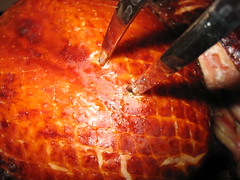
Mmmmm... Tryptophan! (Photo credit: The Rocketeer)
I can personally attest that people with insomnia will try most anything to get to sleep.  The endless tossing and turning can be agonizing, but many sleep aid drugs are highly addictive, and may have other negative side effects. There are some natural supplements that can be helpful, but next time you just can’t seem to sleep, why not try opening the refrigerator for relief first instead of the medicine cabinet.

While we tend to overlook it, we all know that food can make us sleepy.  After eating a big turkey dinner, it’s hard to do anything but lie down and take a nap.  This is because of a chemical you’ve probably heard a lot about in recent years: tryptophan.  So what exactly is tryptophan?  It actually allows your body to produce an amino acid called L-Tryptophan.  This amino acid is essential in the production of the neurotransmitters serotonin and melatonin.  These help slow down the nerve traffic in your brain, relax you, and allow you to think less and sleep more. 

While you’ve already felt the relaxing powers turkey has, you probably aren’t too happy about the prospect of eating turkey before bed every single night.  Well, the good news is that turkey isn’t the only source of tryptophan.  This chemical is found in dairy products, soy, meat (especially poultry), nuts, fish, beans, eggs, hummus and most other high-protein foods.  Eating a small amount of these foods shortly before bed time can help you sleep soundly.

The problem with many of the foods that contain tryptophan is that they also contain an amino acid called tyrosine.  This produces chemicals that perk you up and make you more energized.  Eaten alone, these acids will counteract each other produce no significant effects in either direction.  The key to getting rest is to eat other foods that will allow you to utilize the tryptophan and not the tyrosine.  Excellent foods for accomplishing this effect are carbohydrates.  They encourage your body to produce insulin which “ties up” the tyrosine and allows the tryptophan to reach the brain without competition.  Just be sure to avoid large amounts of carbs and simple sugars.  This can lead to the production of too much insulin; causing you to wake up not long after you’ve fallen asleep.

English: A Sleeping moon in a cap.
(Photo credit: Wikipedia)
Another way to get the full benefit of tryptophan is to eat foods that will increase your brain’s absorption of this amino acid.  The best way to do this is with calcium.  And we already learned that dairy products are a great source of tryptophan.  This is why our mothers often gave us a warm glass of milk at night to help us rest; because it works.

So, if you just can’t seem to settle down and get to sleep, try a late night meal containing nature’s sleeping pill: tryptophan.  Just remember not too eat too much at night or you’ll likely wake up a few hours later.  The most effective plan is to have a moderately sized dinner and a small snack containing protein and complex carbs an hour or two before bed.  If you eat the right foods at bedtime, you’ll bed drifting off to dreamland in no time - without having to resort to harmful drugs.

And if stress is what's keeping you awake, be sure to check back Wednesday for some superfoods that help reduce stress!

Enhanced by Zemanta