Showing posts with label foods to fight cold and flu. Show all posts

Monday, November 5, 2012

Enhancing Your Immune System with Echinacea

As the cold and flu season approaches and media tries to find a new flu virus to promote drugs for, you may be wondering what you can do to improve your immune system naturally.  After all, no one wants to get sick.  The good news is that there are very simple and natural things you can do to start enhancing your immune system right now.

One of the best ways is to take Echinacea.  In fact, according to a study reported on MayoClinic.com, a 2006 study found that the likelihood of experiencing a clinical cold was 55% higher with placebo than with Echinacea.  Here are some tips on using one of nature’s finest additions to your medicine cabinet.

Echinacea purpurea 'Maxima'
Echinacea purpurea 'Maxima' (Photo credit: Wikipedia)
#1.  Forms of Echinacea 

Echinacea is a relative of the common coneflower.  Echinacea purpurea herb is considered to be the most potent Echinacea species.  They’re actually quite pretty and can be grown in your home garden.  However, eating the flower isn’t going to give you the immune-boosting effects you need.  It is the root of this plant which is said to hold the powerful properties. 

You can take Echinacea in the form of:

* Tea
* Juice
* Extracts
* Capsule or powder, supplement form

You may also find Echinacea as part of an immune booster supplement

#2.  Be aware of its limitations and side effects

Not everyone can take Echinacea, however.  Some people can be allergic and suffer side effects.  This is particularly the case if you’re allergic to ragweed, marigolds and daisies, and chrysanthemums.  These side effects and complications can include:

* Rash
* Asthma
* Anaphylaxis
* Gastrointestinal side effects
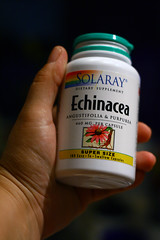
Day 360 - Let's hope these really work...
(Photo credit: ktpupp)
#3.  Make it part of a routine - but not TOO routine

To take Echinacea, you might think you should include it in your daily vitamin routine. If you feel a cold coming on and rush to drink Echinacea tea, sometimes it may be too late.  However, it is not recommended to take Echinacea daily indefinitely. Instead, first make sure the supplement is safe for use for you - speak with your doctor if you’re unsure, and then find a form that appeals to you. It may be that you absolutely love the tea or perhaps a simple supplemental capsule better meets your needs.

Try taking it every month just for a few days in a row, during cold and flu season. And of course take it right away at the first sign of feeling something coming on. Sometimes you might not always recognize these signs, so pay attention for times when you feel tired or lethargic for no apparent reason, or notice mild symptoms like a dry throat or night-time congestion, and give your immune system an extra boost at these times with a few days of Echinacea.

Echinacea is an herb that is still being studied for its immune-boosting properties.  In the struggle to stay healthy and cold free this winter, it may be the best natural weapon you have.  Take precautions, plan ahead and stay healthy!
Enhanced by Zemanta

Wednesday, February 1, 2012

Superfoods for Fighting the Flu

Breakouts of the flu are responsible for millions of lost hours at both work and home each year, not to mention many miserable days trying to recover. If you’re wondering what you can do to naturally boost your immunity and prepare your body’s defenses, study the foods you’re eating, look at your family’s meals, and make the changes needed to ensure everyone is eating a well-balanced diet abundant in nutrient-dense fruits and vegetables (preferably organic), low-fat proteins, and complex carbohydrates.

Ambersweet oranges, a new cold-resistant orang...Image via WikipediaBlack currants are even richer in vitamin C than oranges, containing approximately three times the recommended daily intake for adults. It’s imperative that you get plenty of vitamin C since it helps prevent infections and helps keep the immune system healthy.

Pork has high levels of zinc and selenium, both of which help keep your immune system strong. It’s also one of the best sources of B vitamins and contains only a little more total fat than beef. So be sure to include a few pork entrees in your menu planning (but watch the source - commercially farmed pigs can be raised in really disgusting environments - and what they eat, you eat! For best health, choose free-range, naturally raised pork).

Mix up your morning breakfast with a glass of grapefruit juice instead of orange juice for a vitamin C-rich drink that's both sweet and tart. However, you should check with your doctor if you're on certain medications for blood pressure, AIDS, anxiety, or hay fever, as mixing grapefruit juice with certain drugs can lead to dangerous toxicity.

Brussel sprouts are a great vegetable source of vitamin C, are high in fiber and contain lots of folate as well. They improve anticarcinogenic glucosinolates, which have important cancer-fighting properties. They’re a great addition in a stew to provide lots of flu-busting nutrients.

Yogurt that includes live cultures has a positive effect on your GI tract, and as a result, helps the body purge the germs more quickly and effectively and fight the flu. You want your yogurt to contain the active culture L. acidophilus, which is also helpful in fighting off yeast infections.

English: Different potato varieties. – The pot...Image via WikipediaPotatoes are one of the most affordable sources of vitamin C, and nicely complement any entrĂ©e with their high levels of potassium and fiber. The skin contains the most fiber and the flesh just under the skin contains the most vitamin C. Fresh potatoes are the best source of vitamin C. Be careful of how you choose to prepare them, as soaking them in water robs them of their germ-busting vitamin C.

Whole wheat pasta is also rich in niacin, fiber, and iron. Its complex carbohydrates are an essential part of a healthy diet that will keep your immune system strong. Simply substitute recipes calling for traditional pasta with the whole wheat variety instead for a delicious and nutritious twist on your favorite pasta dishes.

But remember, an ounce prevention is worth a pound of cure! The best way to "fight" the flu this year is not to get it at all. Be sure to eat plenty of the foods above to build up a strong and healthy immune system, take some good immune-boosting supplements such as Vitamins C and D, get regular exercise and sleep, and above all, wash your hands a lot! (Recent studies have shown frequent hand-washing to be as effective as a flu shot!)


Enhanced by Zemanta

Friday, November 18, 2011

Superfoods to Stomp out a Cold

Well, here we are again - facing the start of cold and flu season. Already half the people in my office are coughing and sneezing everywhere! For me - so far, so good. I follow a pretty aggressive regimen of vitamins and supplements throughout the winter months - plus I eat lots of good foods!

An Ikea garlic press, with pressed garlic.Image via WikipediaMany people don't realize that not only do healthy, nutrient-dense foods nourish your body and help the cells grow and reproduce, they also help arm your body’s defenses to ward off attacks from germs that cause colds. Low-fat meats, fruits, vegetables and whole (especially sprouted) grains all play a part in preparing your body to do battle.

Another important component of your anti-cold defense system is water. When your body is dehydrated, it’s at an increased risk of germs latching on and not letting go. So be sure to drink plenty of water and decaffeinated drinks to help your body stay hydrated and ready.

Just one cup of yogurt a day may work to keep the gastrointestinal tract healthier, which can help ward off colds. It has to be yogurt with live cultures, as this is the key ingredient that helps keep the GI track ready to rumble. And an added bonus to eating yogurt - recent studies suggest regular dairy consumption helps you lose weight or maintain a healthy weight.  Yogurt is easy to make on your own, or get some good cultured stuff at the healthfood store.

Garlic contains allicin, an antibiotic that has been shown to prevent complications from a cold in some research. Garlic can be added to many of your favorite dishes to spice them up and help you suit up to do battle against cold germs.

Yellow and green Bell peppers, North End marke...Image via WikipediaIt’s been said an apple a day keeps the doctor away. Well, so can an orange. One orange a day provides your recommended daily allowance of vitamin C (assuming it's fresh, which oranges from the grocery store may not be). Oranges are also abundant in flavonoids, which helps your body’s cells regenerate and stay healthy and strong. Green bell peppers are the vegetable family’s best vitamin C source. Add them to a salad, or simply slice one up and eat it raw - or add one to a smoothie (a new favorite of mine). Flavonoids are also found in peppers. You may even want to prepare a green pepper dip seasoned with garlic for an added germ-kicking effect - yum!

Lean ground beef, especially when prepared with a bit of garlic, can maintain cell health and fight off illness. It’s a good source of protein, selenium and zinc, and when eaten with a bit of tomato, is a great defense during cold season.

Enhanced by Zemanta