Showing posts with label Biofuel. Show all posts

Thursday, December 4, 2014

Is Biomass A Valid Green Energy Source?

According to experts, yes it is. In fact, it is one of the three main sources of bioenergy.

But what is bioenergy? Bioenergy is a process by which organic material such as animal waste, plants and wood, etc. are used to generate electricity, produce heat and also aid in the production of biofuels.

Biomass Fuel Supply
Biomass Fuel Supply (Photo credit: Wikipedia)
In the case of biomass, hot air or water is generated to produce electricity. This is done through direct combustion and is considered the simplest and most common method of generating energy from biomass.

Aside from generating electricity, biomass can be used for hot air production to warm a home or workspace. For this to work, biomass has to be combusted in a furnace where it heats either water or air. Speaking of water, this enables you to have warm water so you can take a shower. In short, biomass in itself can also be used in a small scale as a heating system.

Since you can generate electricity and heat, some people have been able to combine the two which is known as combined heat and power or CHP - which is a very efficient way to generate energy as you can use one energy source for two purposes.

If you are able to compare the amount of electricity generated between biomass and let’s say solar energy, you will notice that biomass produces more because the energy in plants is already captured and stored, and you don’t have to collect it first which is what happens with solar or even wind energy since this is manufactured technology. Biomass energy is readily available unlike the other two which are dependent on the weather.

English: BioEnergy Taufkirchen; combined heat ...
Combined heat and power plant fired with biomass (woodchips from local forest and other) in Taufkirchen near Munich, Germany. (Photo credit: Wikipedia)
You can even use organic waste to product electricity. No other green energy source can do that, and by using this fuel source properly, governments and municipalities can save money because you don’t have to spend money to dispose of the waste and you will no longer depend as much on foreign oil to power energy plants.

The downside to biomass is that because you have to burn waste and other organic materials to produce power, you add to the pollution which is already in the atmosphere. But this can be offset by planting more crops which help reduce the amount of carbon dioxide in the atmosphere.

You will also have to shell out a lot of money initially for the costs of labor, and the transport and storage of these fuels.

Biomass uses renewable natural resources which is why it is considered a green energy source. This means that we theoretically can have an endless supply of it, just like the power of the sun or the wind which flows from the ocean. The challenge is to find suitable land that has a sufficient water supply so these biomass fuel sources will be able to grow. This means that in areas where water is not that abundant, you cannot rely on biomass technology to generate power. When that happens, you will need to use other means, such as solar, wind, or geothermal energy.

There are lots of ways to generate power without causing harm to the environment. Biomass is just one of many, and it can be a viable option to supplement our fuel needs in some areas.

Friday, April 27, 2012

Video - Biofuels: Good or Bad?

Here is a short but interesting video about the pros and cons of biofuels. Are they the answer, or do they cause more problems than they fix? Many people climbed on the Ethanol bandwagon a few years ago, but now there some unforeseen issues coming to light - from clearcutting of forests (which absorb carbon), to chemical-intensive production processes which actually increase pollution, to striking a balance between food and fuel, there are many considerations that need to be taken into account before we decide to make the switch to biofuels for our transportation needs.

Watch the short 6-minute video to learn more:

Biofuels - The Answer Or The Problem
The problem with biofuels

Enhanced by Zemanta

Wednesday, April 25, 2012

Biofuels As A Green Energy Source

Biofuels are a green energy source you may not be all that familiar with, but they have been around for a very long time.

Liquid biofuel, which is the one used in cars, is a natural and renewable domestic fuel that can only be used for diesel engines. This can be made from vegetable oils - mostly soy and corn. The nice thing about it is that it contains no petroleum, and is nontoxic and biodegradable.

By fueling up with biofuel, you decrease the pollutants in the air because it does not emit much of anything in the way of pollutants. Right now, it is the only fuel that is approved by the Environmental Protection Agency (EPA), has passed every Heath-Effects Test of the Clean Air Act, and meets the requirements of the California Air Resources Board (CARB).
Bus running on soybean biodiesel. U.S. Departm...
Bus running on soybean biodiesel. U.S. Department of Energy: Energy Efficiency and Renewable Energy (www.eere.energy.gov). (Photo credit: Wikipedia)

One example of this type of fuel is biodiesel, which is made from alcohol like methanol and a chemical process that separates glycerine and methyl esters (biodiesel) from fats or vegetable oils. Aside from methanol, some countries have also experimented with corn and sugarcane to create their own version of biofuel.

Glycerine is a common product used in making toothpaste and soap. However, since the technology for this is fairly new, the process of converting it is quite expensive and right now, this is still much more expensive per gallon compared to petroleum (gasoline).

(Although if you look at what you pay for it, the returns are huge because you get to do your share to preserve a cleaner environment, an improvement in air quality and a reduction of cancer-causing agents.)

A cheaper and more primitive way to make bio-diesel is by collecting used cooking oil and then processing it. This may not be good your car’s engine so be careful if you decide to use it.

If you are skeptic about biodiesels, studies have shown that performance on the road is just as good as petroleum in terms of power to efficiency, hauling and climbing. You can use this in its pure form or blend with petroleum fuel. The most common mix in the market is 20/80 and is referred to as "B20." This means that 20% is biodiesel and the remainder is 80%. Another version is the E85 which is fuel composed of 85% ethanol and 15% gasoline.

The best part about using biodiesel is that you only have to make a few changes in your engine to be able to use it. Aside from making the car run, it also helps clean the engine. If you are concerned that this will void the warranty of your vehicle should there be a problem, don’t worry because it doesn’t. In the US, B20 is the most common one available but there are only a few gas stations that carry it. (E85 is becoming more common, but there are some concerns coming to light regarding lack of efficiency, and environmental issues due to overuse of farmland for intensive farming of corn to make this product.)

Biofuels work at Argonne
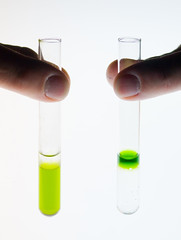
Biofuels work at Argonne (Photo credit: Argonne National Laboratory)
When cars first rolled out in the beginning of the 20th century, Henry Ford planned to make these vehicles - especially the Model T’s - run using ethanol. Tests have even shown that these may also run using peanut oil.

This never materialized because huge oil deposits were discovered and diesel was cheap. It was only when our demand for oil increased in the 1970’s, 1980’s, 1990’s and in the last decade or so that people began to realize that to reduce our demand for foreign oil that we should try using biodiesels and other forms of alternative energy. Developments in processing and efficiency continue to occur at an increasing pace, and we can look forward to seeing better biofuels on the market and readily accessible in the years to come.

That said, although improvements continue, we must keep in mind that some of these solutions may cause more problems than they fix, so it is important to look at all sides, and find the proper balance before choosing a green energy source. Check back Friday for an interesting video on the pros and cons of biofuels.

Enhanced by Zemanta