Showing posts with label Organic farming. Show all posts

Monday, March 18, 2013

What Are The Disadvantages to Eating Organic Foods?

Are you interested in making the switch to organic foods?  You likely already know the many benefits to eating organic foods, as these benefits are often prominently displayed and advertised.  With that being said, we rarely hear about the disadvantages to eating organic foods. 

English: A hand reaching for organic tomatoes ...
Organic tomatoes at a farmer's market. (Photo credit: Wikipedia)
One of the few disadvantages to eating organic foods is the cost.  Do you know how much most organic foods costs?  If not, you may want to examine those costs before you make the decision to switch to organic foods.  After a closer look, you will see that organic foods often do cost a little bit more money, but if eating organic foods improves your health, it actually may pay for itself over time with fewer visits to the doctor.

Although the cost of organic food may turn you and other hopeful eaters away, it is also important to know that there are many ways in which you can go about saving money.  For example, you can search for organic food sales at your local natural food stores or supermarkets.  Stock up when you see those sales or choose to shop at a store that is known for their everyday low prices on organic foods.  Organic food coupons can also be used. These coupons can be found online, with a standard internet search, in many stores, as well as in weekend newspapers.

In addition to costs, another disadvantage to eating organically is the limited selection of organic products available in some areas. Luckily, not everyone is faced with this organic food eating disadvantage.  Often  those who live in small cities and towns find it the hardest to buy organic foods.  With that being said, it doesn’t matter whether you live in a small town or a huge city, there are still a number of different ways that you can go about buying organic foods.

English: Sign at the Sonoma Farmer's Market, S...
Sign at the Sonoma Farmer's Market, Sonoma, California (Photo credit: Wikipedia)
In my opinion the absolute best way to buy organic foods is by going directly to the source - organic farmers.  You can usually find organic farmers in just about any size town, if you know where to look, and is the best possible way to get your organic fruits and vegetables, as well as, in some areas, even meats and dairy. Visit your local farmer's market and start getting connected.

You can also search for specialty organic food stores by using online business directories, your local phone book, or by asking those that you know for recommendations.  The internet can also be used to shop online for organic foods - just be aware of shipping costs.

Although there are a few disadvantages to eating organic foods, it is also important to remember the benefits or advantages to doing so as well.  For starters, organic foods are all natural and safe to eat.  You won't have to worry about potentially harmful chemicals, additives, and pesticides.  Organic foods also benefit the overall environment and the economy.

But there is one disadvantage we haven't discussed yet, and that is the tendency of organic foods not to keep as long, since they don't contain artificial preservatives, and typically aren't as highly processed. For some ways to keep your organic food fresh during storage, be sure to check back for Wednesday's post.
Enhanced by Zemanta

Friday, February 8, 2013

Video - Why Organic?

This video offers a comprehensive look at organic foods, what they are, how they're regulated, and why they are better for you. It's a bit detailed, but quite interesting and will give you some great information if you're "on the fence" about whether or not to choose organically grown foods.

Why Organic? with Jim Riddle
Many of us today are asking, "Why should I eat organic? Is there really such a difference?" As research into organic food and farming expands, trends are beginning to emerge validating the multiple benefits of organic - at every stage. Jim Riddle pre...


Enhanced by Zemanta

Wednesday, February 6, 2013

Eight Reasons Why Eating Organic is Important

Guest Post by Grace Simpson.

It seems like everyone is talking about organic foods like it’s some kind of buzz word or status symbol. I suppose for some, it might be. But for many of us, it’s a way of life that takes us back to a more natural way of living and farming. One that has been destroyed by the machine food production has become today.

Now, I don’t mean to sound like one of those doom and gloom, anti-establishment types. I don’t disparage anyone for choosing the foods that they do. Sometimes it’s an economic necessity. Other times it’s simply not having enough information about what’s really going on with our food. Sometimes it’s just apathy.

“Science may have found a cure for most evils; but we have found no remedy for the worst of them all, the apathy of human beings.”
~ Helen Keller

I’m not sure what I can do about the apathetic, but for people like you who may have budgeting obstacles or are trying to find more information about what’s going into your bodies, I am here to help.

So the first natural question is…Why go organic?

Organic eating has a number of benefits and here are just a few of them:

Organic certification
Organic certification (Photo credit: Wikipedia)
1. Organic produce is free of chemical pesticides and fertilizers. Even if you wash your produce, you cannot remove all these harmful chemicals that can affect your nervous system, cause cancer and more.  Also consider that conventional farming which uses harmful chemicals can contribute to the contamination of our water supply, so by supporting organic growers, you are also supporting a cleaner water supply for all.

2. While some people may not be quite as concerned, eating organic can help you avoid foods that have been irradiated. Government bodies tout the irradiation process as helpful in reducing harmful bacteria, preventing spoilage and increasing shelf life of foods. However, irradiation reduces the nutritional value of your foods and there is growing concern by researchers that the process may not be as safe as previously thought.

3. Avoidance of genetically modified foods or GMOs (genetically modified organisms). While huge biotechnology companies like Monstanto will have you believing that they are increasing the viability of crop growing, there are long-term dangers in GMOs that have caused them to be banned by much of Europe and Japan.

4. Organic livestock is fed its natural diet, rather than potentially contaminated grains, antibiotics and hormones. This is in contrast to conventionally-raised livestock that get hormones to help them grow faster and antibiotics are given en masse as a preventative measure to illness. The scary thing is that this preventative measure may be necessary given the poor hygienic conditions of the animals. Organically grown animals are raised more humanely and more naturally, eliminating the need for these potentially dangerous situations for both livestock and humans.

5. Organic growing contributes to improved soil quality. A lot of people don’t realize it, but our soils are so depleted that we no longer get the nutrients we did from our foods a few decades ago. In order to obtain the certified organic label from the USDA, soil must be free of prohibited chemicals for three years and the increased soil quality is a necessary goal for organic farmers. (To learn more about a variety of soil studies, check out http://www.ota.com/organic/benefits/soil.html )

6. Organic farming is more wildlife friendly. From animals to plant species, a more natural ecology is supported through organic methods. There are many studies supporting this including a study from the University of Oxford that found that there is increased biodiversity on organically farmed land.

English: eco symbol used to promote organic, l...
Eco symbol used to promote organic, locally grown food (Photo credit: Wikipedia)
7. Buying organic allows you to support your local economy and farmers. This is good for you because you get fresher (and therefore more nutritious and tasty) foods, and it also reduces the pollution that results from food transport. (Here's a short video on why to eat local.)

There are so many reasons to go organic and this post touches on just a few of them. But here’s the most immediate one that just about everyone can really appreciate.

8. Organic foods simply taste better. This is real food, free of all unnecessary human interventions and inventions. It’s nature’s perfection and once you try it, you probably won’t want to go back to your other options. 

Of course, this still leaves the issue of cost and how organic food can seem unaffordable to many families today. Well, that is exactly what we’ll be talking about in my next post....


Related Resources:
 
Enhanced by Zemanta

Monday, February 4, 2013

Going Organic - Introducing Our Guest Post Series

I'm sure you've noticed the organic movement has really taken off over the past few years. Obviously we're big on the organic thing, as it's an integral part of avoiding and reducing toxins in your environment and in your body. So this month we're doing a little series on going organic, which I think you'll really enjoy.

The National Organic Program administers the O...
The National Organic Program administers the Organic Seal to products that meet the requirements. (Photo credit: Wikipedia)
If you’ve ever thought about going organic, you’ve probably had a few questions on your mind. What does organic really mean? How can it benefit you? And can it really be done on a budget? Well, I’ve enlisted a special guest to help shed some light on the topic for you this month, and her name is Grace Simpson. She’s very educated about organic food and the organic lifestyle in general, and is great at helping people get started with a more natural way of eating. Her philosophy is right in line with ours, so we're happy to have her!

Here is a brief intro to the series from Grace - I’ll let her introduce herself…

Hi, I’m Grace. I’ve been studying organic living since the USDA introduced national standards in 2002 and my family has been eating fully organic since about 2006. This subject means a lot to me because I want my family to have the healthiest meals possible.  A few other related subjects that I feel are important are our nation’s health, our wildlife and the sustainability of food production.

Even though certified organics have been around for a decade, I know there are still a lot of questions surrounding organic food. That’s why I am so happy to be here to talk about many of those concerns people have.

Here’s what you can expect in the next few posts:

- Why eating organic is important…to you and the world around you.
- How to introduce organics, even if you’re on a budget.
- What does organic really mean and are you really eating organic?
- We’ll also discuss issues surrounding meats and produce in more detail.
- Being your own source of organic foods.
- Do you need supplements?
We’re going to cover a lot, but remember, as you start consider the organic lifestyle; you don’t have to do this all at once. Just take it one step at a time adding healthier options slowly and keeping this great earth of ours in harmony.


Be sure to stay tuned for more in this series coming later this week!


Enhanced by Zemanta

Monday, September 17, 2012

Do You Know Where Your Food Comes From?

As seen in the eye-opening documentary, Food, Inc., the industrialization of food has meant the addition of preservatives, pesticides, and many other chemicals which can be harmful to our health and to the environment.  Additionally, it means that there are generally only a handful of large farms growing the majority of any particular crop throughout the country.  That means distribution is costly both in terms of money and resources.  However, not all food is created equally.  Some foods are better than others - both for you and the rest of the planet - and getting your food from quality, sustainable sources can benefit you in more ways than one. 

English: Environmental contamination with pest...
Environmental contamination with pesticides (Photo credit: Wikipedia)
Here’s how to know where your food comes from and to make an educated buying decision.

#1.  Check your food’s mileage.  Many foods come from half way around the world to land on your kitchen table.  That means that they’re often harvested early (and green), robbing you of nutrients.  It also means that to make the trip they are filled with preservatives and pesticides to maximize productivity and enhance longevity.  To find out where a food comes from, simply check the label.  It will say, "Grown and raised in Iowa" or "California oranges", or "Farm-raised in Thailand" and so on.

Buying food that comes from just down the street, or at least within your home state, accomplishes two things.  It helps to ensure you’re not receiving nutrient-poor foods or foods heavily loaded with toxins. It also reduces the carbon footprint and helps the environment.

#2.  Buy according to what is in season. Buying strawberries in December is definitely going to cost you more in terms of carbon footprint and money than buying them in June or July (at least in most areas of the world). 

#3.  Buy fruits and vegetables locally.  Buy your fruits and vegetables from local organic farmers who can charge much less for their produce because they don’t have to pay for distribution.  Additionally, you’re helping to sustain your local economy and you’re ensuring that thousands of gallons in fuel are not required to get the produce from the farm to your table. 

English: eco symbol used to promote organic, l...
Organic, locally grown food at a farm market. (Photo credit: Wikipedia)
Joining a CSA (community sustained agriculture) program (my favorite!) or shopping at your local farmer’s market is also a great way to buy foods which are both healthy for you and the environment. CSAs are most often organic farms and do not pour pesticides, chemical fertilizers, and fungicides into the earth.

#4.  Try growing a few fruits and veggies on your own.  Whether you live in a small space or you have acres of land, you can grow your own herbs, fruits and vegetables.  This not only provides immense satisfaction, it saves you money and is good for the sustainability of our planet. (See our sustainable gardening blog for tips and helpful resources on starting your own garden, or visit www.newholisticliving.com/sustainablegardening.html.)

#5.  Finally, whenever possible, buy organic.  Organic farmers treat your food and the planet with more respect.  Unlike industrialized farms, they do not use chemical pesticides, fungicides or fertilizers.  They use sustainable practices to keep you and our planet healthy.

Knowing where your food comes from is important for the planet, but it’s also important for your own health and the health of your family.  Pay attention and take measures to buy your food from sustainable resources.  You’ll be glad you did.

Learn More About Your Food:
   
Enhanced by Zemanta

Wednesday, March 21, 2012

Take Action to Support the Local Farms & Foods Act!

We don't jump on the bandwagon for many causes, but this is an important one for all of us. Americans are clamoring for more locally and sustainably grown food that is better for our health and the environment (and tastes better too!). But the farmers producing sustainable food for local markets need help to compete with the bigger, better-financed conglomerates. Especially in these tough economic times, it makes sense to support healthier local food systems that will boost your local economy and create thousands of jobs. The Local Farms, Food and Jobs Act is definitely worth your support - it is a strong bill that could have a big impact.

This bill will do some really terrific things, such as:

These folks sure knew how to make their food l...Image via Wikipedia:: Provide more money for local farmers' markets and to help farmers adopt organic methods.
:: Allow schools to use more of their federal funding to buy fresh, local foods.
:: Make it easier for low-income families to use food stamps at farmers' markets.
:: Increase support for local processing and distribution networks so schools, hospitals, stores and restaurants can more easily purchase healthy food directly from local farmers.
:: Improve credit and crop insurance for diversified and organic farmers producing for local markets.

With the 2012 farm bill fast upon us, this is going to be a big year in the fight to level the playing field for local farmers and to ensure greater access to healthy, sustainably produced food. This bill is a crucial part of that fight. We need to make sure our representatives understand that we want our food to come from local farmers, and that we expect Congress and the US Department of Agriculture to do their parts. It's clear we're ready for something different - now.

Click here to email your elected officials today and urge them to co-sponsor this important local food bill:
http://action.ewg.org/p/dia/action/public/index.sjs?action_KEY=1963

Thank you for standing up for healthy, local food!
Enhanced by Zemanta

Monday, August 22, 2011

Why You Should Drink Organic Wine

Do you drink wine? I know I do! There are many health benefits to drinking wine. It’s full of antioxidants. Red wine has been shown to reduce the risk of heart disease. It can also reduce the risk of certain cancers and slow progression of neurological diseases like Alzheimer’s and Parkinson’s disease.

Tempranillo varietal wine bottle and glass, sh...Image via WikipediaAll of these benefits are truly wonderful. However, organic wine may offer more benefits than your standard bottle.

1. Standard wines are grown with pesticides. Organic wines are not. They’re free from pesticides and therefore your wine is free from pesticides. It tastes better and is better for you.

2. Pesticide free also means that pesticides are not put into the soil and our water supply. Organic wines are better for the environment.

3. Standard wines can have additives in them. Organic wines are free from additives. They’re also simply processed. All you get is the simple pleasure of good glass of wine.

4. No sulfites. Organic wines do not contain sulfites. They cannot if they want to be classified as organic. Many people are sensitive or allergic to sulfites. The absence of them means more people can drink wine without side effects.

5. Organic wines tend to be produced by smaller farmers. When you drink organic wine you’re supporting smaller farmers and local businesses.

6. Due to demand and biodynamic farming improvements more and more organic wines are available. This means you have more options at your local wine stores and restaurants. Biodynamic farming is the process of balancing the soil, the animals, and even the stars to take advantage of all the environment’s resources. It uses compost and manure rather than chemicals to feed and nurture the vines.

7. Finally, consider drinking organic wine because it simply tastes better than many other standard non-organic wines. You don’t have any chemical tastes or additives or extra packaging. You’re getting a simple straight-forward bottle of wine. However, don’t let the simplicity fool you. Many organically grown wines are quite sophisticated. Biodynamic farming has been around for decades. Organic vineyards are popping up around the globe. That means more variety for you.

If you enjoy a good glass of wine from time to time consider organic wine. It’s good for your health. There are fewer allergens. It’s good for the environment. It’s good for small business and farms. And ultimately it just plain tastes superior.

(Wondering where to find organic wine? Check back Wednesday when we will share a great source! Meanwhile, learn more via the resources below.)
Enhanced by Zemanta

Learn More About Organic Wine:
   

Monday, May 16, 2011

Organic Foods: Why You Should Buy Directly From Farmers

Are you interested in improving the way that you eat?  If you are, you will want to examine natural, organic foods.  After a close examination, you will see that there are a number of benefits to eating organic. 

As previously stated, there are a number of benefits to eating organic foods.  One of those benefits is your ability to shop at a wide range of locations.  Organic foods are available for sale at supermarkets, organic food stores, and online.  With that said, organic foods are also commonly sold directly by the farmers who grew them.  If you have local farmers who sell organic foods, you should consider doing your shopping directly through them.

A farmers' market in Lhasa, Tibet. Celtuces ca...Image via WikipediaWhen it comes to buying many organic food products, such as fruits and vegetables, directly from organic farmers, many individuals wonder why they should do so.  In all honesty, there are a number of reasons, as well as benefits to buying organic foods directly from the source.  One of those benefits is the assistance that you will be providing to local farmers.  It is no secret that many farmers find it difficult to stay afloat financially.  In fact, hundreds of small farms shut down each year.  Instead of shutting down, many farmers are now making the switch to organic foods.

As previously stated, a large number of farmers, all across the United States, are now making the decision to go organic.  Unfortunately, this decision isn’t always easy.  It can be costly in the beginning, as well as very risky.  Although you may not necessarily think about it at the time, you can provide financial relief and assistance to organic farmers by buying their products directly from them.  When you buy organic fruits and vegetables directly from the farmer or farmers who made them, they are able to receive all profits, not just a portion of them.  In this aspect, you can consider buying organic fruits and vegetables directly from farmers your good deed for the week or month.

As nice as it is to hear that you should purchase some organic foods directly from the farmers who grow them, you may be curious as to how you can go about doing so.  For starters, farmer’s markets should be examined.  Farmer’s markets typically involve the setup of stands and booths.  Many farmer’s markets in the United States allow a large number of farmers to attend and set up booths.  Depending on your local farmer’s markets, its size, and who is present, you may be able to find organic food sold.

The New Leaf CSA (community-supported agricult...Image via WikipediaIn addition to visiting one of your local farmer’s markets to see if organic foods are for sale, you can also visit local farms in person.  To help you decide which farms should be visited look for signs or advertisements in local newspapers.  It is also usually easy to spot farms where organic foods are being sold - many set up roadside booths or have a storefront building on their property, which is usually easy to see from the road.  If you do make the decision to shop with a local farmer, be sure to bring cash, as many small operations are not equipped to accept checks, debit cards, or credit cards.


Another option is to join a Community Supported Agriculture program - my personal favorite! We've written several posts on here about this, and so won't repeat it all here, but feel free browse through our archives for more info on CSAs, or visit our website for more info.

As highlighted above, there are a number of reasons why you should buy your organic foods directly from the source - local farmers.  With a number of different buying options, you are encouraged to support your local organic farmers - both for your benefit, and theirs!
Enhanced by Zemanta

Wednesday, April 13, 2011

Easy Ways to Make the Switch to Organic Foods

If you are interested in improving the way that you eat and lowering your toxic load, you may also be interested in making the switch to organic foods.  Although many individuals are able to do so with ease, it can take others a little bit more time.  If you are looking for easy ways and tips to help make the switch to organic foods, please continue reading on.

The National Organic Program administers the O...Image via WikipediaThe first step in making the switch to organic foods involves getting used to the cost.  Many individuals who decide to go organic without first researching are put off by the costs, as organic foods often do cost more.  This is something that you should prepare for. Although organic foods are more than worth their costs, you should still prepare for the change. (However, it can certainly be manageable - see our earlier post on the cost of organic local food vs. commercially grown groceries.)

In addition to preparing for the cost increase, you should also examine ways that you can save money when eating organically.  For example, organic food coupons can be found on online coupon websites, as well as the websites of organic food manufacturers.  Simply Organic and Earth’s Best Organic are known for regularly offering free printable coupons on their websites.  Also, familiarize yourself with stores in the area that are known for their affordable prices or great sales on organic food - often you may find a local farmer's market or CSA offers the best prices, and also the best/freshest quality.

It is also a good idea to start preparing for the disappearance of many of the artificial additives that are found in many foods.  Although many will notice a taste difference, that taste difference is usually an improvement with organic foods.  Even still, it takes some people time to get use to.  For example, soda, like Pepsi, is not considered organic.  If you are interested in having a truly organic diet, you will need to eliminate it from your diet.  This can be easier said than done for many, as they grow dependant on the caffeine and other artificial additives.  That is why a quick and complete change to strictly organic food (if you have been eating commercially produced foods exclusively) is sometimes advised against. 

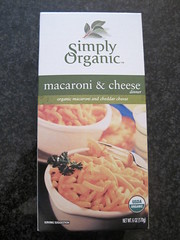
Simply Organic Macaroni and CheeseImage by aMichiganMom via FlickrAs stated above, a quick switch to organic foods doesn’t always work well for everyone.  What you will want to do is consider making a slow transition, especially if you are dependant on a particular food or drink.  Sometimes slow is the best way to go.  Consider incorporating a few organic snacks, like organic crackers or organic fruit bars, into your diet on a daily basis.  Next, start with one meal, like organic oatmeal and fruit for breakfast.  After a week or a few days, replace another meal with organic foods.  Do so until you are completely organic.

You will want to examine and try as many organic food products as you can.  You should have multiple brands and flavors to choose from.  For example, Simply Organic and other manufacturers sell organic flavors, extracts, spices, and dinner mixes.  Give as many of these items and flavors as you can a try until you are able to find something that you like.  This is a nice approach to take because it is important to remember that there are a large number of benefits to eating organic foods - even besides reducing your toxic load, as important as that is.
Enhanced by Zemanta

Wednesday, February 9, 2011

Healthy CSA News

As a follow-up to our post from Monday on CSAs (community supported agriculture programs), here are some recent articles on CSAs in the news. This method of farming/eating is growing more and more popular, as people become increasingly aware of the effects of commercially grown, chemically treated foods on our health, and the environment. Participating in a CSA, or patronizing your local farmers' market is one of the best ways to reduce toxins both in your body, and the world at large.

Here is some more info on this interesting community-based method:

How to Pick the Right CSA for You
Community Supported Agriculture (CSA) is a popular and growing business model that allows consumers to become more connected with their local farms and the food they eat. We are just entering into the registration time for Community ...
Publish Date: 02/06/2011 7:55
http://faces-of-local-living.blogspot.com/2011/02/how-to-pick-right-csa-for-you.html

Winter. Or is it?
We farm using natural methods because we care about the health of our families, workers, and customers, and we want to be good stewards of the portion of this earth that is temporarily under our care. ...
Publish Date: 02/03/2011 0:31
http://farmyardcsa.com/blog/?p=332

Utilize your local CSA for the modern Paleo lifestyle
What is a CSA? CSA is an acronym for community supported agriculture. My family uses the Full Circle Farm CSA program at www.fullcirclefarm.com. Every week we receive a "family" sized box of ALL organic fruits and vegetables DELIVERED ...
Publish Date: 01/27/2011 1:38
http://www.kirklandcrossfit.com/kirkland_crossfit/2011/01/utilize-your-local-csa-for-the-modern-paleo-lifestyle.html

CSA News 35: Working Fast to Slow Climate Change, Featured ...
In contrast, organic agriculture - it's called “organic” because it increases soil organic matter - uses natural fertilizers (compost, manure, cover crops, crop rotations, and intercropping) to improve soil health and clean greenhouse ...
Publish Date: 01/24/2011 17:42
http://avalongardens.org/report/2011/01/24/csa-news-35-working-fast-to-slow-climate-change-featured-vegetable-garden-cress-recipes/


CSA shareImage via WikipediaImportant Note: Remember that CSA sign-up season is NOW! Most CSAs try to fill their memberships by April or May, so don't wait too long, or those in your area may be full. If you are having trouble finding a CSA in your area, post a comment below to let us know, and we'd be happy to try to help!


Enhanced by Zemanta