Showing posts with label Zero-energy building. Show all posts

Tuesday, June 10, 2014

What Is A Zero-Carbon House?

Can you imagine what it would be like to live in a house that produced zero carbon emissions?  It’s almost inconceivable, right?  How could that work?   Let’s take a look at what it means to be a zero-carbon house and how it’s possible.

Definition of Zero-Carbon

Designed to drastically reduce our greenhouse emissions by utilizing more efficient and sustainable practices, zero-carbon homes and buildings are being designed and built all around the world.  Depending on whom you ask, zero-carbon has different meanings.  It’s defined by the country and by the professional.  For example, an architect may define zero carbon differently than a civil engineer.

Here are some common definitions:
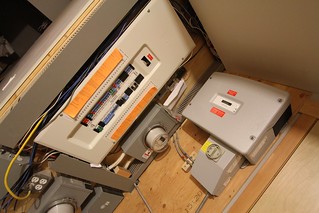
A net-zero home powered by solar modules has a...
A net-zero home powered by solar modules has a little more happening at the electricial panel but no furnace and no gas hook up. (Photo credit: Green Energy Futures)
*Zero-carbon is a general term applied to a building with zero net energy consumption and zero carbon emissions annually. They’re separate from the energy grid and are also called off the grid homes.

*A zero carbon home is one that generates as much power as it uses over the course of a year and therefore has net zero carbon dioxide emissions.  This is also commonly called a net zero site energy.

*Net off-site zero energy use is when a home produces 100% of the energy from renewable energy sources.

*Finally, another common definition is what is called net zero emissions, which means the carbon emissions generated from this type of home are balanced by the on-site energy production.  For example, if the home uses 100 energy units from fuels and generates 100 units onsite from solar energy, then they’re net zero.

Each definition embraces a philosophy of what it means to be green.  It taps into the energy conservation versus energy generation debate.  Is a home green because it conserves energy or is it green because it generates its own energy?

What Zero Carbon Means for You  

Under these definitions, it’s entirely possible for you to transform your home into a zero-carbon home right now.  Embracing wind and solar power to balance the amount of energy you use from the grid would result in a net zero off-site home.  You’re contributing as much as you’re using. This is certainly something to keep in mind as you make modifications or undergo any type of home renovations.
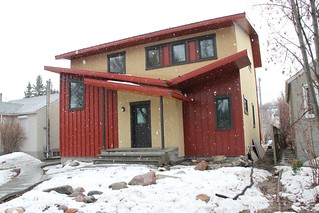
Bob Heath's net-zero home was designed by Pete...
Bob Heath's net-zero home, designed by Peter Amerongen of Habitat Studios and Workshop, a custom builder in Edmonton that specializes in net-zero homes. (Photo credit: Green Energy Futures)
Homebuilders today are adopting zero carbon practices to make their homes more environmentally friendly and to meet the demands of homebuyers.  And if you’re going to be in the market to buy a home in the future, you can know what your energy options are.  You can make an educated decision on where you get your energy resources and how you want to contribute to a greener planet.

There are of course benefits to having a zero-carbon home beyond reducing your carbon emissions.  One substantial benefit is that while it may cost more to build a zero-carbon home, you do reap the benefits in substantially lower utility bills and after a few years will see your return on investment.  Additionally, your home may retain or increase its value compared to comparable homes without an environmentally-friendly design.


Enhanced by Zemanta

Monday, April 15, 2013

What Is a Zero Energy Home?

In this day and age of growing awareness of conservation of energy and a more holistic approach to building, one term that you may hear from time to time is "zero energy home."  It may sound impossible, but there really is such a thing, and more and more people are striving to attain this ideal when building a new home. So just what is it? A zero energy home (ZEH) is one where all of the energy needs for the household are supplied by alternative means. It does not mean a home that uses no electricity. Solar panels and solar water heating systems are generally the form of energy employed by these homes, because they are residential. Residential wind turbines are uncommon in most community neighborhoods - at least so far.

English: Solar boiler on a rooftop in Israel.
Solar boiler on a rooftop. (Photo credit: Wikipedia)
A zero energy home needs some sort of back-up. It is often not actually an "off the grid" home. The sun is not always shining, and sometimes a home's energy needs drastically increase for a variety of reasons (a cold snap, a heat wave, or an increase in laundry). In fact, zero energy homes remain connected to the utility grid, and often engage in net metering.

Net metering means both the energy you use from the grid and the amount you put back into the grid are measured. Because an electric meter can spin forward or backward, the homeowner gets credit for the energy he or she puts into the grid, which is a good safeguard against those times when you need back-up.

How a ZEH Works

As noted above, a photovoltaic solar power system is employed for electricity generation. Water is heated by a passive, solar-thermal system. Passive systems do not use electrical energy to warm the water. They simply collect the sun's heat and use it to warm water. Energy needs are greatly offset or replaced for heating, cooling, lighting, and appliances.

draft of a solarpipe
draft of a solarpipe (Photo credit: Wikipedia)
What Else Is Involved In a ZEH?

Some ZEH builders use awnings over the windows and large eaves to block hot summer sunlight but let in sunlight in the winter. Windows in a ZEH home are thick, as is the insulation. Skylights supply much of the indoor light and the solar panels are on the roof, so the angle and location of the home are carefully considered by the builders.

How Do You Obtain a Zero Energy Home?

There are professional builders that specialize in or include the construction of zero energy homes.

You could also take a DIY approach and convert your existing home into a zero energy home. But, although in theory, a conventional home could be converted into a ZEH, the essence of a ZEH is that it is constructed from the ground up. This is because the designers incorporate a lot of "tricks" and design elements within the house's walls, roof, and so forth that would be impossible to insert into an existing home. But you can still achieve great energy savings by incorporating some of the principles of a zero energy home into your existing home if desired.
Enhanced by Zemanta