Showing posts with label Green building. Show all posts

Tuesday, June 10, 2014

What Is A Zero-Carbon House?

Can you imagine what it would be like to live in a house that produced zero carbon emissions?  It’s almost inconceivable, right?  How could that work?   Let’s take a look at what it means to be a zero-carbon house and how it’s possible.

Definition of Zero-Carbon

Designed to drastically reduce our greenhouse emissions by utilizing more efficient and sustainable practices, zero-carbon homes and buildings are being designed and built all around the world.  Depending on whom you ask, zero-carbon has different meanings.  It’s defined by the country and by the professional.  For example, an architect may define zero carbon differently than a civil engineer.

Here are some common definitions:
A net-zero home powered by solar modules has a...
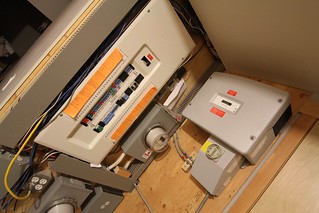
A net-zero home powered by solar modules has a little more happening at the electricial panel but no furnace and no gas hook up. (Photo credit: Green Energy Futures)
*Zero-carbon is a general term applied to a building with zero net energy consumption and zero carbon emissions annually. They’re separate from the energy grid and are also called off the grid homes.

*A zero carbon home is one that generates as much power as it uses over the course of a year and therefore has net zero carbon dioxide emissions.  This is also commonly called a net zero site energy.

*Net off-site zero energy use is when a home produces 100% of the energy from renewable energy sources.

*Finally, another common definition is what is called net zero emissions, which means the carbon emissions generated from this type of home are balanced by the on-site energy production.  For example, if the home uses 100 energy units from fuels and generates 100 units onsite from solar energy, then they’re net zero.

Each definition embraces a philosophy of what it means to be green.  It taps into the energy conservation versus energy generation debate.  Is a home green because it conserves energy or is it green because it generates its own energy?

What Zero Carbon Means for You  

Under these definitions, it’s entirely possible for you to transform your home into a zero-carbon home right now.  Embracing wind and solar power to balance the amount of energy you use from the grid would result in a net zero off-site home.  You’re contributing as much as you’re using. This is certainly something to keep in mind as you make modifications or undergo any type of home renovations.
Bob Heath's net-zero home was designed by Pete...
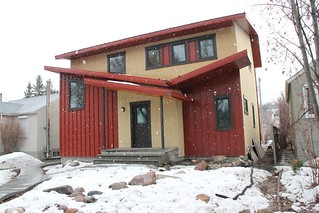
Bob Heath's net-zero home, designed by Peter Amerongen of Habitat Studios and Workshop, a custom builder in Edmonton that specializes in net-zero homes. (Photo credit: Green Energy Futures)
Homebuilders today are adopting zero carbon practices to make their homes more environmentally friendly and to meet the demands of homebuyers.  And if you’re going to be in the market to buy a home in the future, you can know what your energy options are.  You can make an educated decision on where you get your energy resources and how you want to contribute to a greener planet.

There are of course benefits to having a zero-carbon home beyond reducing your carbon emissions.  One substantial benefit is that while it may cost more to build a zero-carbon home, you do reap the benefits in substantially lower utility bills and after a few years will see your return on investment.  Additionally, your home may retain or increase its value compared to comparable homes without an environmentally-friendly design.


Enhanced by Zemanta

Tuesday, May 21, 2013

Kitchen Refit – Making Your Kitchen Greener

Are you thinking of going green in your kitchen? Maybe you have already gone green in your cooking or other lifestyle habits and want to extend that to the kitchen. Whatever your reasons, here are some ideas for ways you can make your kitchen green.

Remodel Your Kitchen

This is the big one! If you are able, this is a fabulous way to green your kitchen. Here are some things to look at when you remodel.

English: Compact fluorescent light bulb
Compact fluorescent light bulb (Photo credit: Wikipedia)
* Lighting - When you remodel, you can arrange for more eco-friendly lighting. Skylights are ideal, but you can also make the most efficient use of energy-efficient lighting such as CFLs (compact fluorescent lights) or LEDs (light emitting diodes). And a remodel can also open up space and let in more light from the existing windows.

* Appliances - Replacing your old appliances with energy-efficient ones helps your green efforts. Before tossing out your old appliances, though, make sure they really are less efficient. If not, then it would be less wasteful and worthwhile to have them refurbished. If you do decide to discard your old appliances, donate them to Habitat for Humanity or other charitable organizations.

* Flooring - Choose natural, sustainable flooring material like cork, bamboo, mango wood, linoleum (not to be confused with synthetic vinyl flooring), or eucalyptus wood. Natural tiles are also good choices, as are tiles made from recycled rubber. Be sure to dispose of your old flooring responsibly - contact your solid waste authority to see if it can be recycled or donated. 

* Countertops - There are lots of green options for countertops. You can do mosaic tops on your existing counters, or replace them entirely with something eco-friendly like PaperStone or mango wood. Again, donate or recycle your old countertops.

A small, modern kitchen with popular stainless...
(Photo credit: Wikipedia)
* Green Extras - If you remodel your kitchen, you can arrange to have a worm compost bin built right in, as well as convenient recycling containers.

Save Water

We use a lot of water in the kitchen. Go green by saving water in the kitchen - install low-flow aerators or faucets, pre-rinse your dishes in a sink full of water rather than under running water, and turn off the water when you are scrubbing pots and pans. If possible, use rain water to rinse dishes. And when you rinse vegetables and fruits, use a pan of water and then pour the water on your plants in your sustainable garden.

Save Energy

Little things can add up to make your kitchen greener. Even if you have energy-efficient appliances, that doesn't mean it's acceptable to waste. For example, don't hold the refrigerator door open, and don't open the oven when something is cooking inside. And last but not least, only run your dishwasher when it is full.
Enhanced by Zemanta

Wednesday, October 10, 2012

7 Benefits Of Straw Bale Construction

We mentioned straw as a "green" insulation material, but the use of straw as a building material goes back centuries (remember the 3 Little Pigs?). :-)  Straw bales as building materials became very popular over a century ago, as settlers in Nebraska found themselves in need of shelter but with very little lumber. They contrived straw bale buildings, and interestingly enough, this building style is enjoying a resurgence in modern times. These early structures used straw bales to bear the weight of the roof; this load-bearing style is therefore called Nebraska-style.

English: Building a straw-bale house Français ...
Building a straw-bale house. (Photo credit: Wikipedia)
More common today is the post-and-beam style, which consists of a traditional frame of wooden posts and beams. The straw bales are used as a fill for the walls. In both styles, the bales are covered with plaster. There are quite a few benefits to straw bale constructions, some of which are discussed below.

1. Reduce your carbon footprint
The straw used in straw bale structures is entirely contained in the wall, which means that the carbon absorbed while the straw was growing as wheat, oats, or other grains will not be released into the atmosphere. Also, straw bale construction uses a common waste product, straw, that would normally be burned or otherwise disposed of. Finally, using straw decreases the need for other natural resources, particularly lumber.

2. Fire resistance
It may seem counter-intuitive, but straw bales are actually more fire resistant than the average lumber house. Why? The bales are packed so tightly that not enough oxygen penetrates them to feed a fire. Fire tends only to smolder in straw bales, rather than going up in flames.

3. Insulation
The real savings in straw bale structures is in energy costs. Straw makes an excellent insulation against temperature and noise. People who are building near an airport or highway may want to consider straw bale construction.

4. Save on labor costs
Straw bales are easy to stack, like big blocks, which means a "work party" of volunteers can help build your structure for much less money than a typical contractor.

Straw Bale House
Straw Bale House (Photo credit: Todd Dwyer)
5. Straw is free of chemicals
Unlike flake board, plywood, drywall, fiberglass insulation, and other building materials, straw contains no artificial chemicals and won't outgas any harmful fumes.

6. Termites don't like it
Termites just don't find straw palatable. Unlike hay, straw has no food value to termites or other vermin.

7. No allergy worries
Also unlike hay, straw has no leftover flower or plant parts and thus no pollen. That's why certain allergic reactions are called hay fever, not straw fever!

Straw bale construction is worth considering, especially if you live in a climate with temperature extremes or in an area with a great deal of noise. And last but not least, when covered with smooth plaster, straw bale constructions are very attractive. While this method of building construction may be new to you, as you can see there are many benefits, and in some cases it can be a very economical and environmentally friendly choice.
Enhanced by Zemanta

Friday, October 7, 2011

Video - Sustainable Building for the Future

Here is a pretty cool video about a sustainable building project. It's a bit light on audio description, so be sure to pay attention to the text-overs, and check out the really cool looking finished building at the end!

Plus it will give you a whole new respect for ants.... :-)

Sustainable Buildings
How a new way of thinking about the buildings we live in will help solve issues of sustainability by reducing carbon emissions so you can become carbon neutral. This is about making buildings 'nutritious' for mind, health and ecology.


Enhanced by Zemanta

Wednesday, October 5, 2011

Sustainable Building Products for Your Home

Building a new home or renovating an existing one? You might want to consider using sustainable building products. Sustainable building products have come down in price over the past few years. You may be able to receive a tax credit for using them. And you’ll be doing a large part to help the environment.

Giant Bamboo in EcuadorImage via WikipediaWhat Are Sustainable Building Products?

Sustainable building products are products that are easily replenished. They come from sustainable resources. One example is bamboo. Anyone who has a stand of bamboo in their backyard can testify that bamboo grows very quickly, and any plants that are cut down are quickly replenished.

Another example might be solar cells. They’re not made of sustainable materials. However, they produce sustainable energy. They harness the sun’s power and convert it into electricity in your home.


What Qualifies a Building Product as Sustainable?

There are no certification boards to stamp something as sustainable. However you can look for a few keywords to help you make a decision. Some keywords include:

* Recycled Content
* Low-Emitting Materials
* FSC certified
* Zero VOC emissions
* Energy savings
* Low flow – water savings

Where Can You Find Sustainable Building Products?

Depending on your home project you may be able to find much of what you need at your local home store. For example, if you’re remodeling your home you might choose:
* Cork
* Cement
* Bamboo

Bamboo flooring(http://www.floorproducer.com),...Image via WikipediaThese work well for flooring or countertop options.

You might also choose to utilize reclaimed wood products or reclaimed appliances. In many communities you can find a facility that takes:

* Countertops,
* Cabinets,
* Appliances
* And even things like toilets, faucets and sinks.

You can often repurpose or refinish these items to use in your home project.

Consider also low emissions products when you’re painting or using an adhesive. Even carpet adhesives can be sustainable and environmentally friendly. Or, they can be toxic to your health. And most carpet installation companies offer both low emission adhesives and the standard adhesives.

If you’re planning a large project you might consider consulting with a green architect, contractor, or designer. They can help you get professional discounts on sustainable home building products. These discounts can really add up.

Before you begin any home building project, the first step is to plan. Take a look at the resources your project requires, then explore your options. Where can you use sustainable and environmentally friendly products? Where can you find them locally? How much will they cost? How much will they save? Remember many states are offering tax incentives and credits for sustainable building projects.

Remodeling or building a home is an exciting time. You can make sure your home is a source of pride. Using sustainable building products can make it look great and do your part to help the environment at the same time. It’s a win win!
Enhanced by Zemanta

Wednesday, August 3, 2011

Book Review: The Solar House: Passive Heating and Cooling

More and more people want to make their own homes more energy-efficient and earth-friendly. There are lots of books on the market that you can read up on passive heating and cooling ideas and designs. One great book you should read is Daniel Chiras' book: The Solar House: Passive Heating and Cooling.

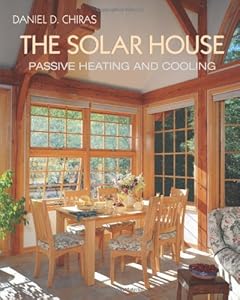
Cover of "The Solar House: Passive Heatin...Cover via AmazonIt is a fantastic resource on energy efficient home designs and covers related topics in great detail. You will be able to read up on region-specific building techniques to keep your home comfortably cool or warm, green building techniques, insulation materials, backup heating systems, such as geothermal heat pumps etc

I like the chapter on healthy air quality in passively conditional homes. This talks about health and environmental issues arising from various home designs, such as insulation material, air conditioning, ventilation. If you want to keep our planet and your family healthy, these are important things to consider before deciding on appropriate passive heating and cooling designs.

In my opinion, this book covers lots of valuable information on how to modify your house so you can live in a healthy and energy-efficient home.

You can find this book in many bookstores, as well as on Amazon.com.
Enhanced by Zemanta