Thursday, March 13, 2014

Reviewing Sharper Image Air Purifiers

If you own a television, a radio, or have access to a computer, you have probably heard of Sharper Image before.  Sharper Image is a well-known company that specializes in household items, which may include, but are not limited to, clocks, lamps, traditional household appliances, televisions, massage chairs, and air purifiers. 

If you are interested in purchasing an air purifier, you may wish to look for a Sharper Image product. If you make the decision to purchase an air purifier from Sharper Image, you will find that you have a number of different options.

Despite the fact that Sharper Image produces a number of different air purifiers, they are most well-known for their line of ionic air purifiers. These air purifiers are commonly known as or sold as Ionic Breezes.  What is nice about the Ionic Breeze air purifiers is that most are quite compact.  Their tower designs make it possible to fit these air purifiers in just about any space, no matter how much or how little room you have.  The Ionic Breeze air purifiers are also known as being extremely quiet, when compared to most other air purifiers. 

The full size Ionic Breeze towers are capable of cleaning the air in a room up to 500 square feet. Since this square footage is larger than most other air purifiers, you will find that Ionic Breeze air purifiers tend to sell for more money.  In most cases, you should be able to purchase a full size Sharper Image Ionic Breeze air purifier for around $100 to $300.  If you are looking for something more affordable, you may want to examine the Table Top Ionic Breeze. The Table Top Ionic Breeze is ideal for 350 square foot rooms.  When you think about it, this is still a fairly large amount of space. The Table Top Ionic Breeze retails for under $100.

In 2006, Sharper Image introduced a new air purifier. That air purifier is known as the Hybrid GP Germicidal Air Purifier.  The Hybrid GP Germicidal Air Purifier is one of a kind. In fact, it is known as being one of the most efficient air purifiers currently available for sale.  As with the Ionic Breeze air purifiers, the Hybrid GP Germicidal Air Purifier is energy efficient; thus this top of the line air purifier will not only help to clean the air inside your home, but it will also reduce the cost of doing so, energy wise.

Since the Sharper Image Hybrid GP Germicidal Air Purifier is considered top of the line, the price is higher than most air purifiers.  This well performing air purifier tends to retail for around $350.  Although the cost may seem high, it is important that you remember what you are getting when you purchase this product.  In addition to being a top of the line product, the Hybrid GP Germicidal Air Purifier also has a modern and compact design.  This means that in addition to fitting into a wide variety of different spaces, the air purifier will also go great with just about any home décor. 

When considering the cost of Sharper Image air purifiers, including the Hybrid GP Germicidal Air Purifiers, as well as the line of Ionic Breezes, it is important to remember one thing.  Unlike most other air purifiers, they do not need replacement filters.  Almost all of the Shaper Image air purifiers are filter-less.  Essentially this means, that you usually only need to wipe off a collection grid. This is important when determining the cost of a Sharper Image air purifier. Although the cost may seem high, you do not need to purchase additional accessories, which tend to drive up the cost of most air purifiers. 

You can find many air purifiers by Sharper Image at a lower cost online, such as at Amazon.com.

   
Enhanced by Zemanta

Tuesday, March 11, 2014

Finding the Best Air Purifier for You

Picking the best air purifier is a very difficult decision since each home has different needs. Adding to this tough task is the fact that different allergens and different types of home pollutions are removed in different ways. Below are some comparisons of some of the more popular types of air purifiers, and what they do.

This image was created as part of the Philip G...
HEPA Filter. (Photo credit: Wikipedia)
Air Purifiers with HEPA (High Energy Particle Arresting) filters were originally developed for the atomic energy commission, and are used in commercial clean rooms (such as hospitals) to remove particles of dust and other airborne pollution. These consist of a paper or polymer sheet with very tiny holes that allow airflow to pass though the material but not very much else. The holes are so small you need a lot of surface area for a reasonable amount of airflow to pass though the material. Therefore the medium is always folded in an accordion or zigzag fashion to fit a lot of surface area in a small space. There is also a mixed version of the technology where the holes in the HEPA filter are slightly larger to promote more airflow but the air is charged with electrostatic wands - which then attract and trap any of the smaller particles that get through the holes. 

HEPA Filters work well in the home for trapping particulates. The disadvantage is that the filters must be changed regularly (every 6-months to 5-years depending on the manufacturer). Before purchasing you would also want to review how much air by-passes the filter, fan noise, how long the filter is good for and finally price of both original unit and replacement filters.

Ultraviolet (UV) photons harm the DNA molecule...
Ultraviolet (UV) photons harm the DNA molecules of living organisms in different ways. (Photo credit: Wikipedia)
UV air purifiers use ultraviolet light. Ultraviolet light in the right intensity destroys the DNA of microorganisms such as bacteria and viruses. The disadvantage of a UV air purifier is that removes very few gas pollutants and no air particles. It would be necessary then to purchase a UV air purifier along with another type or one that combines it with another filter system.

Ion Generator Air Purifiers are small air purifier devices that put out a stream of negatively charged Ions. These ions charge particulate pollution and when the particle bumps up against something it sticks due to the electronic charge. These devices are used on US submarines and in the poultry industry to keep the feather dust down.

These air purifiers do what they say but there are some very distinct disadvantages. Particulates end up on your walls so your walls may turn black near the device. Secondly, since they typically do not have a fan so they only work in a localized area. They also do nothing for gas pollution and some may put off a bit of ozone.

You can see just with the 3 examples above there are some pretty major differences between air purifiers. Research and comparison shopping is necessary to find the right purifier for your specific case. Do not allow promotional hype to sway your judgment; picking the wrong air purifier is as bad as not having one at all.

Be sure to check back Thursday for a helpful review of several different air purifiers...
Enhanced by Zemanta

Thursday, March 6, 2014

Create An Appreciation of Nature By Stargazing with Your Children

The sky is filled with fantasy and wonder.  One can look up at those amazing stars for hours and contemplate the universe. It relieves stress, helps you focus on the world around you, and gets you connected with nature. Why not share this stargazing experience with your children? 

Here Are Several Benefits of Stargazing with Children:

Tried to do a night Sky shot, harder than anti...
(Photo credit: Wikipedia)
1. It inspires curiosity. Looking up at a night sky full of stars fills your child with wonder and delight.  It sparks their imagination and their curiosity.  So many questions pop into their fertile minds. 

* What are the stars?
* How did they get there?
* How far away are they?
* Who put them there?
* What are they made of?

This gives you not only great insight into the mind of your children; it also gives you a valuable teaching moment.  You can teach not only about science and astronomy but looking up to the sky also lends itself to wonderful religious and spiritual teaching moments. 

2. It creates memories.  What is your fondest childhood memory?  For many, it’s that special one on one time with their parent(s).  Stargazing provides you with that opportunity to connect with your children.

3. It is calming.  Children are so busy today they barely have time to think.  If they’re not in school, they’re doing homework, playing sports, going to scouts and other after school activities, and hanging out with friends then they’re watching television, surfing the net or playing computer games.  There’s very little time made for quiet. 

Yet quiet time is exactly what children and adults need.  Numerous studies have shown that spending time simply looking at the sky or taking a walk in nature improves concentration, boost mood and generate feelings of well-being. 

Getting Started Stargazing with Children

In order to create a memorable stargazing experience you’ll need to take a few steps.  To begin with, you’ll need a comfortable place to lie down - grab a blanket and locate a place to stargaze. 

Night sky (stars and the Milky Way), Cherry Sp...
Night sky (stars and the Milky Way). (Photo credit: Wikipedia)
If your children are younger, you may want to grab a few snacks.  Decide in advance if you’re going to look at constellations. If you are, you may want to find a few pictures of the constellations show your children know what they’re looking for.

Create a list of things to look find in the sky, like the North Star, Venus, the Milky Way and so on.  Having a list seems to get the ball rolling and once you get them searching the night sky, they’ll take the ball and run with it.

If you have a telescope, then you can really focus on a few astronomical features, like exploring the craters on the moon. 

Stargazing with your children is more than a learning opportunity, though it certainly is that; it also provides you a wonderful opportunity to connect with your children, to help them grow and foster a sense of well-being and connection with the universe and the world around them. 

Enhanced by Zemanta

Tuesday, March 4, 2014

10 Ways to Become Eco-Parents

My sister recently had twins, and it got me thinking a lot about parenthood, and how important it is to teach your kids to appreciate and value the world we live in.

Have you ever heard the phrase, “children learn by our actions, not by our words?”  When it comes to many issues, this is very true.  Children emulate what they see.  If you want your children to grow up to be environmentally conscious and responsible adults, show them what that looks like.  Show them what it means to be eco-friendly.  Here are ten great ways to become eco-parents, and teach your kids to respect and care for themselves and the world they live in:

CSA share: June 25, 2011
CSA share (Photo credit: .m.e.c.)
#1.  Buy organic when possible.  In this instance, it is important to also discuss with your children why you buy organic.  Make them part of the shopping process by having them find items on your grocery list.  Take them to the farmer’s market with your or join a CSA (community sustained agriculture) program and have them come with you when you visit the farm.  Share with your children your thoughts on why to buy organic produce and then follow through with your actions.

#2.  Recycle.  This is such a small thing but it has a huge impact.  If your community waste management program offers a recycling program, then getting your children involved is easy.  Have them recycle paper, clean out plastic containers and help with the recycling system in your home.  If you don’t have the convenience of curbside recycling, it is a bit more of a process, but children can still get involved and it can become a family routine. 

#3.  Walk, ride your bike and take public transportation when possible.  Demonstrate to your children the value of conserving resources by practicing good eco-friendly habits.

#4.  Teach them to appreciate nature by taking them on nature walks, visiting wildlife preserves and learning about animals and their habitats.

#5.  Use reusable products whenever possible.  One very simple tip is to use reusable shopping bags.  Children are great for helping you remember to bring them along when you head to the store!

#6.  Grow a garden.  Children of all ages love digging their hands in the dirt and growing things.  Let them choose what they want to grow, help them cultivate it and teach them about planting and growing their own fruits and vegetables.

#7.  Travel.  Visiting other places helps children develop an appreciation and an awareness for the world outside their immediate surroundings.

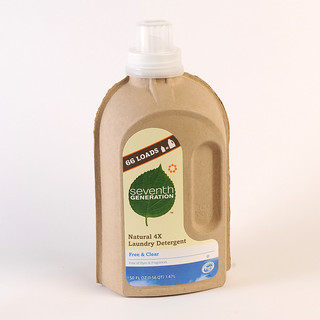
Natural Laundry Detergent, Free and Clear
Natural Laundry Detergent, Free and Clear (Photo credit: artizone)
#8.  Use natural cleaners.  Mainstream cleaning products contain a whole host of chemicals and fragrances that are harmful to our health, and if you’re going to get your children involved in cleaning and caring for the home, then they’re going to be exposed to those chemicals.  Opting for natural cleaners gets the job done while staying chemical free - it's healthy for you, for them, and for the environment. Many cleaning products can even be made at home using safe, natural, and cheap ingredients like baking soda and vinegar, so they can save you money too.

#9.  Breastfeed infants.  Breastfeeding isn’t just better for a child’s health, it eliminates the need to manufacture and distribute formula.  And when your other children see you breastfeeding their sibling, they begin to develop an appreciation for its practicality - and for the efficiency of nature to provide what we need.

#10.  Buy used.  Clothing, furniture and even kitchen appliances can all be purchased used. This keeps them out of the landfills, and it saves money and resources manufacturing and distributing these items.  And you save a bit of money too.

Being an eco-parent is really about adopting environmentally friendly practices that make sense for you and your family, and taking responsibility for your role in the natural world.  Your children will grow up knowing you thought it was important to conserve, preserve, and take care of their health, and the health of the world we live in, and hopefully they’ll adopt the same responsible philosophy as they grow into adults themselves.


Enhanced by Zemanta

Thursday, February 27, 2014

Superfoods for Heart Health

Heart disease is number one killer among both men and women in the United States. And although we all realize that eating nutrient-dense healthy foods help reduce the risk, we may not know which foods are the best choices to battle this deadly disease head on. The key is stepping up fiber and choosing healthy fats. Eating healthy fats, like omega-3 fatty acids and olive oil, can help to reduce triglycerides. Whole, natural fats such as coconut oil are also great at reducing inflammation, and provide a quick and healthy source of energy. And a diet rich in soluble fiber, which is often found in legumes and some fruits and vegetables, helps to decrease LDL cholesterol levels.

Two Juglans regia walnuts.
Heart-healthy walnuts. (Photo credit: Wikipedia)
Sardines are an awesome source of omega-3 fatty acids, along with calcium and niacin. You can prepare fresh ones on the grill, or canned sardines work great in salads or sandwiches. Mackerel is another excellent source of omega-3s, and is full of selenium, which is an antioxidant mineral which may help protect the body from heart disease and cancer. (Small fish like sardines also have fewer pollutants and heavy metal content.)  Another great way to get omega-3s on the go is by grabbing a handful of walnuts for an afternoon snack. Add some to your green salad, or give chicken salad a nutrition boost by adding ground walnuts.

Kidney beans are a very affordable source of high fiber, and are high in protein for sustained energy without fat. Add them to salads, soups, and chili whenever you can, as they truly are almost a perfect health food. Since canned varieties tend to be higher in sodium, try to use the dried varieties whenever possible. Beans are easy to cook - just soak overnight in cold water with a pinch of baking soda, then drain, rinse, cover with water, and cook for about an hour. Drain and keep in the refrigerator until needed (they will keep in the refrigerator in a covered container for up to a week).

Whole-grain barley is rich in soluble fiber and insoluble fiber, which is good for combating constipation. It’s also a good protein source and has a good supply of iron and minerals. Choose whole-grain barley cereals, or substitute whole-grain barley for rice and pasta side dishes once a week.

Oatmeal is a great way to boost your fiber content early in the morning, and it also has a low glycemic index, which helps to provide lasting energy and stave off hunger. Choose rolled oats, and add some raisins, apples, and honey for flavor. Instant oatmeal isn’t a healthy option as it’s usually loaded with sugar.


Enhanced by Zemanta

Tuesday, February 25, 2014

Cranberries- The Superfood to Stave Off Bladder Infections

Numerous studies have shown that cranberries may help to fight off urinary tract infections (UTIs). They reduce the power of certain E. coli bacteria to adhere to and penetrate the walls of the bladder.

In about half of the cases of UTIs, the E. coli responsible have special little hairy tips called P fimbria. The bacteria use their fimbria to attach themselves to the bladder so that they can multiply and cause an infection. That's where cranberries--which contain a group of chemicals called proanthocyanidins---come in. They bind to the P fimbria of the E. coli and hinder them so they are unable to sticking to the walls of the bladder. As a result, the E. coli is flushed out in the urine instead of causing an infection. And because cranberries remove rather than kill the bacteria, there’s less of a chance for the E. coli to become resistant.

Ocean Spray Craisins brand dried cranberries
Dried cranberries (Photo credit: Wikipedia)
It’s imperative that those who are prone to UTIs eat cranberries or drink cranberry juice on a daily basis, because once the bacteria are able to adhere to the wall, the infection sets in, and the cranberries can’t help at that point. Juice products sweetened with stevia or other natural sweeteners are probably best, as sugar can actually increase the proliferation of bacteria.

It’s probably best to use cranberry products twice a day if you are prone, as the effects of the cranberries wear off after about 10 hours.

You should also be diligent about drinking lots of fluids in order to flush the bladder out on a regular basis. Citrus fruits and fresh vegetables high in vitamin C are also good, as they help boost the body’s immunity and germ-fighting abilities. Coffee, tea and other caffeinated beverages should be avoided, as well as alcohol. Be sure to complement your diet with plenty of foods rich in vitamin B, such as fortified cereals, lean proteins, asparagus, almonds and bananas, as they all assist the body in the digestive process and converting food to energy, which your body will need if it’s working to fend off a UTI.
Enhanced by Zemanta

Thursday, February 20, 2014

5 Advantages of Cork Flooring

When choosing the right floor for your home there are many considerations.  You want it to be durable, to be beautiful and to fit your budget.  You may also want it to be an environmentally sound decision, having the least impact on the environment.  Weigh all your options; cork flooring may be your flooring of choice.  Here are five advantages of cork flooring. 

#1.  Cork flooring is a renewable resource.  Instead of having to cut down a tree, cork is harvested from a tree without causing it any harm.  The harvesting process is actually pretty interesting; cork, made from the bark of oak trees, is only harvested from a tree once every ten years.  And it’s biodegradable, which means you don’t have to feel guilty when your flooring has reached the end of its life and needs to be replaced

This image shows some varnished cork bathroom ...
Varnished cork bathroom tiles. (Photo credit: Wikipedia)
#2.  Cork flooring is excellent for people with allergies and sensitivities.  Unlike carpet, which can collect pollen, pollutants and dust mites, cork is naturally hypoallergenic and mold-resistant. 

#3.  Cork also contains suberin, a natural insect repellent.  Why would you want your floor to repel insects?  Think termites…enough said, right?  What’s better than a floor that repels termites rather than attracting them? 

#4.  Cork flooring is extremely durable.  Not only does it resist the dents and scratches most wood floors easily incur, it’s also lightweight which means you can install it on any type of subfloor.  It is important to note that while cork is very durable, it isn’t kryptonite - you can gouge it.  Additionally, it is water resistant which means it won’t suffer water damage as easily as other types of floors.

#5.  Cork flooring is economical.  Basic cork tiles start around $4.00 per tile or plank and vary depending on stain choice and size of plank or tile.  And because it’s fairly easy to install, do-it-yourselfers can save a lot of money on installation.

Cork flooring has the ability to be customized to fit every lifestyle and décor choice.  It can be stained, and be installed as tiles or planks, which creates a variety of pattern options.  It’s durable, mold and mildew resistant and perhaps best of all, a renewable and sustainable product.  If you’re looking to replace the flooring in your home, consider cork.  It’s an economical and environmentally friendly option.

Enhanced by Zemanta