Showing posts with label Environmentally friendly. Show all posts

Wednesday, July 1, 2015

Try These Simple Improvements for a Greener Home

Want to make your home greener without having to spend too much time and energy on it? There are a few simple things you can do that'll make your home more green literally overnight with very little effort.

Here are a few simple improvements you can make for a greener home.

1. Invest in Auto-Off Lights

Getting a light switch system that automatically turns off is a great way to save energy and help the environment.

This is an especially good idea if you have a hard time remembering to turn off the light or have children who aren't in the habit of turning the lights off (and who doesn't?) :-)

2. Purchase Energy Saving Light Bulbs

English: Compact fluorescent light bulb
Energy-saving compact fluorescent light bulb. (Photo credit: Wikipedia)
Energy saving light bulbs use much less energy than the typical light bulb. They generate less heat and produce just as much light as your typical light bulb.

Yes, they are slightly more expensive than a run-of-the-mill light bulb. However, if you care about going green, this is a really simple way to do so - and they can last 5-20 times as long, so you actually save a lot of money in the long run! CFLs and LEDs are two types of energy-saving bulbs you can find just about anywhere these days.

3. Use Water Conserving Shower Heads

Water conserving shower heads are very affordable, easy to install and can help you save a lot of money on your water bills.

Essentially what they do is inject air inside the streams of water. It still feels like you're getting a full blast of water on your body when you shower, but you're actually using a lot less water. I absolutely love mine!

4. Improve Your House's Insulation

Improving your home's insulation can save you a lot of energy in the long run. It might take a bit of upfront investment, but it'll easily pay for itself.

Insulation will help you keep the heat in during winter and the heat out in summer. It'll help you reduce both your air conditioning and heating bills.

Different kinds of homes and different climates work best with different kinds of insulation. Talk to a local expert to figure out your exact cost to benefit ratio.
 
5. Use Green Products Wherever Possible

There are many places you can opt to go green in your house. You can buy eco-friendly biodegradable dishwashing soap instead of commercial detergents. You can buy organic soap and shampoo in your local Whole Foods instead of mass produced soap.

You can buy biodegradable plastics instead of plastics that clog up landfills. You can buy products made from recyclable products or which are themselves recyclable, instead of products that contribute to our unsustainable waste growth.

These are just some of the many ways you can go green. Just about every room in your house can benefit from going green. Often going green means not only helping the environment, but also saving money for your family. It takes a little bit of effort in the beginning to set up your home properly, but the rewards more than justify the effort in the long run.


Wednesday, April 15, 2015

7 Simple Tips to Help Keep the Earth Clean

Many people don't bother making changes to live a greener and more environmentally friendly life because they don’t think what they do can make a difference. It is difficult to imagine how one person can make a change in the environment when there are billions of people on this planet.

Yet each small part does make a difference. Think about it this way - one tree over the course of its lifetime will remove 600 pounds of carbon dioxide. One small tree makes a significant difference in the cleanliness of the air you breathe and you can make a big difference too. Here’s how:

The aerosol(A gaseous suspension of fine solid...
The aerosol spray canister invented by USDA researchers. (Photo credit: Wikipedia)
1. Paint Your Home With Latex – Oil-based paints contain solvents that are released into the air and cause pollution. Latex paints are water-based and safer.

2. Stop Buying Aerosols – Many things come with a propellant. From hair spray to cooking spray, each requires a propellant to release from the can. These propellants release harmful gases. They’re not great for your health and they’re certainly not good for the environment. Use pump sprays instead.

3. Unplug & Turn Off – When you’re not using an appliance, unplug it. This includes electronic devices too. And turn off lights in your home when you’re not using them. In fact, try to watch less television and use electronics less. You might decide to designate an afternoon or an entire day as a day to “unplug” and not use any electronics for entertainment (Hint: Earth Day is next Tuesday!). Read a book. Go for a walk. Enjoy a game or time with your family.

4. Recycle – Recycling is something that is so easy to do. Even if your community doesn’t offer a recycling pick up, you can make a weekly, or even monthly, habit of driving to the recycling center to drop off your materials. You’ll be amazed how much you save from the landfill when you recycle.

Crystal earth recycle icon
(Photo credit: Wikipedia)
5. Use Environmentally Friendly Cleaners – To be fair, not all “green” cleaners work as well as you’d like them to. However, there are some amazing brands and truly effective and “green” cleaners. Read reviews. Find the products that fit your needs, and clean your home without harsh and harmful chemicals. We often offer suggestions on this blog, or check out our Green Living Products page on our website for some excellent suggestions.

6. Wash In Cold Water – Most washable items do not need to be washed in hot or warm water. When possible, use cold water. It requires less energy from your water heater and is usually better for your clothing too.

7. Buy Organic Whenever Possible – Organic crops are crops that are not treated with harmful chemicals. They’re better for your health too. However, we realize it’s not always feasible to buy organic all the time. Check into the "Dirty Dozen," which includes items like apples and strawberries which have a heavy use of pesticides and other chemicals.

Cotton is another product that should ideally be organic. The cotton industry is one of the most harmful industries. “Cotton covers 55% of the world's cultivated land and uses 75% of the world's insecticides, more than any other single major crop.” (Source: Organic Trade Association)

You really can make a difference in the world around you. Small changes to your habits and your lifestyle do have an impact. In honor of Earth Day next week, why not choose at least one or two of these tips, and put them into practice this month!


Wednesday, January 7, 2015

How To Go Green In 2015

Many people start off the year with some lofty goals for how they will live a healthier lifestyle this year, and do more to help others as well as the planet. One great way to do that is to adopt an environmentally friendly, or "green" lifestyle. However, many people find the idea intimidating. Perhaps you think it takes someone special to live green, or maybe you believe it requires a certain personality type or income level. But in reality, green living is within everyone's reach.

This month, we will share some ideas for helping you live a cleaner, greener, healthier lifestyle in the year(s) ahead, starting with the 4 tips below.

Think Before You Buy

English: Eletrical wire reel used in MORAR MAI...
Eletrical wire reel used as an eco-design coffee table. (Photo credit: Wikipedia)
In our modern culture, it's tempting just to go out and buy something new, cheap, and (usually) plastic whenever we have a need. But used items are worth considering, either from second-hand stores, antique stores, or yard sales. And it might pay to look around your house for hidden treasures first.

For instance, you may decide you need a lemonade pitcher or a container for iced tea. Rather than getting a cheap plastic one, look around and see what you can reuse - maybe a glass juice container that you were going to throw away would work just fine.

Did you know it's considered "green" to buy pretty much anything second-hand? Clothing, furniture, lamps, appliances and so forth can all be purchased second-hand for a fraction of the cost, and it helps keep those items from being thrown away.

Shop Local for Food

If you've looked at the price of organic food, you might think you can't afford to go green with regard to the foods you eat. But you don't have to buy the expensive imported organic foods to be green; it's just as eco-friendly to buy locally-grown produce or foods that are produced near you.

Foods like honey, vegetables, fruits, breads, and meat can often be found at decent prices from local producers - and you're also supporting your local community (try a CSA for an even easier shopping experience). Organic whole grains and dried beans are still pretty cheap, and switching to those is a move in the green direction.

Plastic recycle logo PET, Polyethylene Terepht...
Plastic recycle logo. (Photo credit: Wikipedia)
Recycle

In addition to doing the usual "recycling thing," you can also look around and think of creative ways to recycle or reuse items around your home. For instance, use empty jars, cardboard tubes, and cereal boxes in crafts, or reuse plastic food tubs for storage (you could paint them or cover them with construction paper first if you want to pretty them up).

Look at yard sales and second-hand stores for your household needs - this is not only cheaper; it also means you're reusing (recycling) items that are already in circulation. Recycling means more than just shipping off your plastic, glass, and metal to the recycling center. It also involves reusing items to avoid buying new ones. That's budget-friendly for just about everyone!

Conserve Resources

From saving water, to reducing energy consumption via your heating and cooling system, to using blinds for passive solar heating and cooling, there are lots of things you can do to save energy and reduce your carbon footprint that not only don't cost you much money, but can even result in some significant savings!

Buy following these tips, at least some elements of the green lifestyle are within everyone's reach, and with just a few simple adjustments, you can live a healthier, cleaner lifestyle this year. Be sure to check back later this month for some more tips to help you live green in 2015.

One of our goals this year is to update our website to include even more helpful resources. Along with getting our little homestead going, we're going to be extra busy this year! For the time being, we are switching to a once-per-week posting schedule, so be sure to check back each Wednesday for more healthy green living tips.


Tuesday, December 30, 2014

Choose Chemical-Free Deicers This Winter

There's no question about it, it's winter! Along with winter in most areas of the country comes the inevitable bouts of snow and ice. Ice buildup on your walkways can not only be a hassle, it can actually be dangerous. People in your family can slip and fall on the ice. It could cause your car to slip, and ice can also damage your trees and shrubs in your garden.

The answer a lot of people turn to is deicers. Deicers can help you get rid of the ice, but can be damaging in their own way. A lot of them contain corrosive ingredients that can damage metals, stone and glass.

So what can you do? Here are a few tips:

A sequence of winter precipitation: several in...
Snow and ice. (Photo credit: Wikipedia)
Don't Use Too Much

A common misconception about deicers is that they're supposed to actually remove ice. They're not. If you're using your deicer as your primary vehicle for removing ice, chances are you're using far too much.

The deicer's job is to lower the freezing point, so the bottom layer of the snow or ice melts. You can then use a shovel to move all the ice out. It's more of a loosening agent than a removal agent.

So if you want to keep your property in good shape, don't over do it on the deicer.

Watch Out For Plants

A lot of deicers are labeled as "safe for plants," but many of them really aren't. People don't catch the damage to their plants because it doesn't happen right away. Your plants and shrubs are most likely dormant for the winter, so you don't suddenly start to see your plants wilting the moment you pour deicer on top.

Instead, your plants just won't grow healthily after winter time. They might grow more slowly, have stunted leaves or have some sort of other issue.

English: Picture of solid form of rock salt us...
Solid form of rock salt used for ice removal on streets. (Photo credit: Wikipedia)
What Are Your Options?

There are a few different environmentally friendly, property-safe ways to get rid of ice.

Your best option is an extract made from limestone and vinegar called calcium magnesium acetate (CMA.) CMA is more expensive than your average salt-based deicer. But it's also much better for your plants as well as for concrete and for windshields. As far as researchers can tell, it's basically non-corrosive.

There are a number of deicers you can use that are fine for plants, but damaging to concrete. You can use these for your garden areas, but don't use it on sidewalks.

If you have pets, this whole equation changes. Deicers can be deadly to pets. Pets tend to run around everywhere in the house and will walk on almost every pathway. If that pathway has chemicals or salts, your pet could poison himself when he licks his paws.

There are a number of environmentally friendly products on the market that are safe for plants, animals and concrete. Ice Melt and Safe Paw are two well known options. Calcium magnesium acetate is also generally regarded as safe for pets.

These are some of the most important things to keep in mind when you're choosing a deicer. Remember that sometimes it's worth spending a little more, especially when the safety of your plants, animals and property are involved.


Tuesday, November 25, 2014

Eco-Friendly Gift Ideas for Black Friday Shoppers

It's almost here! "Black Friday" is just around the corner, and millions of shoppers will hit the street (and web) this weekend to get great deals on gifts for the holidays. But why not "give green" this holiday season? Giving green is a great way to show your community that you really care. It can also inspire others to think eco-friendly as well. It's also unique. People can get a little tired of receiving toys, gift cards and kitchen wares every year. Giving a green gift is a great way to spice up your holiday gifting - and do a good deed at the same time!

So what are some green gifts you can give? Here are some ideas to consider when you hit the stores this weekend:

1. Soap Nuts

Green Will Soap Nuts on Amazon.com
Huh?? Yes, you read that right. Soap Nuts are tiny nuts that work more or less like soap. They come from the Sapindus tree, more commonly known as the soapberry tree. Just throw these nuts in your washing machine and they'll clean your clothes just as well as laundry detergent. They are safe, bio-degradable, and contain no harmful chemicals.

This gift is unique, saves people money on detergent and helps them adopt a green lifestyle with zero effort. It also is great for those who are sensitive to fragrances or chemical sudsing agents commonly found in commercial laundry detergents.

2. The Gift of Life

One fantastic gift you can give is seed packets. Before you buy these packets, take a walk through your friend's gardens. What kind of plants do they have? What colors do you think would do well in their garden?

Once you have a sense for what your friend might want, go online and buy a few different kinds of seeds you think they'll appreciate. You can also buy trees and shrubs, or gift certificates for companies that sell them. In a few years, you might just see your gift spreading its leaves in your friend's backyard!

English: Half a dozen home-made cookies. Ingre...
Home-made chocolate chip cookies. (Photo credit: Wikipedia)
3. Home Made Organic Food

Giving someone homemade organic chocolate chip cookies, or perhaps a raw vegan snack bar is a fantastic way to promote green culture while giving someone a gift they can really enjoy.

If you don't enjoy cooking, you can also buy many incredible eco-friendly snacks online.

4. Green Clothing

Did you know there's an entire sub-culture dedicated to creating dazzling clothing made entirely from eco-friendly materials? Some of the materials are recycled, others are bio-degradable, others are petrochemical-free.

Support these designers by purchasing from them this holiday. Make sure they look great and make sure you let whoever is receiving it know that they just received a green item. It makes a great dinner party story too!

5. Recycled Wine Glasses

What happens to glass that goes in the recycling bin? You see recycled paper and recycled plastic everywhere, but you seldom see labels for recycled glass.

Recycled glass looks and feels more or less exactly like normal glass. But by buying recycled glass, you support the recycling industry as well as giving your friend something unique. Recycled wine glasses come in all kinds of shapes and sizes.

There are a lot of incredible green and eco-friendly gifts out there, just waiting to be found. These gifts will wow your friends and family and bring a smile to their face, not just because of what they are but also because of their story. Give a green gift this holiday season, and you're giving to the environment as well!


Thursday, November 13, 2014

Healthier Ways to Clean Your Dishes

Food is the center of many of life’s celebrations, but at the end of the celebrating, when all the guests are heading home, the clean up has to begin. Doing the dishes, whether you put them in a dishwasher or wash them by hand, takes up a lot of time. And depending on what you use to aid in the cleaning up process, the products you use may be environmentally unfriendly and unsafe for your skin.

Seventh Generation Dishwasher Pods
Organic cleaners are safer for every cleaning task you need to do - so that means you don’t have to skip using organic products to clean your dishes, regardless of whether you choose to wash them by hand or load them in a dishwasher.

There are a lot of organic cleaners that can give your dishes sparkle and get them shiny clean. If you choose a dishwasher, you can buy organic cleaning pods that come with delightful fragrances like thyme. This scent can give your entire kitchen a fresh smell - without all the harmful chemicals.

Look for organic dishwashing detergents that don’t have any chlorine or phosphate in them. These are also a much better option if you have a septic system, as these chemicals can disrupt the delicate microbial balance of your system and cause problems in the future.

Organic cleaners can make a greasy clean up job a lot easier by cutting through the grease. And if you get the pre-measured dishwasher pods, this even cuts back on time spent in the kitchen, too. All you have to do is stick one into the dishwasher - no time needed to measure and no chance of accidentally overfilling the soap dish.

Earth-Friendly Products Dishmate
If you want to hand wash the dishes, then using organic soap won’t only clean your dishes without unsightly spots, but the soap is also better for your hands, too, without drying alcohols or harsh sudsing agents. Find one that contains aloe vera or chamomile to soothe your skin.

Instead of using dishwasher detergent that has synthetic scents and colors, use ones that have citrus extracts like lemon so that your kitchen is instantly refreshed after you cook a meal with strong odors.

You can make a nice cleaner yourself very cheaply just by using a mix of borax and baking soda with an essential oil of your choice. This may not have the beautiful color and suds that you had when you used store-bought dishwasher detergent, but you also won’t be putting anything harmful down your drain.

Make sure you play around with the do-it-yourself recipes for organic and natural cleaners, because results can vary depending on the hardness of your water. And watch how your skin reacts to the ingredients, too. You might need to wear gloves while cleaning, as even some natural ingredients are abrasive and can irritate your skin.

Thursday, September 25, 2014

Review: ECOnscious Clothing: Dress Responsibly

Men's 100% Organic Cotton Pique Polo
Living sustainably doesn't only mean in terms of food and saving energy, but it also means trying to invest in earth-friendly and fair-trade products. There are more and more choices on the web and in shops to shop for eco-conscious clothes, which is a fantastic trend. One such company is ECOnscious. They not only sell organic and sustainably grown clothing, but they also advocate fair trade, which means fair wages to employees of their suppliers.

Their clothing range includes high-quality, well-made t-shirts - both long and short-sleeved, hooded sweatshirts, tank tops, hats, caps, and tote bags, made from organic cotton and recycled materials. Whether you are looking for a comfortable, organic cotton fleece to keep warm this winter, or a soft cotton tee for the man in your life - you'll find their products of superb quality and style.

In my opinion, ECOnscious is a company that is worth supporting. The more that we purchase items made from sustainable materials, by responsible companies, the more eco-friendly options will be available to everyone, and the better off we - and the planet - will be.

You can find ECOnscious clothing through Amazon.com and other online retailers.


Wednesday, August 20, 2014

6 Tips for Cost-Effective & Eco-Friendly Living

Being conscious of the environment in your daily life can be hard and sometimes sounds costly as well. But it doesn't have to be. You can be eco-friendly without breaking the bank. Here are some cost-effective eco-friendly tips to help you out.

1. Unplug appliances. When appliances are not in use but are plugged in, they are still using a small amount of electricity. The coffee pot, toaster oven, and fans can all be unplugged when not in use. So if you get into the habit of unplugging things when you're not using them, you will not only start saving yourself money on your electric bill - you will also be making your carbon footprint smaller by using less electricity and energy.

2. Replace older appliances with Energy Star appliances. Now we know it can be a huge up-front expense having to replace appliances that don't really need to be replaced. But you will save money on your energy bills and eventually it will pay off. You don't have to do it all at once, but you can save up to $75 a year by making the switch, so just start switching over when you need to replace things. When old appliances start to wear out, gradually replace them with newer, more energy-efficient models. For our new house, my husband and I will be replacing the 20+ year old furnace, and inefficient window air conditioning units, with a new geothermal system when we move in. While it is more expensive up front, it will save us thousands of dollars in electricity usage in the long run.

Battery charger
Battery charger (Photo credit: Wikipedia)
3. Use rechargeable batteries. You will again be spending slightly more money up front, but think about how many times you have to change batteries on those TV remote controls or the kids' toys. You will save quite a bit by purchasing rechargeable batteries that you can use over and over again, rather than the disposable kind that you throw away after one use. And you will be keeping more batteries out of landfills - batteries which do not break down and can release harmful chemicals into the environment.

4. Replace your chemical household cleaners with natural cleaners. You can buy specific green cleaners which will cost you more. Alternatively, if you use something like white vinegar or baking soda to disinfect, clean, and remove stains and freshen the air, then you'll be saving huge amounts of money on your cleaning products - and still getting things clean to boot.

5. Whenever possible, skip the car and walk or bike where you need to go. The obvious savings would be gas savings, but you'll also save on auto repairs. If you must drive, though, then try to combine errands as much as possible and take a more direct route to get there, and carpool whenever possible. If your co-worker needs to pick up their dry cleaning at the same laundromat as you, then just do it together. Or ride to work together if you live close to each other.

6. Research recyclable items and use products that are made from recycled materials. It can be cost-effective to use items which can be used over and over. Companies are learning that they also save by using recycled materials, and they pass those cost savings onto you. However, they need the materials to come back to them if they are going to continue producing recyclable materials. So make sure to recycle your materials when done.

Just think smart and work hard to be aware of what's out there. Saving money and being conscientious of the eco-system just go hand in hand. If you follow these tips then you will be keeping money in your pocket while also helping protect the planet. It's a win-win situation!

Tuesday, June 24, 2014

14 Sustainable Summer Travel Tips

Summer is the time for vacation travel, as families head for the coast, the mountains, or the beach for summer vacation. But for eco-conscious folks, travel can pose a dilemma. What about all those emissions? Does traveling mean you're destroying the environment? You'll be happy to know that the depleted ozone layer doesn't mean you have to stop traveling. You can still see the world without killing the planet.

Here are 14 green travel tips which will make your next trip more enjoyable - and guilt-free!

Travel
 (Photo credit: raffacama)
1. If at all possible, avoid flying. Flying is very carbon-intensive and bad for the environment. Taking a bus or train is not only cheaper, but also better for the environment. Plus, you really get to see aspects of the country you haven't seen before. It can be a fun adventure, even if it takes longer to get there. Family road trips can be fun - just make sure you leave plenty of time to stop and see the sights on the way, so you don't feel rushed to get to your destination.

2. If flying is unavoidable, then try to find non-stop flights. That will of course not only reduce your travel time, but also your carbon footprint.

3. Paper tickets are becoming a thing of the past. Use electronic tickets whenever and wherever possible and save a tree.

4. Pack light. The more weighted down your mode of transportation is, the more fuel it will use. So if you pack light, you'll keep more carbon from getting into the environment and it's also a time saver. Time spent packing and unpacking bags or waiting at baggage claim to receive your bags will be shorter if you have fewer bags.

5. Use a reusable water bottle. (Glass or stainless steel are good - be sure to avoid plastics containing BPA.)

6. Don't forget about what you can do in your own home while you're gone. There's no need to have the heating and cooling systems running as usual if you're not home. So reset the thermostat. Stop your newspaper delivery as well; not only is it better for the environment, but you won't have newspapers piling up in front of your home letting people know you're away. Unplug the TV, DVD player, coffee pot, toaster, microwave, washer, and dryer. These all will continue to pull electricity while plugged in even if they're not being used.

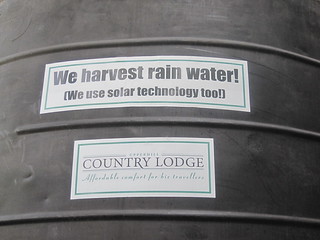
Country Lodge Hotel, Nairobi is Eco-Friendly
Country Lodge Hotel, Nairobi is Eco-Friendly (Photo credit: Wayan Vota)
7. Stay in hotels with environmental certification like Green Seal, Green Leaf, or the Green Hotels Association - these make an effort to use ecologically friendly practices.

8. When you leave the hotel room, turn off the lights or turn down the air conditioning.

9. Reuse your towels and sheets during your stay. Just let the hotel staff that they don't need to give you fresh linens every day.

10. Leave the complimentary toiletries for the next guest unless you're absolutely sure you'll use them. The less waste, the greener you'll be.

11. Check out electronically if the hotel will allow it. Less paper is better.

12. Rely on public transportation or the hotel's van service to get where you need to go. Walking or renting a bike to get around also might be an enjoyable way to explore this new place.

13. If you can't get by with public transportation and walking everywhere, then rent a hybrid or fuel efficient vehicle.

14. Buy local goods and foods. Local products have less of an environmental impact - and you'll be supporting the local economy where you're vacationing - which they will appreciate as well!

Using these travel tips will help you enjoy your vacation without worrying about what you are doing to the environment. Best of all, you can even save yourself money by following many of these tips. So go out and have yourself a great vacation this summer, and keep the planet safe at the same time.


Tuesday, March 4, 2014

10 Ways to Become Eco-Parents

My sister recently had twins, and it got me thinking a lot about parenthood, and how important it is to teach your kids to appreciate and value the world we live in.

Have you ever heard the phrase, “children learn by our actions, not by our words?”  When it comes to many issues, this is very true.  Children emulate what they see.  If you want your children to grow up to be environmentally conscious and responsible adults, show them what that looks like.  Show them what it means to be eco-friendly.  Here are ten great ways to become eco-parents, and teach your kids to respect and care for themselves and the world they live in:

CSA share: June 25, 2011
CSA share (Photo credit: .m.e.c.)
#1.  Buy organic when possible.  In this instance, it is important to also discuss with your children why you buy organic.  Make them part of the shopping process by having them find items on your grocery list.  Take them to the farmer’s market with your or join a CSA (community sustained agriculture) program and have them come with you when you visit the farm.  Share with your children your thoughts on why to buy organic produce and then follow through with your actions.

#2.  Recycle.  This is such a small thing but it has a huge impact.  If your community waste management program offers a recycling program, then getting your children involved is easy.  Have them recycle paper, clean out plastic containers and help with the recycling system in your home.  If you don’t have the convenience of curbside recycling, it is a bit more of a process, but children can still get involved and it can become a family routine. 

#3.  Walk, ride your bike and take public transportation when possible.  Demonstrate to your children the value of conserving resources by practicing good eco-friendly habits.

#4.  Teach them to appreciate nature by taking them on nature walks, visiting wildlife preserves and learning about animals and their habitats.

#5.  Use reusable products whenever possible.  One very simple tip is to use reusable shopping bags.  Children are great for helping you remember to bring them along when you head to the store!

#6.  Grow a garden Children of all ages love digging their hands in the dirt and growing things.  Let them choose what they want to grow, help them cultivate it and teach them about planting and growing their own fruits and vegetables.

#7.  Travel.  Visiting other places helps children develop an appreciation and an awareness for the world outside their immediate surroundings.

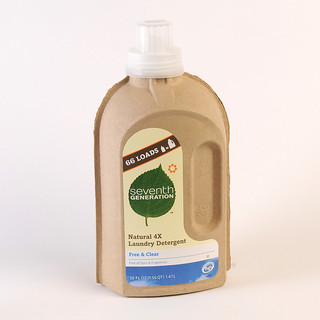
Natural Laundry Detergent, Free and Clear
Natural Laundry Detergent, Free and Clear (Photo credit: artizone)
#8.  Use natural cleaners.  Mainstream cleaning products contain a whole host of chemicals and fragrances that are harmful to our health, and if you’re going to get your children involved in cleaning and caring for the home, then they’re going to be exposed to those chemicals.  Opting for natural cleaners gets the job done while staying chemical free - it's healthy for you, for them, and for the environment. Many cleaning products can even be made at home using safe, natural, and cheap ingredients like baking soda and vinegar, so they can save you money too.

#9.  Breastfeed infants.  Breastfeeding isn’t just better for a child’s health, it eliminates the need to manufacture and distribute formula.  And when your other children see you breastfeeding their sibling, they begin to develop an appreciation for its practicality - and for the efficiency of nature to provide what we need.

#10.  Buy used.  Clothing, furniture and even kitchen appliances can all be purchased used. This keeps them out of the landfills, and it saves money and resources manufacturing and distributing these items.  And you save a bit of money too.

Being an eco-parent is really about adopting environmentally friendly practices that make sense for you and your family, and taking responsibility for your role in the natural world.  Your children will grow up knowing you thought it was important to conserve, preserve, and take care of their health, and the health of the world we live in, and hopefully they’ll adopt the same responsible philosophy as they grow into adults themselves.


Enhanced by Zemanta

Thursday, February 20, 2014

5 Advantages of Cork Flooring

When choosing the right floor for your home there are many considerations.  You want it to be durable, to be beautiful and to fit your budget.  You may also want it to be an environmentally sound decision, having the least impact on the environment.  Weigh all your options; cork flooring may be your flooring of choice.  Here are five advantages of cork flooring. 

#1.  Cork flooring is a renewable resource.  Instead of having to cut down a tree, cork is harvested from a tree without causing it any harm.  The harvesting process is actually pretty interesting; cork, made from the bark of oak trees, is only harvested from a tree once every ten years.  And it’s biodegradable, which means you don’t have to feel guilty when your flooring has reached the end of its life and needs to be replaced

This image shows some varnished cork bathroom ...
Varnished cork bathroom tiles. (Photo credit: Wikipedia)
#2.  Cork flooring is excellent for people with allergies and sensitivities.  Unlike carpet, which can collect pollen, pollutants and dust mites, cork is naturally hypoallergenic and mold-resistant. 

#3.  Cork also contains suberin, a natural insect repellent.  Why would you want your floor to repel insects?  Think termites…enough said, right?  What’s better than a floor that repels termites rather than attracting them? 

#4.  Cork flooring is extremely durable.  Not only does it resist the dents and scratches most wood floors easily incur, it’s also lightweight which means you can install it on any type of subfloor.  It is important to note that while cork is very durable, it isn’t kryptonite - you can gouge it.  Additionally, it is water resistant which means it won’t suffer water damage as easily as other types of floors.

#5.  Cork flooring is economical.  Basic cork tiles start around $4.00 per tile or plank and vary depending on stain choice and size of plank or tile.  And because it’s fairly easy to install, do-it-yourselfers can save a lot of money on installation.

Cork flooring has the ability to be customized to fit every lifestyle and décor choice.  It can be stained, and be installed as tiles or planks, which creates a variety of pattern options.  It’s durable, mold and mildew resistant and perhaps best of all, a renewable and sustainable product.  If you’re looking to replace the flooring in your home, consider cork.  It’s an economical and environmentally friendly option.

Enhanced by Zemanta

Tuesday, December 24, 2013

Finding Eco-Friendly Christmas Decoration Ideas

Decorations can cause a lot of waste during the holiday season every year. Although many of us have decorations that we re-use every year, many stores are now stocking cheap, plastic decorations that wear out quickly and don't do anything to help the environment. Why not think about what kind of eco-friendly decorations you could use instead?

Natural Christmas Wreath
Natural Christmas Wreath (Photo credit: **Mary**)
Decorate With Nature

If you're in the market for new eco-friendly decorations then one of the best places to find them is outdoors. There are plenty natural items that you can use to decorate your home. And once Christmas is over, you can leave them to biodegrade naturally.

1. Pinecones: You'll often find these on the ground during the winter, so gather some for free - and without harming any trees in the process - and glue them to wreaths or other Christmas decorations.

2. Leaves: What better way to make your home look like Christmas than by using a variety of winter leaves? Ivy is just perfect for decorations: combine it with twigs and holly and you can create the perfect, homemade wreath.

3. Berries and Nuts: We all associate nuts and berries with Christmas, and thankfully nature provides them for free. If you can, gather some acorns and holly berries to add to your decorations this year.

One of the best things about using natural, eco friendly decorations is that it encourages you to get outside and experience the real beauty of winter. Not only this, but you can turn it into a project for the whole family to enjoy together.

Recycled Paper

If you and your kids like to make your own Christmas decorations, then using recycled paper can be a great way to go about it. Paper chains are a simple way to decorate the home, or you can use old paper scraps or even old cards or gift wrap to create snowflakes and more!

Christmas Tree & Lights

Christmas decoration at the Christmas Market i...
Christmas decoration at the Christmas Market in Aachen, Germany (Photo credit: Wikipedia)
Choosing trees that can be planted outside after Christmas is the most eco-friendly choice, and LED lights are the most energy saving way to light them. For ornaments, try making your own from recycled materials (old CDs, cardboard, fabrics and more), or even pretty food items like brightly colored dried peppers, popcorn, or cranberries, and add some organic, fair trade candy, too!

The key to using eco friendly Christmas decorations is to use natural, biodegradable materials wherever possible. When you do buy decorations, make sure that they are good quality and will be reused for years to come. And, if you have old decorations you no longer want, try donating them to ensure they still get some use instead of going into a landfill.

Have a wonderful, healthy, happy, and green Christmas!


Enhanced by Zemanta

Tuesday, December 17, 2013

Green Gift Ideas for Everyone This Christmas

Gifts are a huge part of Christmas and, as such, coming up with green gift ideas can have a huge impact on your carbon emissions every year. You really aren't limited in this area: there are literally hundreds of possible eco-friendly gifts you could choose for family and friends this year.

Here are a few quick green gift ideas to get you started:

Fair Trade
Fair Trade (Photo credit: flydown)
* When you buy wooden gifts, ensure that the wood is taken from a sustainable source,
* Gifts made from recycled waste materials (such as recycled metals or plastic) are a good choice,
* When buying beauty products, opt for organic products wherever you can,
* Buy gifts that encourage people to grow food, such as a starter kit for kitchen herbs,
* Instead of cut flowers, choose potted flowers and plants.

Fair Trade Gifts

Buying fair trade is an ethical choice for Christmas gifts, and any other products you may usually buy. The fair trade system ensures that the producers of the products, all around the world, are treated fairly in their prices and business practices. Although fair trade gifts are not the same as eco-friendly gifts, they are a great way to ensure you're doing something good with your money. Make sure you look for the fair trade logo when buying your presents.

Baked Gifts

If you're short on cash or ideas, then why not bake some gifts for Christmas this year? If you choose organic, local ingredients then your cooking will not only be more eco-friendly, it'll also be healthier for anyone who eats it. What's more, this is a fantastic personalized Christmas gift choice!

English: Burger Trailer The East of England Sh...
Shopping locally helps the environment and the community. (Photo credit: Wikipedia)
Local Gifts

Whether you're buying food or other products, buying items that were produced locally can help to reduce their environmental impact. Not only this, but you'll be doing your part to help out businesses and individuals in your community.

The Gift Of Time

Not all the gifts you can give have to be physical products. Why not give someone your time? Perhaps you know someone who needs help redecorating their home, or clearing out the weeds in their garden this winter?

You can also buy loved ones activities such as a day out, pampering in a day spa, a meal in a restaurant and much more. These green gift ideas don't need wrapping, but they provide a fun experience the recipient will never forget!


Enhanced by Zemanta

Thursday, September 19, 2013

Green Ideas on How to Revamp & Reuse Old Furniture

Whether you have furniture in your home you’d like to spruce up or you’ve purchased furniture at a flea market or salvage yard, there are plenty of low-cost and green ways to make old furniture exciting so you can get more use out of it and keep it out of the landfills.

English: Furniture conservation - applying pai...
Furniture conservation - applying paint remover (stripper) (Photo credit: Wikipedia)
#1.  Paint it.  Dingy furniture can get a whole new life with a fresh coat of paint.  If the furniture is already painted, you’ll want to put on a mask and strip it.  Old paint can contain lead and other harmful chemicals.  Next, head to your local paint store and find your favorite color in low VOC or VOC-free paint. 

(VOCs, or Volatile Organic Compounds, are chemicals released from the paint.  They can cause illness and disease for many years to come as they are released into the air for decades.)  You can also strip and stain the furniture with natural and VOC-free stains. 

#2.  Reupholster it.  Have a piece of furniture that you like but doesn’t quite match your current décor?  Reupholster it with environmentally-friendly fabric like organic cotton or wool.  And if upholstering is too big of a do-it-yourself job, take it to an expert. It’ll cost less than buying new and is a more environmentally-friendly choice.

#3.  Add bits of finery.  Cabinets, drawers, and armoires can be spruced up with a little bit of new hardware.  You can often purchase the hardware from a flea market or a salvage store. They’re great places to find hardware with personality. 

English: Taken at a Chicagoland Flea Market. R...
A Chicagoland Flea Market.  (Photo credit: Wikipedia)
Tabletops can shine with mosaic tiles made from hammered porcelain or glass tiles.  You can find tiles at your local flea market or salvage yard and the project of hammering them into bits and then reassembling them on your tabletop into a beautiful pattern can be both cathartic and fun. 

Finally, you can also use sheets of scrap metal or recycled metal to create flash on tabletops or cupboard fronts.  The metal can be used as tiles or as an entire front to add an urban or contemporary touch. 

People have used everything from chicken wire to astro turf to add flair and personality to old furniture.  There are a million green ways to make old furniture new again - it just takes a bit of creativity.  Take a look at what you have around you and how you can make good use of it in an eco-friendly way.

Helpful Resources on Refinishing and Reusing Furniture:
   
Enhanced by Zemanta