Showing posts with label Recycling. Show all posts

Wednesday, January 7, 2015

How To Go Green In 2015

Many people start off the year with some lofty goals for how they will live a healthier lifestyle this year, and do more to help others as well as the planet. One great way to do that is to adopt an environmentally friendly, or "green" lifestyle. However, many people find the idea intimidating. Perhaps you think it takes someone special to live green, or maybe you believe it requires a certain personality type or income level. But in reality, green living is within everyone's reach.

This month, we will share some ideas for helping you live a cleaner, greener, healthier lifestyle in the year(s) ahead, starting with the 4 tips below.

Think Before You Buy

English: Eletrical wire reel used in MORAR MAI...
Eletrical wire reel used as an eco-design coffee table. (Photo credit: Wikipedia)
In our modern culture, it's tempting just to go out and buy something new, cheap, and (usually) plastic whenever we have a need. But used items are worth considering, either from second-hand stores, antique stores, or yard sales. And it might pay to look around your house for hidden treasures first.

For instance, you may decide you need a lemonade pitcher or a container for iced tea. Rather than getting a cheap plastic one, look around and see what you can reuse - maybe a glass juice container that you were going to throw away would work just fine.

Did you know it's considered "green" to buy pretty much anything second-hand? Clothing, furniture, lamps, appliances and so forth can all be purchased second-hand for a fraction of the cost, and it helps keep those items from being thrown away.

Shop Local for Food

If you've looked at the price of organic food, you might think you can't afford to go green with regard to the foods you eat. But you don't have to buy the expensive imported organic foods to be green; it's just as eco-friendly to buy locally-grown produce or foods that are produced near you.

Foods like honey, vegetables, fruits, breads, and meat can often be found at decent prices from local producers - and you're also supporting your local community (try a CSA for an even easier shopping experience). Organic whole grains and dried beans are still pretty cheap, and switching to those is a move in the green direction.

Plastic recycle logo PET, Polyethylene Terepht...
Plastic recycle logo. (Photo credit: Wikipedia)
Recycle

In addition to doing the usual "recycling thing," you can also look around and think of creative ways to recycle or reuse items around your home. For instance, use empty jars, cardboard tubes, and cereal boxes in crafts, or reuse plastic food tubs for storage (you could paint them or cover them with construction paper first if you want to pretty them up).

Look at yard sales and second-hand stores for your household needs - this is not only cheaper; it also means you're reusing (recycling) items that are already in circulation. Recycling means more than just shipping off your plastic, glass, and metal to the recycling center. It also involves reusing items to avoid buying new ones. That's budget-friendly for just about everyone!

Conserve Resources

From saving water, to reducing energy consumption via your heating and cooling system, to using blinds for passive solar heating and cooling, there are lots of things you can do to save energy and reduce your carbon footprint that not only don't cost you much money, but can even result in some significant savings!

Buy following these tips, at least some elements of the green lifestyle are within everyone's reach, and with just a few simple adjustments, you can live a healthier, cleaner lifestyle this year. Be sure to check back later this month for some more tips to help you live green in 2015.

One of our goals this year is to update our website to include even more helpful resources. Along with getting our little homestead going, we're going to be extra busy this year! For the time being, we are switching to a once-per-week posting schedule, so be sure to check back each Wednesday for more healthy green living tips.


Friday, January 2, 2015

6 Ways to Recycle Your Real Christmas Tree

It's hard to believe it's already January, and time to take down the Christmas tree - a sad time for children (and adults) everywhere.... But you can make this occasion just a little less sad this year by disposing of your Christmas tree responsibly.

Every year, between 34 and 36 million Christmas trees are produced every year. At the end of Christmas season, a lot of these trees end up simply discarded. But there are really much better ways to dispose of a Christmas tree. Ways that are much better for the environment - and not much hassle at all.

Here are a few different ways to responsibly dispose of your real Christmas trees.

1. Curbside Pickup

Don't just throw your tree out onto the curb after Christmas. Many municipalities will recycle your tree into mulch that can be used by the city or its residents. Look up when curbside pickup actually happens in your area. Generally it's around 2 weeks after Christmas. Look up when they're doing pickups and place your tree outside then.

If you put your tree out front too early, it could get treated as trash. If you do it too late, you might miss the curbside pickup window and again the tree will just be treated as trash. Note that some cities don't offer Christmas tree pickups at all, so do make sure you check your county's or locality's website.

English: Christmas Tree recycling bin in Place...
Christmas Tree recycling bin in Place des Vosges (Paris, France). (Photo credit: Wikipedia)
2. Look Up Green Non-Profits

Look up green and environmentally oriented non-profits in your area. Chances are many of them will have partnerships with recyclers that help people get rid of their Christmas trees. Generally all the information you need will usually be on their website, though you can also call and ask.

3. Call the Boy Scouts

You can also just have the tree picked up for you by the Boy Scouts. Just call your local Boy Scouts chapter and ask if they have a program to pick up Christmas trees.

You'll generally have to pay them $5 to $10 for this service. But this is a great way to make sure your tree gets recycled, as well as to support your local Boy Scouts chapter and help teach kids the value of helping the community.

4. Use It As Firewood

If you live in a cold part of the country, and you have a fireplace, you could just cut up the tree and use it as firewood. Christmas trees aren't the best burning woods in the world and can be smokier than your average firewood, but it's still a good way to get rid of a tree if push comes to shove. Chop it up and burn it in small pieces. You may also wish to save it and let it dry out in a shed or garage and burn it later in an outdoor fire pit to avoid as much smoke and soot indoors.

5. Shred It Into Mulch

A lot of cities today have programs that shred your tree into mulch for you. Basically a tree shredder drives to your house and the tree is turned into mulch on the spot. This makes a great mulch for pathways and garden walkways.

6. Drive It To the Recycler

If you can't find anyone to pick it up for you and if you miss the curbside pickup deadline, then you can just drive your tree to the recycler yourself. Most recyclers will take your tree completely free of charge.

With so many different options for recycling a Christmas tree, there's really no reason to throw yours away. Avoid waste, and turn your tree into something useful this year!


Tuesday, December 23, 2014

5 Holiday Recycling Tips

The holidays are a time of joy and celebration - But they can also be a time of waste. People often throw all kinds of things away during the holidays and create all kinds of trash that ends up in the landfills. A lot of this waste can be avoided.

Here are five tips to help improve your recycling this holiday season, and reduce your environmental impact - which is a great gift to the planet!

Tip #1: Recycle Your Batteries

Electric batteries.
Batteries. (Photo credit: Wikipedia)
Don't throw away batteries. Batteries contain chemicals that pollute landfills and poison land. Yet most people simply chuck their batteries in the garbage can when they're done. Worse yet, a lot of the toys and gifts exchanged during the holidays have batteries in them, so more batteries are used this time of year than any other. Luckily there are more options available every day for responsibly disposing of used batteries.

How do you recycle your batteries? Simple. Collect them and take them to RadioShack or Home Depot. That's right - They'll recycle your batteries for you, for free.

Tip #2: Recycle Your Catalogs

Holiday season is also catalog season. Chances are you're going to get a whole slew of catalogs in the mail, even if you never asked for them.

Don't throw them away. Instead, collect all of them and recycle them. Do this for all the papers, mailers and various scraps that'll come your way in the holiday season. This includes greeting cards that you don't plan on keeping.

Tip #3: Shipping Materials

If you're shipping presents to other people, pack your boxes with newspaper. It works just as well as Styrofoam, but is easier on the environment. Not only is Styrofoam made of toxic chemicals that clog up landfills, the process to make them is toxic as well.

If you're receiving gifts in the mail, make sure you recycle all the shipping materials. Recycle your cardboard boxes and any packaging you can.

English: Gift ideas for men - wrapping paper e...
(Photo credit: Wikipedia)
Tip #4: Buy Recyclable Gift Wrap

Not all gift wrap is recyclable. When you're shopping for wrapping, look for the recyclable symbol. The more people who buy recyclable gift wraps, the more likely stores are to stock them in the future.

Don't be shy about telling people you give gifts to that the gift wrap can be recycled. A lot of people just won't know.

Tip #5: Reuse, Reuse, Reuse

Reusing something is far better than recycling something. When you recycle something, be it plastic or paper, only a fraction of what you throw out can actually be reused. Recycling is also an energy intensive process. When you reuse something, you skip all of that.

Reuse your boxes. Re-gift presents that you don't like. Store your artificial Christmas tree for next year instead of throwing it out. Look for creative ways to reuse things instead of just tossing it in the trash or recycle bin.

These five tips will help you stay eco-friendly this holiday season. Get in the habit of asking yourself: "Can I recycle or reuse this?"


Tuesday, December 2, 2014

Does Recycling Really Matter?

Recycling is all the rage these days. Green this and green that. Think about the environment. No more chemicals. Recycled materials for everything from what things are packaged in, to what our homes are made up of. The symbol for recycling can be found on so many different things and yet here we are, still dealing with global warming and climate change. So does recycling really make a difference? Or is it all just the latest fad? Let's take a look at what recycling really does for the environment:

International Recycling Symbol 32px|alt=W3C|li...
International Recycling Symbol  (Photo credit: Wikipedia)
1. Recycling one aluminum can saves enough energy to keep a 100-watt light bulb burning for up to four hours or could even run your television for up to three hours. The energy it takes to create one aluminum can with new materials could create 20 aluminum cans from recycled materials. In almost all cases, it takes more resources and energy to make something new.

2. There are social benefits to recycling. Many non-profit organizations have drives to raise money for various causes. Habitat for Humanity for example has a program called Cans for Humanity which raises money to help Habitat for Humanity make quality affordable housing for low-income families. They have locations all around the nation for people to drop off cans.

3. Glass is the easiest and most frequently recycled material. For every 20 glass bottles recycled you will save two pounds of carbon emissions. For every ton of glass recycled that's 700 pounds of saved carbon emissions, or the equivalent of line drying your laundry for six months.

4. The energy savings we see from recycling reduce the greenhouse gas emissions, which in turn affect climate change. If we save 18 million tons of CO2 by recycling in a year, that would be the equivalent of taking five million cars off the road.

Comparison of greenhouse gas emissions for mun...
Comparison of greenhouse gas emissions for municipal solid waste disposal methods. (Photo credit: Wikipedia)
5. On average an eco-conscious person recycles up to 1.5 pounds of municipal solid waste (MSW) a day. That's a savings of over 2.5 pounds of carbon emissions from one person a day. For every ton of MSW waste recycled, that's 2.27 metric tons of carbon dioxide emissions.

6. If we were to recycle about 50 percent of our waste per day (or just over two pounds), then on average per family we would save 2400 pounds of carbon dioxide emissions per year.

7. Everything you recycle instead of dump in the dumpster saves room in landfills. Large amounts of methane gas are produced at landfills. And these areas can become hazardous, not to mention unsightly.

Recycling definitely has its benefits for the environment - even though it seems like such a small thing! However, it's not all we should be doing. We also need to be much more conscientious consumers. This includes buying products which save energy, and buying products made from recycled materials. Buy green power for your home. Be aware of what you're doing when you travel and think about how you're traveling. Eat healthy, whole, sustainably grown foods - and grow your own organic garden. 

Doing all of this will reduce your carbon footprint even more, but recycling is a great start to a life of being green and helping to save the planet for future generations.

Wednesday, August 20, 2014

6 Tips for Cost-Effective & Eco-Friendly Living

Being conscious of the environment in your daily life can be hard and sometimes sounds costly as well. But it doesn't have to be. You can be eco-friendly without breaking the bank. Here are some cost-effective eco-friendly tips to help you out.

1. Unplug appliances. When appliances are not in use but are plugged in, they are still using a small amount of electricity. The coffee pot, toaster oven, and fans can all be unplugged when not in use. So if you get into the habit of unplugging things when you're not using them, you will not only start saving yourself money on your electric bill - you will also be making your carbon footprint smaller by using less electricity and energy.

2. Replace older appliances with Energy Star appliances. Now we know it can be a huge up-front expense having to replace appliances that don't really need to be replaced. But you will save money on your energy bills and eventually it will pay off. You don't have to do it all at once, but you can save up to $75 a year by making the switch, so just start switching over when you need to replace things. When old appliances start to wear out, gradually replace them with newer, more energy-efficient models. For our new house, my husband and I will be replacing the 20+ year old furnace, and inefficient window air conditioning units, with a new geothermal system when we move in. While it is more expensive up front, it will save us thousands of dollars in electricity usage in the long run.

Battery charger
Battery charger (Photo credit: Wikipedia)
3. Use rechargeable batteries. You will again be spending slightly more money up front, but think about how many times you have to change batteries on those TV remote controls or the kids' toys. You will save quite a bit by purchasing rechargeable batteries that you can use over and over again, rather than the disposable kind that you throw away after one use. And you will be keeping more batteries out of landfills - batteries which do not break down and can release harmful chemicals into the environment.

4. Replace your chemical household cleaners with natural cleaners. You can buy specific green cleaners which will cost you more. Alternatively, if you use something like white vinegar or baking soda to disinfect, clean, and remove stains and freshen the air, then you'll be saving huge amounts of money on your cleaning products - and still getting things clean to boot.

5. Whenever possible, skip the car and walk or bike where you need to go. The obvious savings would be gas savings, but you'll also save on auto repairs. If you must drive, though, then try to combine errands as much as possible and take a more direct route to get there, and carpool whenever possible. If your co-worker needs to pick up their dry cleaning at the same laundromat as you, then just do it together. Or ride to work together if you live close to each other.

6. Research recyclable items and use products that are made from recycled materials. It can be cost-effective to use items which can be used over and over. Companies are learning that they also save by using recycled materials, and they pass those cost savings onto you. However, they need the materials to come back to them if they are going to continue producing recyclable materials. So make sure to recycle your materials when done.

Just think smart and work hard to be aware of what's out there. Saving money and being conscientious of the eco-system just go hand in hand. If you follow these tips then you will be keeping money in your pocket while also helping protect the planet. It's a win-win situation!

Tuesday, May 6, 2014

Implementing Sustainable Business Practices

There's so much to think about when running a business. Switching over to green business practices might not seem like top priority, but you might want to consider it.

More and more people are taking an interest in things that are green. That also means they are choosing companies which follow sustainable business practices. Also, there are so many ways to save money when you are being more green. So if you're considering switching over to green business practices, here are some tips for how and why you should make the switch.

Prevent Air Pollution

Look for this logo when considering your new r...
Look for this logo when considering business appliances & materials. (Photo credit: Wikipedia)
By installing Energy Star qualified products you can help reduce the air pollution your company produces. By making your company more energy efficient, you will save money on energy bills while helping the environment. Energy efficient products use less energy and therefore emit less pollution into the air by using less fossil fuels. 

Switch to Renewable Energy

Using fossil fuels is costly and bad for the environment. Look for ways to add solar panels, geothermal technology, wind, hydro energy, and biomass. There are incentives for using renewable energy sources through the government which can help “buy down” the cost of these kinds of upgrades.

If you're a small business who cannot afford to buy all of these environment-friendly products, then contact your energy companies. You can purchase green energy at a slightly higher cost. Don't forget, people might just buy your product just because you have taken more steps to be more green, so the added cost can potentially lead to more sales.

Reduce the Use of Paper

Giving electronic receipts over paper receipts for things will help use less paper and fewer trees. The energy used to produce paper is significant as well. So the less paper you use, the less energy is being drawn to produce said paper. Not to mention the energy used to harvest trees and transport them, and then ship the paper to you.

Aside from offering electronic receipts, you can also do double-sided printing. Use paper that has high recycled content. Recycle your paper as much as possible.

English: Graph originally published in 3rd Int...
Graph originally published in 3rd International Congress on Energy Efficiency and Renewable Energy Sources Proceedings, 2007 paper: DETERMINING ENERGY SAVINGS USING UTILITY BILLS. (Photo credit: Wikipedia)
Reduce Waste

This can save you huge amounts of money by having smaller removal costs, as well as cost savings on raw materials, and it can make you more efficient, productive, and will improve your public image. To accomplish this, simply produce less waste. You can do this by:

* Exchanging, selling, or giving away unneeded goods
* Redesigning products to use less material
* Redesigning packaging
* Designing a packaging return program with your customers
* Reusing shipping/packing materials
* Developing a product take-back program
* Eliminating, reusing, or recycling cardboard
* Repairing broken furniture to extend its life instead of tossing and buying new
* Buying products made from recycled material
* Using and maintaining durable equipment and supplies
* Purchasing environmentally preferable products
* Not using catalogs or sending junk mail
* Finding ways to reuse products you no longer need or passing them along to someone else
* Recycling. Whenever possible recycle.
* Conserving water. Getting water to your building uses energy unless you have a well system. So to save here, make sure you repair broken pipes, use water efficient appliances, have controls that turn faucets off automatically, water efficient landscaping, install an energy efficient water heater, and insulate pipes. 

Doing these things will save you and your business money in the long run, and in general will be good for business. As more and more people become interested in energy conservation, they will also seek out companies which have the same values.


Enhanced by Zemanta

Tuesday, March 4, 2014

10 Ways to Become Eco-Parents

My sister recently had twins, and it got me thinking a lot about parenthood, and how important it is to teach your kids to appreciate and value the world we live in.

Have you ever heard the phrase, “children learn by our actions, not by our words?”  When it comes to many issues, this is very true.  Children emulate what they see.  If you want your children to grow up to be environmentally conscious and responsible adults, show them what that looks like.  Show them what it means to be eco-friendly.  Here are ten great ways to become eco-parents, and teach your kids to respect and care for themselves and the world they live in:

CSA share: June 25, 2011
CSA share (Photo credit: .m.e.c.)
#1.  Buy organic when possible.  In this instance, it is important to also discuss with your children why you buy organic.  Make them part of the shopping process by having them find items on your grocery list.  Take them to the farmer’s market with your or join a CSA (community sustained agriculture) program and have them come with you when you visit the farm.  Share with your children your thoughts on why to buy organic produce and then follow through with your actions.

#2.  Recycle.  This is such a small thing but it has a huge impact.  If your community waste management program offers a recycling program, then getting your children involved is easy.  Have them recycle paper, clean out plastic containers and help with the recycling system in your home.  If you don’t have the convenience of curbside recycling, it is a bit more of a process, but children can still get involved and it can become a family routine. 

#3.  Walk, ride your bike and take public transportation when possible.  Demonstrate to your children the value of conserving resources by practicing good eco-friendly habits.

#4.  Teach them to appreciate nature by taking them on nature walks, visiting wildlife preserves and learning about animals and their habitats.

#5.  Use reusable products whenever possible.  One very simple tip is to use reusable shopping bags.  Children are great for helping you remember to bring them along when you head to the store!

#6.  Grow a garden.  Children of all ages love digging their hands in the dirt and growing things.  Let them choose what they want to grow, help them cultivate it and teach them about planting and growing their own fruits and vegetables.

#7.  Travel.  Visiting other places helps children develop an appreciation and an awareness for the world outside their immediate surroundings.

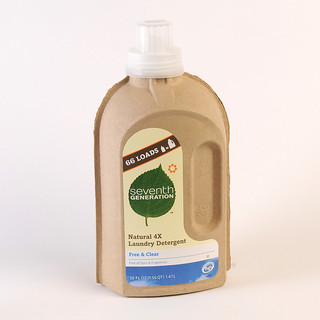
Natural Laundry Detergent, Free and Clear
Natural Laundry Detergent, Free and Clear (Photo credit: artizone)
#8.  Use natural cleaners.  Mainstream cleaning products contain a whole host of chemicals and fragrances that are harmful to our health, and if you’re going to get your children involved in cleaning and caring for the home, then they’re going to be exposed to those chemicals.  Opting for natural cleaners gets the job done while staying chemical free - it's healthy for you, for them, and for the environment. Many cleaning products can even be made at home using safe, natural, and cheap ingredients like baking soda and vinegar, so they can save you money too.

#9.  Breastfeed infants.  Breastfeeding isn’t just better for a child’s health, it eliminates the need to manufacture and distribute formula.  And when your other children see you breastfeeding their sibling, they begin to develop an appreciation for its practicality - and for the efficiency of nature to provide what we need.

#10.  Buy used.  Clothing, furniture and even kitchen appliances can all be purchased used. This keeps them out of the landfills, and it saves money and resources manufacturing and distributing these items.  And you save a bit of money too.

Being an eco-parent is really about adopting environmentally friendly practices that make sense for you and your family, and taking responsibility for your role in the natural world.  Your children will grow up knowing you thought it was important to conserve, preserve, and take care of their health, and the health of the world we live in, and hopefully they’ll adopt the same responsible philosophy as they grow into adults themselves.


Enhanced by Zemanta

Tuesday, December 24, 2013

Finding Eco-Friendly Christmas Decoration Ideas

Decorations can cause a lot of waste during the holiday season every year. Although many of us have decorations that we re-use every year, many stores are now stocking cheap, plastic decorations that wear out quickly and don't do anything to help the environment. Why not think about what kind of eco-friendly decorations you could use instead?

Natural Christmas Wreath
Natural Christmas Wreath (Photo credit: **Mary**)
Decorate With Nature

If you're in the market for new eco-friendly decorations then one of the best places to find them is outdoors. There are plenty natural items that you can use to decorate your home. And once Christmas is over, you can leave them to biodegrade naturally.

1. Pinecones: You'll often find these on the ground during the winter, so gather some for free - and without harming any trees in the process - and glue them to wreaths or other Christmas decorations.

2. Leaves: What better way to make your home look like Christmas than by using a variety of winter leaves? Ivy is just perfect for decorations: combine it with twigs and holly and you can create the perfect, homemade wreath.

3. Berries and Nuts: We all associate nuts and berries with Christmas, and thankfully nature provides them for free. If you can, gather some acorns and holly berries to add to your decorations this year.

One of the best things about using natural, eco friendly decorations is that it encourages you to get outside and experience the real beauty of winter. Not only this, but you can turn it into a project for the whole family to enjoy together.

Recycled Paper

If you and your kids like to make your own Christmas decorations, then using recycled paper can be a great way to go about it. Paper chains are a simple way to decorate the home, or you can use old paper scraps or even old cards or gift wrap to create snowflakes and more!

Christmas Tree & Lights

Christmas decoration at the Christmas Market i...
Christmas decoration at the Christmas Market in Aachen, Germany (Photo credit: Wikipedia)
Choosing trees that can be planted outside after Christmas is the most eco-friendly choice, and LED lights are the most energy saving way to light them. For ornaments, try making your own from recycled materials (old CDs, cardboard, fabrics and more), or even pretty food items like brightly colored dried peppers, popcorn, or cranberries, and add some organic, fair trade candy, too!

The key to using eco friendly Christmas decorations is to use natural, biodegradable materials wherever possible. When you do buy decorations, make sure that they are good quality and will be reused for years to come. And, if you have old decorations you no longer want, try donating them to ensure they still get some use instead of going into a landfill.

Have a wonderful, healthy, happy, and green Christmas!


Enhanced by Zemanta

Thursday, December 19, 2013

Green Christmas Presents Also Mean Green Gift Wrapping & Cards

Green Christmas presents aren't just about what you choose to give as a gift - it's also important to think about wrapping paper and even the greetings cards you're sending out. Christmas cards are a fantastic way to get in touch with people who you may not have spoken to for a while, and are perfect for sending good wishes to family and friends. However, the numbers quickly add up, and most of us will end up using huge amounts of card for these yearly greetings. There are ways in which you can minimize the environmental impact of the cards you send, and the gifts you wrap.

Make Your Own Cards

If you're really feeling creative then why not try making your own cards from recycled materials? You can use parts of old greetings cards, or scraps of card, to put together cards that are personal and fun. This is an especially good idea if you've got kids who enjoy arts and crafts!

You can also go digital and design your own cards on the computer. This can be another fun project for you or the kids and is an easy way to send out cards without wasting any paper at all! Save the paper cards for only your closest friends and family and you'll be helping to save a lot of trees this Christmas.

Wrapping Gifts

Traditional Japanese wrapping cloth,furoshiki,...
Traditional Japanese wrapping cloth. (Photo credit: Wikipedia)
A lot of gift wrap is difficult to recycle, especially since it gets torn up and thrown out with other trash! Try not to add to this waste by using recycled materials to wrap your green Christmas presents, such as old newspapers, magazines, old brown paper bags, pretty reusable cloth, or wrapping that you've saved from previous years. Most people won't mind you wrapping in this way - in fact, you can usually make it look unique and creative with a little effort! If you still want to buy wrapping paper, many stores now sell recycled wrapping options.

After Christmas

Once Christmas is over you'll likely be left with a huge number of Christmas cards that no longer have any use. It's important that you recycle cards as much as possible - whether this means re-using them for your kids' craft projects, or dropping them off at local stores who include a Christmas card recycling point.

Although these are easier to recycle, you should also try to save as many envelopes as you can when receiving cards. When it comes time to send cards again, you can reuse the better quality envelopes by using special “reuse labels” to cover up old details. This is a habit you can continue throughout the year, too!

You can also recycle or reuse holiday gift wrap. When unwrapping gifts, try to do it carefully rather than tearing it open and you can save it and use it again. This is the perfect way to turn the presents you receive into more green Christmas presents next year!

Enhanced by Zemanta

Thursday, November 28, 2013

Your Gifts Make a Difference This Holiday Season

When the holidays come around it’s easy to feel overwhelmed.  You want to show your appreciation to your clients and business associates, but the commercialism and potential for waste can leave you with a sense of guilt.  There’s a solution!  You can give gifts that make a difference in the world. 

Giving gifts that make a difference is a great way to not only feel good about what you’re giving, but also to spread awareness for your cause and potentially earn more respect in the eyes of your associates and clients. 

Here are just a few ideas on how to make a difference with holiday gifts - keep these in mind for Black Friday tomorrow, and the rest of your holiday shopping this year!

WFTO Fair Trade Organization Mark
WFTO Fair Trade Organization Mark (Photo credit: Wikipedia)
Give Fair Trade Gifts

Fair trade is a global initiative that works to ensure all people, artisans, farmers and locally-owned businesses around the world are treated fairly. That means pricing and production are fair as well as environmentally sustainable.  Fair trade products are labeled by the Fair Trade organization and can include items like:

* Coffee
* Chocolate
* Wine
* Artwork
* Textiles and things made from textiles including bags, blankets and so on

Give Recycled Gifts

No, we don’t mean re-gifting!  Recycled gifts are gifts made from recycled materials.  Some examples include:

* Desk accessories
* Bags, totes and portfolios
* Artwork

Give Environmentally-Conscious Gifts

Many products are now created with the environment in mind, for example solar lights, bags and accessories.  Plants are also a great environmentally-conscious gift to give, or shares in a farm or CSA program.

Christmas gifts.
(Photo credit: Wikipedia)
Give Gifts that Give Back

If you have a charity that you strongly believe in or a cause you promote, sometimes giving a gift that supports that cause or charity is a great way to share your passion.  Additionally, if your client or business associate is passionate about something, then contributing to that charity or participating in the cause may also be a great way to give a gift that makes a difference.

Giving a gift that makes a difference is a little more complicated than simply ordering a bunch of pens from the local marketing business.  However, you’ll feel good about your efforts and you’ll make a great impression.  Spend a little time, thought, and effort this holiday season and find a gift that makes everyone feel good! 


Enhanced by Zemanta

Tuesday, October 22, 2013

Which Is Greener - Handcrafted Furniture or Mass-Produced Furniture?

There’s a bit of a debate between furniture manufacturers, designers and environmentalists about which practice is most sustainable: handcrafted furniture or mass-produced furniture.  Let’s take a look at some of the pros and cons of each so you can decide for yourself.

Guadua furniture at the National Bamboo and Gu...
Guadua furniture at the National Bamboo and Guadua Investigation Center, Córdoba, Quindío, Colombia. (Photo credit: Wikipedia)
Handcrafted Furniture

When comparing handcrafted furniture and mass-produced furniture, you’re essentially comparing apples and oranges or perhaps organic apples and oranges.  You have to look at the variables for each to decide which is better.  Initially you might think that organic apples are much better than oranges; however, if they’ve traveled from Australia to land on your table in Chicago then there is a lot of energy used and pollution created on that trip.  The same holds true for furniture.

Handcrafted furniture is the best bet if it’s created with reclaimed or sustainable wood.  For example, bamboo is a sustainable wood because it grows quite quickly and can be harvested from bamboo farms without destroying forests.

Additionally, handcrafted furniture is better if it’s stained or painted with VOC-free or low VOC finishes.

Is it upholstered?  If the answer is yes, then handcrafted furniture would be considered better than mass-produced if the upholstery is reclaimed, recycled or some type of organic and environmentally-friendly fabric.

Finally, where did that piece of furniture come from?  If it was shipped to your community all the way from China then that presents some environmental challenges because the shipping will use up all sorts of fossil fuels and pour carbon emissions into the atmosphere.

So is mass-produced furniture the answer? 

English: Eletrical wire reel used in MORAR MAI...
Project made by Dama Design to show overall concern with ecodesign and reuse of materials. (Photo credit: Wikipedia)
Generally, no.  In most cases, mass-produced furniture commits all of the above environmental sins and then some - including unsafe manufacturing processes, environmental pollution, chemical pollution and more.  However, as people become more and more conscious and particular about what they buy and how they contribute to the environmental situation we’re in, more and more manufacturers are answering the call.

Mass-produced furniture can be green.  It can be made with recycled materials, it can be finished with environmentally-friendly paints or stains and it can be created locally.

One way to make sure your mass-produced furniture meets sustainability standards is to check to see if the manufacturer is recognized by the SFC or Sustainable Furnishings Council.  They have a rigorous life-cycle analysis and if your manufacturer meets their approval it may very well be better than that handcrafted piece of furniture.  You can check the Sustainable Furnishings Council website to find out if a retailer or manufacturer meets their criteria. (For more about the SFC, check back for Thursday's post.)


Enhanced by Zemanta

Thursday, September 26, 2013

How to Recycle E-Waste - Tips for Safely Disposing of Electronics

E-waste is the latest term for all your leftover electronics.  With technology progressing so fast, many people have tons of old TVs, computers, cell phones, and other old stuff just lying around the house which are no longer being used.

English: Pile of e-Waste / Electronic waste: A...
Pile of e-Waste / Electronic waste. (Photo credit: Wikipedia)
Although it may seem like the easiest solution, it’s important not to just throw your electronics away.  They contain harmful chemicals and heavy metals that can fill landfills and pollute the environment around them.  These materials can pollute the air, water, soil, and potentially harm other living creatures including you and your family.  In fact, in many places, it is illegal to throw these items away.  There are quick and easy ways to reuse and recycle your electronics that are safer for the world around you.

It generally isn’t too difficult to find a local place to recycle your junk.  Some places, particularly in areas where recycling is mandatory, have drop off sites, but if not there are generally businesses that will have recycling events or will take the waste all the time.  They are willing to recycle for you because it gets you in the door of the store.  If no one is advertising recycling in your area, ask at local electronic stores.  If they don’t recycle, ask if they know who does.

There are also quite a few places that offer to recycle your ewaste, but be wary of what is happening to it once it gets into their hands.  Many companies have large collections only to simply send the products overseas to be thrown in landfills there.  This not only harms the environment, it can also harm the people in that area that don’t have the same standard of living as we do.  Be sure to look into the place that is claiming to recycle your old stuff.

English: SAN DIEGO (May 13, 2010) Workers gath...
Workers gather computers, printers, and other electronics during Ewaste at Naval Air Station North Island. (Photo credit: Wikipedia)
If you don’t want to just recycle your ewaste, why not do something good with it by donating it to a charity?  There are many charities now that will take your old cell phones and recycle them, then use the money to support a cause - often something environmental.  You can research these organizations online, or even look around in your local community.  A local zoo or nature center is a good place to start asking.

While many people rush to recycle their old ewaste, if it still works, or even if it doesn’t, you may consider selling it or donating it to a local charity.  Just because an electronic device isn’t the newest, latest thing doesn’t mean that someone doesn’t want it.  TVs can be used by families in need to stay up on the news, and old computers, even if they’re not working, can be taken apart and used for parts. 

If you don’t believe people will want your “ancient” electronics, do some quick searching on YouTube.  People are using electronics for tons of crazy things nowadays, from art to planters and more.  If you want an idea on whether you can sell it or should just give it away, do a quick search on eBay and see what similar items are going for.

By taking a bit of extra time to recycle your old electronics, you’ll be doing the environment a world of good, and might make a little money for yourself in the process.

Enhanced by Zemanta

Tuesday, September 24, 2013

How to Safely Recycle Batteries

This week we've reached the third "R" - the one that is the most talked about these days - and of course that's recycling (if you've missed the first two - reduce and reuse, those are especially important, so be sure to check out our earlier posts in the series). Once you've done everything you can to reduce your production of waste, and reuse or re-purpose whatever you can, now it's time to recycle whatever's left. (Oh yes, and of course don't forget when it comes to kitchen and food waste, the ultimate and best form of recycling is composting! We talk a lot more about that on our sustainable gardening blog, so be sure to check that out as well - just click any of the tags below the article to pull up more articles on that topic.)

By now, most people are pretty familiar with how to recycle plastic, paper, and glass, but what about electronics and batteries? This week we'll focus on these newer and trickier categories of recyclables, and how you can keep these items and their potentially dangerous chemical ingredients out of our landfills.

Electric batteries.
Batteries. (Photo credit: Wikipedia)
Many people don’t think about it all that much and just throw batteries away.  This is not only bad for the environment, it’s also dangerous if kids or pets get into the garbage and get a hold of them. We all know not to even touch battery acid if it leaks, so why would we just throw these toxic chemicals out into the landfill where they can leach into the soil and groundwater?

In addition to battery acid, the metals of batteries can be dangerous when left to leak into the soil.  Heavy metals can get into your soil, water and even into your food. 

Instead of throwing out your batteries, you can simply recycle them.  This keeps those dangerous poisons out of the environment and reduces the amount of trash in landfills.  In fact, many places now consider batteries a form of hazardous waste and prohibit them being thrown away; however, even in these areas, very few batteries are being recycled.

If you get a large battery replaced, like in your car or boat, make sure you know what’s happening to your old battery.  While it may cost you a small fee, you should be able to ensure your battery is properly recycled after it’s taken out of your vehicle.  There are many companies that now offer services to help companies recycle batteries.  You can find a place that already recycles, or encourage your mechanic to do so.

Other batteries might take a little more effort to recycle.  You will likely need to take them to a hazardous waste recycling station.  While you may not have a clue of where to find them, a quick online search will help you find local drop offs where you can take your batteries.  If it’s far away or a bit of a hassle to get to, you can have a place in your house to store dead batteries until you have enough to take over.  Just remember not to let them sit too long because they can begin to deteriorate and become dangerous.

You may also find that local businesses will recycle batteries for you.  There are companies that will set up recycling for businesses for a low price, so they may offer to recycle for you if you can get your batteries into the store.  If you look around, you may find a convenient location so you don’t have to go all the way to a recycling center.

English: Rechargeable batteries Português: Pil...
Rechargeable batteries. (Photo credit: Wikipedia)
And when it comes to household batteries, why not just use rechargeables?  Sure, you’re going to eventually have to throw them away, but throwing away one set of batteries is a whole lot less of a mess than throwing out fifty.  It used to be the case that rechargeables were a pain to charge up and didn’t last long, but technology has improved significantly.  Now you can get speed chargers that get your batteries fully charged in just a few minutes and last as long as a regular battery.

Once you’ve safely recycled your batteries, keep going.  Everything in your home from electronics to fluorescent light bulbs can be recycled to provide us with a safer, cleaner world.  So start researching and get recycling!

For how to recycle electronics, be sure to check back Thursday.

Enhanced by Zemanta

Tuesday, September 10, 2013

Reduce: Five Ways to Cut Down On Packaging

This month we're doing a short series on the "3 R's" - Reduce, Reuse, Recycle. Growing up surrounded by nature, even as a little kid I was very environmentally conscious. I read environmentally aware magazines, from Ranger Rick to National Geographic, created artwork on environmental themes, and pasted stickers about recycling in my notebooks and on my bedroom walls. I knew about the three "R's" from about the age of 8!

The waste hierarchy refers to the "3 Rs&q...
The waste hierarchy refers to the "3 Rs" reduce, reuse and recycle, which classify waste management strategies according to their desirability. The 3 Rs are meant to be a hierarchy, in order of importance. (Photo credit: Wikipedia)
These days recycling has become somewhat of a buzz word, but we shouldn't forget the first two - reducing your waste and reusing what you can are even more important. Recycling uses energy and can create its own waste products. So be sure you check off the first two "R's" before you move on to recycling as the last resort. (See the waste hierarchy example to the right.)  This week we're talking about the first and simplest step in terms of energy consumption and effort - reducing your consumption and production of waste.

It’s amazing how much packaging it takes to ship something.  Even something as simple as a book takes a box, shrink-wrap and something to fill the empty space between the box and the book - typically bubbles, foam peanuts or shredded paper.  Where does all this packaging go once you’ve received your item?  For most people it goes in the garbage - unless you're like me, and you save most of your packaging to use the next time you ship something (we'll talk more about reuse next week).  And we haven’t even mentioned the packaging of food and items purchased locally in your every day shopping.  Here are five ways to cut down on packaging and save resources.

#1.  Buy in bulk.  Whether you’re buying books online or cereal at your grocery, when you buy in bulk you cut down on packaging.  Think about it - if you buy one book at a time online then you’re going to receive a box for each book and all the packaging that goes along with shipping that item.  When you buy a regular box of cereal, you consume it and toss the box.  However if you buy a bulk box of cereal it may last as long as three regular boxes of cereal - you get more cereal and less packaging.

#2.  Buy from retailers who package using reusable or recyclable materials.  And when you’re shopping, use reusable or recyclable containers.  This trend is really catching on.  Stand in any grocery store line and you’ll see people shopping with reusable shopping bags - that’s an example of cutting down on packaging because you’re not taking dozens of plastic shopping bags home.  As a mail-order small business owner, I save packaging and reuse it for shipping items to our customers as much as possible. In fact, I haven't bought packing material (other than boxes) in almost 10 years!

Additionally, some retailers who manufacture and distribute processed foods are beginning to package them in reusable and/or easily recyclable containers to minimize landfill waste. And when it comes to books, why not go electronic and buy books with Kindle or another similar reader. You can even download e-books for free from some public libraries now! Not only will you reduce packaging, you'll also cut down on clutter from all those stacks of books that tend to accumulate around the house.

PackagingExceedExample
Food Packaging (Photo credit: Wikipedia)
#3.  Don’t buy prepackaged foods.  Juice boxes, for example, are incredibly useful; however, a large bottle of juice is a more sustainable practice and you can just as easily pour a serving into an aluminum water bottle for your children to enjoy.  You throw away less waste. Obviously we talk a lot here about the impacts of processed foods on your health, and the importance of preparing your own meals at home, so this is just another reason to learn to cook from scratch yourself! When it comes to groceries, shop as much as possible at local farmer's markets and CSA programs - not only will you be consuming much better quality food, but you'll drastically cut down on packaging materials.

#4.  Buy used.  Used products rarely come packaged.  You just pick them up as is from the store.  No packaging, no waste. And you can often save quite a bit of money as well.

#5.  Barter and/or trade items rather than shopping.  Bartering and trading for products is a great way to save money and conserve resources.  Many people are forming book swap groups to save money and materials by simply sharing books.  And some people are banding together to share clothing and other items. This can also be a fun way to connect with other like-minded individuals, which is important in helping you feel connected and supported in your community.

Packaging does more than fill landfills; it costs money and resources to produce - and even to recycle.  When you take a few simple steps to cut down on packaging you’re having a significant effect on your environment.  You’re making it a better place to live for you and for future generations. 

Enhanced by Zemanta

Thursday, May 30, 2013

8 Tips for Recycling at Work

There was a time when recycling just wasn't a priority for most people. But with increased awareness of its environmental benefits and greater access to recycling facilities, many households are making it a point to recycle anything they can. This has made a huge impact on usage of energy and natural resources.

Businesses, on the other hand, have not taken to recycling like individual consumers have. Manufacturing operations often recycle scraps in order to save money, but they often fail to recycle things that they themselves can't reuse. And other businesses frequently do not recycle anything at all.

English: Recycling Português: Reciclagem
Recycling Bins. (Photo credit: Wikipedia)
Businesses may be reluctant to start recycling programs because they do not want to use company resources to administer them. It's often up to employees to suggest recycling, and they may even have to volunteer to oversee it. If you're interested in starting a recycling program at your workplace, here are some tips to help make it a reality.

1. Schedule a meeting with your boss. If you just mention recycling in passing, there's a good chance you'll be ignored. But if you set up a meeting and make a convincing presentation, your boss is more likely to take you seriously. If you can get some co-workers to help you out, that's even better.

2. Point out the benefits for the company. Recycling can save your company money, and it can enhance its image as a responsible corporate citizen. These are the types of arguments that those in charge are most likely to listen to.

3. Prepare a plan for recycling. Research recycling service providers, and come up with some ideas about how to operate the program. Your boss will have the final say, but if you do some of the legwork for him, he is more likely to give his approval.

4. Volunteer to help get things rolling. If you're willing to aid in setting up a recycling program, that's one less thing your boss has to deal with.

Once you've gotten approval, you'll need to spread awareness and make sure that as much waste as possible is recycled. Here are some suggestions that will help.

English: Recycling bin
Recycling bin sign. (Photo credit: Wikipedia)
6. Make sure employees understand what can and cannot be recycled. Have a meeting to discuss this and answer any questions if possible. If not, send out an email with guidelines and make yourself available to those with questions.

7. Post recycling rules in a conspicuous place. It's easy to forget what is and isn't recyclable. Making that information readily available will increase participation rates.

8. Place recycling containers in convenient places, and mark them clearly. Those who can recycle without giving it much thought are more likely to do so than those who have to seek out containers.

Recycling at work is good for the environment and your company. It may, however, take some convincing to get the approval of the higher-ups. But if you make a solid case and do everything you can to help get a recycling program going, it will be hard for them to say no.

Enhanced by Zemanta

Tuesday, May 28, 2013

Recycling 101 - How, Why and What to Recycle

Most of us want to recycle.  However, understanding what’s recyclable and what isn’t can be overwhelming.  Some communities offer support including bins to sort your items in and clear definitions about what is acceptable.  Yet other communities leave their residents more or less alone to figure it out for themselves.  Regardless, here’s the low-down on how to understand recycling and what to do with those extras like cell phones, paint cans and computers.
What is Recyclable?

Essentially just about everything is recyclable however, most recycling programs divide items into four main categories:

* Paper
* Plastic
* Metal
* Glass

Paper items include newspapers, magazines, paper bags, books, cardboard and cardstock.  Just about any type of paper can be recycled and most programs do not limit types of paper however, some do not take cardboard or glossy magazines - check with your local recycling program to be sure.

Plastic is typically where it gets confusing.  Here’s a basic rundown of plastic types and how they’re labeled for recycling.

Resin identification code 4 for low density po...
Resin identification code 4 for low density polyethylene (LDPE) (Photo credit: Wikipedia)
1. PET (polyethylene terephthalate): Soda and water bottles are made from this type of plastic.

2. HDPE (high-density polyethylene): Milk, juice and detergent bottles are made from this type of plastic. 

3. PVC (polyvinyl chloride): Plumbing pipe, shower curtains, and some plastic toys and infant materials.

4. LDPE (low-density polyethylene): Grocery bags and food wrap are made from this plastic

5. PP (polypropylene): Many food storage containers are made from this type of plastic.

6. PS (polystyrene): Also called Styrofoam, this plastic is used to make take out containers, cups and packing materials.

7. Other: Anything labeled 7 cannot be recycled.  This includes many squeezable bottles, older reusable water bottles and dishes.  This type of plastic leaches Bisphenol A, which is toxic and best not to be used anyway. 

Metal items include tin food cans, which commonly hold tomatoes, beans, and other vegetables, as well as soda cans and coffee cans.

Glass items include any glass bottles or jars. However, some recycling programs only take certain colors of glass, or may require the colors to be sorted separately, so check with your local area recyclers if unsure.

English: glass and plastic (bottles) recycling...
Glass and plastic (bottles) recycling in Poland.(Photo credit: Wikipedia)
For those extra items like cell phones and computers or items like paint cans or car batteries, check with your local recycling center to find out if they offer special drop off days.  If they do not, often you can find recycling businesses in your community.  They may charge a small fee but it’s better than tossing them into a landfill.  Online you’ll also find many companies that will actually pay you for your used cell phones and computers. 

Preparing Items For Recycling

The steps to recycle and to prepare your items are easy. In most all cases, you need to simply wash them.  Don’t worry, you don’t have to scrub them clean, a simple rinsing will get the job done.

Remove caps from plastic and glass items.  They’re not recyclable - unless you have a specific source that you know will take them.

Recycling is a relatively easy way to be environmentally conscious.  If your community doesn’t offer curbside service then a sorting bin and a monthly trip to the recycling center while you’re running other errands will get the job done without too much time and effort.  Don’t let recycling intimidate you, it’s easy and well worth the effort.

Enhanced by Zemanta

Tuesday, May 21, 2013

Kitchen Refit – Making Your Kitchen Greener

Are you thinking of going green in your kitchen? Maybe you have already gone green in your cooking or other lifestyle habits and want to extend that to the kitchen. Whatever your reasons, here are some ideas for ways you can make your kitchen green.

Remodel Your Kitchen

This is the big one! If you are able, this is a fabulous way to green your kitchen. Here are some things to look at when you remodel.

English: Compact fluorescent light bulb
Compact fluorescent light bulb (Photo credit: Wikipedia)
* Lighting - When you remodel, you can arrange for more eco-friendly lighting. Skylights are ideal, but you can also make the most efficient use of energy-efficient lighting such as CFLs (compact fluorescent lights) or LEDs (light emitting diodes). And a remodel can also open up space and let in more light from the existing windows.

* Appliances - Replacing your old appliances with energy-efficient ones helps your green efforts. Before tossing out your old appliances, though, make sure they really are less efficient. If not, then it would be less wasteful and worthwhile to have them refurbished. If you do decide to discard your old appliances, donate them to Habitat for Humanity or other charitable organizations.

* Flooring - Choose natural, sustainable flooring material like cork, bamboo, mango wood, linoleum (not to be confused with synthetic vinyl flooring), or eucalyptus wood. Natural tiles are also good choices, as are tiles made from recycled rubber. Be sure to dispose of your old flooring responsibly - contact your solid waste authority to see if it can be recycled or donated. 

* Countertops - There are lots of green options for countertops. You can do mosaic tops on your existing counters, or replace them entirely with something eco-friendly like PaperStone or mango wood. Again, donate or recycle your old countertops.

A small, modern kitchen with popular stainless...
(Photo credit: Wikipedia)
* Green Extras - If you remodel your kitchen, you can arrange to have a worm compost bin built right in, as well as convenient recycling containers.

Save Water

We use a lot of water in the kitchen. Go green by saving water in the kitchen - install low-flow aerators or faucets, pre-rinse your dishes in a sink full of water rather than under running water, and turn off the water when you are scrubbing pots and pans. If possible, use rain water to rinse dishes. And when you rinse vegetables and fruits, use a pan of water and then pour the water on your plants in your sustainable garden.

Save Energy

Little things can add up to make your kitchen greener. Even if you have energy-efficient appliances, that doesn't mean it's acceptable to waste. For example, don't hold the refrigerator door open, and don't open the oven when something is cooking inside. And last but not least, only run your dishwasher when it is full.
Enhanced by Zemanta

Monday, March 25, 2013

How to Have a Zero-Waste Easter Party

In preparation for Easter, we're taking a short break from our Going Organic series - but don't worry - we'll be back next week to wrap up!

This week we'll be sharing some fun and eco-friendly ways to celebrate the holiday in ways that are healthy for both you and the planet. Easter is a time of celebration and renewal. It’s also a great time to embrace earth-friendly practices. If you’re throwing an Easter party, you can make it a green one by having a zero waste party. Here’s how.

#1.  Use E-Vites. Invitations can now be sent via email. There are some extremely useful programs you can use online. These programs allow you to send email invites quickly and easily. They also keep track of who RSVP’d and many offer a message board so people can ask questions about the party. Electronic invitations mean you don’t have to use any paper or ink. They’re 100% electronic. A couple of the more popular ones are Evite.com, and Eventbrite.com. And if you have people you want to invite and they don’t use email, consider giving them a phone call.

Please Recycle Label
Please Recycle Label (Photo credits: www.recyclereminders.com)
#2. Use  Recycled or Reusable Party Ware. Plates, napkins, glasses and all party decorations can be made from recycled materials. You can also use your own every day real or reusable dishes, or if you’re going to have a large party, consider renting dishes. You can also buy compostable party ware, like plates and cups made from corn.

#3.  Make Your Own Decorations. Easter time is spring time and it’s a great opportunity to decorate naturally. That means you don’t have to buy pre-made decorations. Consider using naturally dyed eggs, real grass, and twig branch baskets for decorations. Cut flowers for a spring touch and place them in vases. If you want to create Easter grass for baskets or decorations consider shredding magazines or using vegetable dye on papers in your recycled bin and then shredding them. Beet juice makes a beautiful natural pink color! 

#4.  Make It A Pot-Luck. Instead of cooking everything yourself or getting takeout, consider asking attendees to contribute a dish to the party. It means there’s less work for you and everyone feels as if they’ve contributed to the festivities. Let them know you’re having a zero waste party so they can be sure to bring food in recyclable or reusable containers.

#5. Compost Leftovers. Composting is a great way to make use of leftovers and you can use the finished compost to help indoor and outdoor plants thrive - use it in your sustainable garden to grow great food organically!

Easter party, New Orleans, Louisiana. Coloring...
Coloring Easter eggs. (Photo credit: Wikipedia)
#6.  Play Games. Games make a party fun. Easter egg hunts with real eggs instead of plastic ones are a zero waste game. The kids will love helping dye them the day before! Or have the eggs already boiled and cooled, and make the dyeing part of the party! Charades and scavenger hunts also have zero waste.

#7. Make Natural, Earth Friendly, Crafts. In addition to using games to keep children occupied consider having an earth friendly craft for kids to do. One example might be for children to decorate a tin. You can have seedlings, potting soil and paint on hand. They can decorate the can, choose their plant and take it home. It’s a zero waste craft and a nice goodie to take home from the party. Felted Easter eggs are also a fun craft for kids that they can take home with them - check back for Wednesday's post for how-tos.

#8.  Recycle.  Be sure to recycle anything that cannot be reused. For example, if you purchase soda or juice for the party you can recycle the containers. Or you can use them to create compost scoops, bird feeders, or planters.

Easter is a great time to be environmentally conscious. When you throw a zero waste party you’re not only doing something nice for the planet you’re also getting others involved in the cause. You’re setting a good example for your own family and others. If everyone does their small part it makes a huge difference - plus it can be a lot of fun!

Enhanced by Zemanta