Showing posts with label going organic. Show all posts

Friday, April 5, 2013

No More Excuses: If You Want Organic Living, You Can Have It

We’ve covered a lot over the past month, that’s for sure. If you’re feeling any information overload or are concerned about the choices you’ll make from here, just keep this in mind…

Just one small step to more healthy living is an important one. And as you make each new step, the next one becomes even easier. You don’t have to have all the answers before you start because you’re going to learn as you go along. And besides, only you can decide what is right for you.

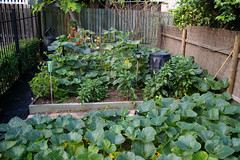
A small vegetable garden in May outside of Aus...
A small home vegetable garden. (Photo credit: Wikipedia)
Whether you start a vegetable garden, decide to raise chickens or rework your budget so you can start eating more organic foods, these are all steps in the right direction.

Start by looking at local resources in your neighborhood. Look for farms, you-picks, seed banks and even educational opportunities available to improve your lifestyle. Some of the resources I’ve mentioned in the past few posts that might help you include:

- The EWG Dirty Dozen - find out which fruits and vegetables are most likely to have the highest and lowest use of pesticides.

- Find farmer’s markets, restaurants and grocery stores that sell organic food.

- Look for you-pick opportunities – just check if they’re organic.

The next step is up to you. I know you’ll be glad you took it.

And be sure to stay tuned to this blog every week for more tips, articles, and resources on healthy, holistic living!

Enhanced by Zemanta

Friday, March 1, 2013

Video - Growing Your Own Food In Suburbia

This is a pretty cool video about the benefits of growing your own food - no matter where you live. Instead of a lawn, John grows an amazing amount and variety of vegetables outside his small suburban home. It really is inspiring to see how much food you can grow on just 1/10 of an acre with smart and creative use of space! From saving money, to improving the quality of your health through fresh and nutritious food, to environmental benefits, growing your own food is an amazingly beneficial way to have a positive impact on your life and the world around you.

Suburban Homesteading Edible Victory Garden Edible Estate on 1/10th of an Acre
John shares with you his suburban homestead where he is growing the majority of his food. Remove your lawn and grow food. Start your victory garden today! See what he has done with only 1/10th of an acre of land.


Enhanced by Zemanta

Wednesday, February 27, 2013

Organic Gardening for Beginners

If you enjoyed Monday's article on growing your own food, we thought we'd continue the theme today by sharing some more tips on getting started with organic gardening. If this strikes your fancy, be sure to check out our Sustainable Gardening blog for ongoing info on this subject.

If you decide to grow herbs and vegetables in your own garden, then you will have the satisfaction of knowing that you have not sprayed poisonous pesticides anywhere near them. You can eat your own home grown food without worrying about what has been done to it.

English: The aromatic herb garden, with exampl...
The aromatic herb garden. (Photo credit: Wikipedia)
In fact, herbs are some of the easiest things to grow, so we strongly recommend growing some herbs when you are starting out with gardening if you're a beginner. You can either put them in a sunny spot in the garden, or have them in containers outside, or even on the windowsill indoors. Most herbs are small enough for this, and you will not need to grow large quantities because you will only use a little in cooking. It is so rewarding to be able to taste your own home grown organic herbs in the delicious dishes that you prepare in your kitchen!

So what is the first thing to do when starting your own organic garden? You will need to prepare a small garden plot. You can do this by hand digging, with the use of a machine, or use the no-dig method. If the land that you are working with is overgrown and has never been used for a garden before, you will probably need to hire a machine. Otherwise, start small by digging a manageable area. Or, if you would like to try gardening without digging, try the lasagna gardening method. This is pretty easy for beginners, and you can use it in areas that have never been gardened before.

Then you can start planting. Be sure to choose correct plants for the season. Whatever time of year it is, in most areas you can find something that can be planted right now. Choose plants whose colors or fruits you will enjoy, and don't plant them too close together.

If you have just moved to a house that already has a garden, the first thing that you should do is try to identify all the plants that are there already. You can draw a plan of your garden and write down all of the names. If you have a wireless internet connection, the easiest way to identify the plants is probably to take your laptop into the garden and call up some pictures of popular garden plants and weeds. Then you can pull out anything that is obviously a weed.

IMGP0854 - vege garden
(Photo credit: RaeAllen)
The first year in your new garden, you may want to wait and see what comes up. Don't start pulling leaves as soon as you see a weed, but wait until it is large enough that you can be sure what it is. If the land has been cultivated before, there may be some valuable self-seeding annuals that will surprise you!

Of course, if you simply avoid using chemical pesticides and fertilizers then technically your garden will not be organic. For that, you would need to use organic seeds too. These are available from many online suppliers. But if you can't find them, don't worry about it too much - most of what matters is what is in your soil, and what you put in the garden yourself which the plants will absorb.

Gardening is a wonderful activity that keeps you fit, makes your home more beautiful and brings an aspect of your life into harmony with nature. Gardening for beginners the organic way can be one of the most rewarding hobbies that you could imagine.

And if you're wondering about growing other foods yourself, besides vegetables and herbs in the garden, be sure to check back next week when we're going to discuss raising your own chickens!
Enhanced by Zemanta

Monday, February 25, 2013

The Simplest Way to Go Organic: Grow Your Own

Whether you’re on a budget, aren’t sure of the authenticity of local organics or both, the surest and cheapest way to get good organic food is by growing your own.  And growing your own can be as simple or as involved as you want.

If you’re a first-time gardener, the trick is not to overwhelm yourself. Keep your garden relatively small, but leave room for expansion when you’re ready. A family of 4 can start with about 200 square feet (approximately 50 square feet per person) and have a great supply of produce. But if you don’t want to start that big, don’t. Do what you’d like and what you can.

Green common beans on the plant.
(Photo credit: Wikipedia)
If you don't have a lot of space, containers work well. Root vegetables may not be possible but some people report great success in growing potatoes in compost bags or buckets. Other traditional container fare includes tomatoes, cucumbers, green beans, carrots, peppers, strawberries, blueberries and herbs.

If you are growing directly in the ground, there are a couple of things to consider.  First, is the amount of sunlight. The second is soil quality.

For sunlight, you should find a space that gets full sun. That’s about 8 hours of sun each day. Some items may need a little less sun, but 8 hours will help you grow a large variety of crops.

For soil quality, you are looking for a pH of about 5.8 – 6.8 and you can buy an inexpensive testing kit at a garden store. You can increase pH, or correct acidity, by adding limestone. To decrease pH, or to correct alkalinity, use elemental limestone. Also, ensure that you have plenty of organic material in your soil and add leaves and compost to help. (See our sustainable gardening blog for some more tips on soil pH.)

If your soil isn't quite right, you can make raised beds and surround them with bricks or stone to contain the nutrient rich and balanced soil.

English: Young Calabrese broccoli plants with ...
Young Calabrese broccoli plants. (Photo credit: Wikipedia)
When you’re ready to start planting, consider planting some plant starts, instead of seeds. They may be a little more difficult to find organically, but for first time growers, they’re much easier to work with.

Make sure to water your plants regularly. Seeds should be watered daily. New plants should be watered every 2-3 days. On particularly hot days, you may need to do more. You can even collect rain water for your plants by using rain barrels or creating your own from garbage pails.

Organic herbicides don't work that well. Instead, take the time to pull weeds, ensuring you grab the weeds fully by their roots or they will continue to grow. Weeding regularly will keep them from maturing and becoming problematic...plus it makes your whole job quicker and easier.

As you go through your gardening journey, keep a record. Write down dates things are planted, how they are treated and progress. Take weather and other conditions into consideration. It will allow you figure out what worked well and help you improve your gardening techniques, year after year.

You may not feel like a green thumb now, but keep at it. It’s so worth it.

Visit http://www.newholisticliving.com/sustainablegardening.html for more info on growing your own organic and sustainable garden. And be sure to check out our Sustainable Gardening blog for all kinds of gardening tips, tricks, ideas, videos, and helpful resources!


Enhanced by Zemanta

Wednesday, February 20, 2013

Organic Milk vs. Regular Milk - What's the Difference?

If you’ve done any research into organic milk, you’ll find many articles claiming that there is very little difference in the quality of the product when compared to regular or conventionally-produced milk. This research is based on the study of the end product, but in order to make an informed decision, you need to investigate the way milk is produced.

You may have also seen dairy labels that say “rBGH-Free” or “rBST-Free” and immediately below, you’ll inevitably see the disclaimer, “No significant difference has been shown between milk from rBGH [or rBST] treated and untreated cows.”

English: Trader Joe's organic milk label
Trader Joe's organic milk label (Photo credit: Wikipedia)
This disclaimer a result of a lawsuit Monsanto (remember them?) brought against Maine’s Oakhurst Dairy. In the lawsuit, Monsanto objected to the use of the statements “rBGH-Free” or “rBST-Free” because it implied that these things were undesirable.

See, Monsanto created this synthetic hormone that basically forces cows to produce more milk and for longer periods of time, and they wanted to protect it. (The hormone is actually banned in Canada, Australia, New Zealand, Japan, Israel and a number of European countries.) Thank goodness, public pressure has also pressured some retailers not to sell milk made with the hormone.

These hormones do cause the cows to produce more milk, but they cause a number of problems for cows, including a higher rate of mastitis, which is an inflammation/infection of the udder, often caused when milk supply is not fully expressed. To help prevent mastitis and the resulting pus that gets in the milk supply (yes, I said pus - in your milk - how gross is that?!), cows are given a large amount of antibiotics, adding even more foreign substances to our milk.

Then when milk is ready to be processed for human consumption, it goes through pasteurization. Milk is pasteurized to kill potentially harmful bacteria that are introduced to the milk directly, like from a less than sanitary collection process.

But one of the worst things about the pasteurization process, which most people don't realize, is that it kills the nutritional value in milk and instead of just getting rid of harmful bacteria; it also gets rid of beneficial bacteria. The sad thing is many minerals and vitamins are added in after the pasteurization process when they were already found in the milk naturally, but removed by processing. Add to that, pasteurization has been linked to allergies, poor digestion of milk products and even heart disease. (See extensive research by the Weston A. Price Foundation for more on this.)

So does organic milk solve these problems?

Well, it’s really not that simple, so let’s walk through it.

Cows that produce organic milk are grass fed, rather than fed unnatural grains like their conventional counterparts. That’s a good start. They are also hormone and antibiotic free, so that’s another check in the column for organic. The cows are a lot healthier, which means fewer bacteria in the milk, much lower rates of infection, more nutrients in the milk, etc. The problem is, a lot organic milk is also pasteurized, killing nutrients and making it harder to digest, as we just discussed regarding conventional milk above.

A bottle of green-top (raw, unpasturised) milk...
A bottle of green-top (raw, unpasturised) milk". (Photo credit: Wikipedia)
Your best bet really is to purchase raw organic milk, if you can find it. Raw milk contains more minerals and vitamins than pasteurized milk. It also has 20 amino acids and contains beneficial enzymes and bacteria, which makes it much easier on the digestion, and more easily tolerated - sometimes even those with long-term milk allergies can drink raw milk with no ill effects. It can be expensive, but it’s milk in its natural form and provides the most health benefits. The problem is it isn’t available everywhere, and is actually only permitted for sale by law in 28 states, so it’s not always easy to find. Herd shares are becoming more popular in other states, as they allow you to own part of a share in a cow (or cows) - including their milk production. For sources of raw milk in your area, visit the Weston A. Price Foundation website: http://www.westonaprice.org/

But when you can’t find raw milk or if it’s cost-prohibitive, you may want to consider what you’re putting in your body when you consume regular milk. Going organic doesn't solve all the problems, but if it's all you can find, it's definitely a start.

Enhanced by Zemanta