Showing posts with label eco-friendly house. Show all posts

Tuesday, August 20, 2013

Return to Nature With Amazing Tree Houses

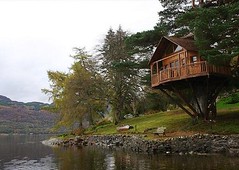
Did you ever have a treehouse when you were a child? Treehouses have come a long way since then! Now entire families can live in a tree house that is remarkably modern and comfortable. Here are some examples of treehouses, and why it is a viable choice for some.

tree houses
(Photo credit: joanneteh_32(On Instagram as Austenland))
The Philosophy

A love of nature is what often inspires builders, manufacturers, and owners of treehouses. After all, living in a tree is living close to nature - surrounded by it, in fact. And tree houses use the natural structure of the tree to support the home's structure. They like the "living" nature of the treehouse that moves and creaks in the wind.

Active people enjoy the treehouse lifestyle, too. You have to hike through the woods even to get to some treehouses, and then there's the ascent up into it.

However, there are luxury treehouses, too. Those who have the money may commission amazingly modern, luxurious treehouses that are only called "treehouses" because they are in a tree! They are not simple, primitive structures. Some of them have pools, media centers, ornate bathrooms, and other amenities.

When you were a child, "escape" was what the treehouse was all about. It still is for some. Many people like living "above it all" where they feel fewer distractions.

The Houses

There are so many different designs of treehouse available today. Thanks to advances in technology, building techniques, and design, the types of treehouse available are limited only by the imagination it seems. Some examples include:
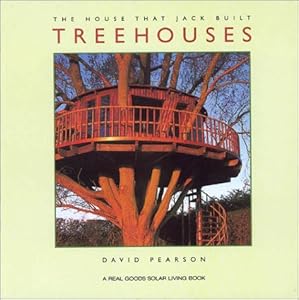
Cover of "Treehouses (The House That Jack...
Cover via Amazon
  • Bed & Breakfasts - For those who just want to live in a treehouse temporarily, there are bed & breakfasts that are built in trees. Usually, the B&B specifies what kind of physical shape you must be in to comfortably stay there. Some of them require people to be in good physical condition to get there. Hiking and rafting are often required to reach the B&B itself.
  • Studios - Some artists and others enjoy a studio in the trees. There, they enjoy a sense of escapism and privacy. Treehouse studios usually have large windows and a lot of natural light.
  • Family homes - Some treehouses are simply family homes. They are not necessarily unusual designs; many look just like a regular house sitting in the trees.
People build treehouses for all kinds of reasons. One thing is noticeable, though, and that is the recent resurgence in this nostalgic, yet modern, form of house. Whether they are right for your family home or not, they are certainly fun to look at and visit!
Enhanced by Zemanta

Monday, May 14, 2012

How to Design an Eco-Friendly and Stress-Free Home

Our priorities are changing.  More and more, people are looking for simpler and conscientious solutions, while at the same time wanting to live in a home that is a sanctuary.  If you’re looking for eco-friendly design ideas to improve your home and reduce your carbon emissions, you’ve come to the right place.  This week we will cover a few of the available options for environmentally friendly (and often quite affordable) modifications to your home. This article looks at 5 quick, easy and economical eco-friendly design options.

Passive solar heating illustration. Polski: Sc...
Passive solar heating illustration. (Photo credit: Wikipedia)
#1  Use passive solar.  The sun has tremendous capabilities to warm our homes.  Take advantage of the sun’s solar rays in the winter and open curtains and drapes.  Ideally, you’ll have an abundance of natural light on the side of your home facing the south.  If not, consider adding windows, and in the meantime take advantage of the eastern and western-facing windows. 

#2  Install thermal shades.  Keep the cool air in your home in the summertime and the warm air in during the winter with thermal cell window blinds and/or curtains with thermal backing.

#3  Add plants to your home to purify the air you and your family breathe.  Spider plants are ideal for cleaning your air, but any plant serves as a great filter - plus they look pretty, and help reduce stress.

#4  When repainting your home, choose low VOC or VOC free paints. These are paints that have little or no toxic emissions.  Lowering your exposure to these chemicals will not only help your health, it’ll also help the environment.

#5  Replace your old thermostat with a programmable thermostat and lower your utility bills, while at the same time making your life a bit easier.  Programmable thermostats enable you to set it and forget about it.

#6  Attach low-flow faucets or aerators into your kitchen and bathroom to reduce the amount of water you consume.  You’ll lower your water bills and conserve water, and some of the new low-flow showerheads offer superior pressure (mine uses half the water my old conventional showerhead did, but it feels way better and the flow feels awesome).

#7  Utilize restored or reclaimed wood or purchase used furniture.  There’s just something beautiful about old wood.  It has an earthy yet lovely appeal.  And you can buy reclaimed or restored pieces for much less than you can buy the same quality pieces for new.  A little extra money in your pocket, beautiful furniture and sustainable practices - that's a win-win-win.

#8  Embrace soy and beeswax candles to create a stress-free zone.  Paraffin candles emit toxic fumes and lead - however, soy and beeswax candles are natural, emission free, and a great way to de-stress. 

#9  Invest in organic bedding.  100% organic cotton is a luxury, no doubt about it, but it’s environmentally friendly and a great way to add those small luxurious touches that make a big difference. Newer bamboo memory foam mattresses can also be low in emissions and extremely comfortable.

Bamboo Flooring Continued
Bamboo Flooring Continued (Photo credit: super-structure)
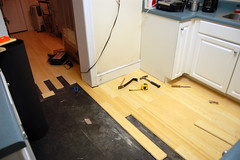
#10  Replace carpet with sustainable flooring like bamboo or cork. These are both environmentally sound flooring choices that are totally gorgeous at the same time.  They’re also economical and easy to maintain. (Be sure to check Wednesday's post for more about bamboo flooring options.)

Environmentally friendly design does more than help the planet, though that is certainly a great perk.  It can also enhance your lifestyle and make your home the sanctuary you desire - often at a financial savings as well.
Enhanced by Zemanta

Wednesday, October 5, 2011

Sustainable Building Products for Your Home

Building a new home or renovating an existing one? You might want to consider using sustainable building products. Sustainable building products have come down in price over the past few years. You may be able to receive a tax credit for using them. And you’ll be doing a large part to help the environment.

Giant Bamboo in EcuadorImage via WikipediaWhat Are Sustainable Building Products?

Sustainable building products are products that are easily replenished. They come from sustainable resources. One example is bamboo. Anyone who has a stand of bamboo in their backyard can testify that bamboo grows very quickly, and any plants that are cut down are quickly replenished.

Another example might be solar cells. They’re not made of sustainable materials. However, they produce sustainable energy. They harness the sun’s power and convert it into electricity in your home.


What Qualifies a Building Product as Sustainable?

There are no certification boards to stamp something as sustainable. However you can look for a few keywords to help you make a decision. Some keywords include:

* Recycled Content
* Low-Emitting Materials
* FSC certified
* Zero VOC emissions
* Energy savings
* Low flow – water savings

Where Can You Find Sustainable Building Products?

Depending on your home project you may be able to find much of what you need at your local home store. For example, if you’re remodeling your home you might choose:
* Cork
* Cement
* Bamboo

Bamboo flooring(http://www.floorproducer.com),...Image via WikipediaThese work well for flooring or countertop options.

You might also choose to utilize reclaimed wood products or reclaimed appliances. In many communities you can find a facility that takes:

* Countertops,
* Cabinets,
* Appliances
* And even things like toilets, faucets and sinks.

You can often repurpose or refinish these items to use in your home project.

Consider also low emissions products when you’re painting or using an adhesive. Even carpet adhesives can be sustainable and environmentally friendly. Or, they can be toxic to your health. And most carpet installation companies offer both low emission adhesives and the standard adhesives.

If you’re planning a large project you might consider consulting with a green architect, contractor, or designer. They can help you get professional discounts on sustainable home building products. These discounts can really add up.

Before you begin any home building project, the first step is to plan. Take a look at the resources your project requires, then explore your options. Where can you use sustainable and environmentally friendly products? Where can you find them locally? How much will they cost? How much will they save? Remember many states are offering tax incentives and credits for sustainable building projects.

Remodeling or building a home is an exciting time. You can make sure your home is a source of pride. Using sustainable building products can make it look great and do your part to help the environment at the same time. It’s a win win!
Enhanced by Zemanta

Wednesday, August 3, 2011

Book Review: The Solar House: Passive Heating and Cooling

More and more people want to make their own homes more energy-efficient and earth-friendly. There are lots of books on the market that you can read up on passive heating and cooling ideas and designs. One great book you should read is Daniel Chiras' book: The Solar House: Passive Heating and Cooling.

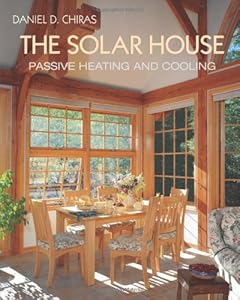
Cover of "The Solar House: Passive Heatin...Cover via AmazonIt is a fantastic resource on energy efficient home designs and covers related topics in great detail. You will be able to read up on region-specific building techniques to keep your home comfortably cool or warm, green building techniques, insulation materials, backup heating systems, such as geothermal heat pumps etc

I like the chapter on healthy air quality in passively conditional homes. This talks about health and environmental issues arising from various home designs, such as insulation material, air conditioning, ventilation. If you want to keep our planet and your family healthy, these are important things to consider before deciding on appropriate passive heating and cooling designs.

In my opinion, this book covers lots of valuable information on how to modify your house so you can live in a healthy and energy-efficient home.

You can find this book in many bookstores, as well as on Amazon.com.
Enhanced by Zemanta