This very short video explains the basics of how geothermal systems work to heat and cool your home - much more quietly, efficiently, and cheaply than any traditional home heating and cooling method. My husband and I plan to install a geothermal system in our new home, but I didn't know much about it until recently. They are a great choice for our location - more consistent and reliable than solar or wind power - and from what we understand, less prone to maintenance issues.
The systems can last up to 3 times longer than a conventional heating or cooling system - and they accomplish both objectives with one, quiet low-maintenance unit - plus providing some hot water in the summer. A 30% tax credit for purchase and installation of these systems is available in most states through 2015.
Check it out, and learn more about this energy-efficient way to provide heating and cooling for your home!
Showing posts with label Geothermal heat pump. Show all posts
Showing posts with label Geothermal heat pump. Show all posts
Thursday, July 17, 2014


Wednesday, April 17, 2013
The Benefits of Geothermal Heating & Air Conditioning Systems
Geothermal heating and air conditioning systems are gaining in popularity, and for good reason. Geothermal heat pumps are not a new idea - they have been in use since the 1940s - but with the recent green movement, more people are gaining awareness of this efficient technology. Here is how it works, and some of the benefits.
Every day, the earth absorbs solar energy and stores it. This is why the temperature below the earth's surface is relatively constant. Below the frost line, it's warmer underground in the winter. In the summer, it's cooler underground (this is the principle behind root cellars). Geothermal heating and cooling systems make use of this sun-to-earth energy.
There are two main types of heating and cooling systems: closed loop and open loop. Both are based in the principle of the heat pump.
An open loop system actually taps into ground water which is, like the earth underground, at a fairly constant temperature. The water is pumped into the geothermal heat pump where it is warmed, circulated through the dwelling, then returned to the earth or used in other ways in the dwelling. Because the ground water temperature is warmer than the cold, outside air, the heat pump does not have to work very hard to heat the water.
Closed loop systems circulate water and anti-freeze through a closed network of pipes. The pipes are laid underground, beginning and ending at the heat pump in the building's basement. As the liquid in the pipes travels underground, it gets heated or warmed by the pump, depending on the season.
Benefits of Geothermal
The benefits of geothermal heating and air conditioning systems are numerous. For example:
1. Much less electricity is used in the generation of hot or cold air with geothermal systems. Because electricity requires fossil fuels to be produced, this helps reduce the use of such fuels. It also lowers your electric bill.
2. Geothermal systems can save energy and water, too, as the hot water produced in an open loop system can be used in various other household applications.
3. Geothermal systems are said to be much more comfortable. There is much less fluctuation in indoor temperature.
4. There are no visible, above-ground components that make noise and can be unsightly. The geothermal system is underground and in the building's basement.
5. No emissions are produced by geothermal systems.
6. There is a great deal of versatility with these systems. They can be customized for just about any dwelling, even going underground vertically in the absence of horizontal property.

 |
| Renewable Energy: Geothermal Heating and Cooling (Photo credit: Argonne National Laboratory) |
There are two main types of heating and cooling systems: closed loop and open loop. Both are based in the principle of the heat pump.
An open loop system actually taps into ground water which is, like the earth underground, at a fairly constant temperature. The water is pumped into the geothermal heat pump where it is warmed, circulated through the dwelling, then returned to the earth or used in other ways in the dwelling. Because the ground water temperature is warmer than the cold, outside air, the heat pump does not have to work very hard to heat the water.
Closed loop systems circulate water and anti-freeze through a closed network of pipes. The pipes are laid underground, beginning and ending at the heat pump in the building's basement. As the liquid in the pipes travels underground, it gets heated or warmed by the pump, depending on the season.
 |
| A hand-drawn picture of a heat pump system schematic combined with cold and heat storage, based on a schematic from Geotherm Energy systems. (Photo credit: Wikipedia) |
The benefits of geothermal heating and air conditioning systems are numerous. For example:
1. Much less electricity is used in the generation of hot or cold air with geothermal systems. Because electricity requires fossil fuels to be produced, this helps reduce the use of such fuels. It also lowers your electric bill.
2. Geothermal systems can save energy and water, too, as the hot water produced in an open loop system can be used in various other household applications.
3. Geothermal systems are said to be much more comfortable. There is much less fluctuation in indoor temperature.
4. There are no visible, above-ground components that make noise and can be unsightly. The geothermal system is underground and in the building's basement.
5. No emissions are produced by geothermal systems.
6. There is a great deal of versatility with these systems. They can be customized for just about any dwelling, even going underground vertically in the absence of horizontal property.
Wednesday, August 3, 2011
Book Review: The Solar House: Passive Heating and Cooling
More and more people want to make their own homes more energy-efficient and earth-friendly. There are lots of books on the market that you can read up on passive heating and cooling ideas and designs. One great book you should read is Daniel Chiras' book: The Solar House: Passive Heating and Cooling .
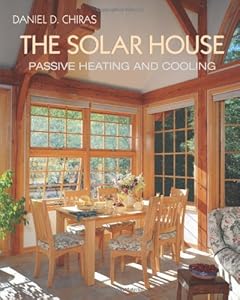 Cover via AmazonIt is a fantastic resource on energy efficient home designs and covers related topics in great detail. You will be able to read up on region-specific building techniques to keep your home comfortably cool or warm, green building techniques, insulation materials, backup heating systems, such as geothermal heat pumps etc
I like the chapter on healthy air quality in passively conditional homes. This talks about health and environmental issues arising from various home designs, such as insulation material, air conditioning, ventilation. If you want to keep our planet and your family healthy, these are important things to consider before deciding on appropriate passive heating and cooling designs.
In my opinion, this book covers lots of valuable information on how to modify your house so you can live in a healthy and energy-efficient home.
You can find this book in many bookstores, as well as on Amazon.com.

. Cover via AmazonIt is a fantastic resource on energy efficient home designs and covers related topics in great detail. You will be able to read up on region-specific building techniques to keep your home comfortably cool or warm, green building techniques, insulation materials, backup heating systems, such as geothermal heat pumps etcI like the chapter on healthy air quality in passively conditional homes. This talks about health and environmental issues arising from various home designs, such as insulation material, air conditioning, ventilation. If you want to keep our planet and your family healthy, these are important things to consider before deciding on appropriate passive heating and cooling designs.
In my opinion, this book covers lots of valuable information on how to modify your house so you can live in a healthy and energy-efficient home.
You can find this book in many bookstores, as well as on Amazon.com
.
Subscribe to:
Posts (Atom)