Showing posts with label reduce toxins in the home. Show all posts

Monday, August 20, 2012

Avoid These Cancer-Causing Products In Your Home

You’d like to believe your home is the safest place on earth however, there are many chemicals and gasses which are emitted from regular every day products that have been linked to various types of cancer.  Below is a list of 7 potential cancer causers in your home - and some suggestions for avoiding or eliminating them. (For more helpful tips, grab a copy of our FREE Toxic Load Checklist for ideas on making your home cleaner and greener!)

air fresheners
Air fresheners (Photo credit: coreythrace)
#1)  Air fresheners and deodorizers.  Our homes can harbor many unpleasant smells.  Whether it’s the stinky gym shoes, the kitty litter box or the bathroom, we often get rid of those smells with air fresheners. However, fresheners often contain naphthalene and formaldehyde, two very toxic and cancer causing agents. (I call them "air poisoners," as that's really what they are.)  There are many wonderful natural fresheners available, or try essential oils, or simply open the windows.

#2)  Radon.  Radon kills about 20,000 people a year. It’s a primary cause of lung cancer and unfortunately it’s an odorless, tasteless and invisible.  Radon is produced by the decay of naturally occurring uranium in soil and water.  Which means it can easily seep into your home through cracks in your foundation and drains.  You can purchase tests at your local home store to test for radon or hire a professional to come out and make sure your home is radon free.

#3)  Adhesives and paints.  Epoxies, rubber cement, glues, acrylic paints, carpet adhesives, paint cleaning solvents markers and other art supplies often contain carcinogens.  The good news is there are many environmentally friendly options available today (grab a copy of our free home checklist for more on this). 
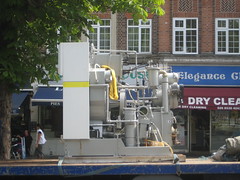
Dry Cleaning Machine
Dry Cleaning Machine (Photo credit: AndyRobertsPhotos)
#4) Dry cleaned clothing.  Dry cleaning stores use a often use perchlorethylene, a known carcinogen, to clean clothes. If you cannot find an eco-friendly dry cleaner in your area, remove the plastic from the clothing and let them air out in a well-ventilated area (preferably outside your home) before placing in your closet.

#5)  Pesticides.  Products like those flea and tick collars and even lice control products often use lindane-based pesticides to keep these creatures away.  Lindane is a neurotoxin and a carcinogen – keep it out of your home and away from your pets and family.

#6) Asbestos.  While asbestos is no longer used in home building products and insulation, if you have a home built before 1980 you may want to check to make sure you do not have it in your home.  The inhalation of asbestos fibers can cause lung cancer.

#7) Candles.  Candles made from petroleum, as many scented candles are, release chemicals into the air.  Many of these chemicals are known carcinogens including formaldehyde, toluene and benzene.  A healthier, non-cancer-causing, candle base would be beeswax or soy, which both burn fairly clean.

Cancer causing agents are all around us, however, due to increasing awareness of these chemicals healthier options are available.  Take care to fill your home with safe, natural and environmentally conscious products. Your family, your body and your planet will thank you!

Be sure to visit our website for more tips on reducing your home's toxic load, and choosing safer and healthier alternatives: http://www.newholisticliving.com/toxicload.html
Enhanced by Zemanta

Wednesday, April 11, 2012

Get Rid of VOCs (Volatile Organic Compounds) In Your Home

You may have heard about VOCs or Volatile Organic Compounds.  They’re essentially dangerous gases which are emitted from a variety of solids and liquids.  This article explores what VOCs can do to your health, where to find them, and how to avoid them.

VOCs and Your Health

Sources of volatile organic compounds. Source:...Sources of volatile organic compounds. Source: http://www.epa.gov/air/emissions/voc.htm (Photo credit: Wikipedia)According to the EPA (Environmental Protection Agency), VOCs can cause:

* Eye, nose, and throat irritation
* Headaches
* Loss of coordination
* Nausea
* Damage to liver, kidney, and central nervous system
* Respiratory distress
* Cancer

Yes, VOCs cause a tremendous number of health issues and unfortunately, they aren’t just emitted when you’re exposed to them.  They can continue to emit toxic gasses for decades.  For example, paint is one item that emits VOCs and painted walls continue to emit these gasses for many years after the paint has first been applied.

Where Do VOCs Come From?

You might be surprised to find that a large number of items that emit VOCs are in your home already.  Common household VOC emitters include:

* Paints
* Paint strippers
* Solvents
* Wood preservatives
* Aerosol sprays
* Cleansers and disinfectants
* Moth repellents
* Air fresheners
* Petroleum fuels
* Hydraulic fluids
* Hobby supplies
* Dry-cleaned clothing
* Mattresses
* Varnished furniture
* Shower curtains
* The list goes on....

VOCs are the main contributor to indoor air pollution.  In fact, the EPA's Total Exposure Assessment Methodology found the most common organic pollutants are two to five times higher inside homes than outside.  The good news is that it’s fairly easy to avoid adding more VOCs into your home.  Use natural air fresheners like essential oils, or natural candles, rather than spray air fresheners.  And when painting or staining, use VOC-free or low VOC paint, and store fuels, adhesives and other VOC emitters outside in a well-ventilated area. (More helpful tips on this can be found here: http://www.newholisticliving.com/toxicload.html)

VOC emissions are one of the most dangerous contaminants inside your home.  They can cause serious health concerns and when thrown away, leech into our ground water and soil.  Start protecting yourself and your environment by avoiding all VOC-emitting products.  It’s the healthy and green way to go.

For a helpful and FREE checklist for identifying and reducing or eliminating toxins in your home, visit http://www.newholisticliving.com/toxicload.html.

Enhanced by Zemanta

Monday, November 28, 2011

Are You A Guinea Pig?

Check out this short video which lists many of the major toxic chemicals that can be commonly found in household products. It's no laughing matter, to be sure. We encourage you to take action today, and for to download a FREE helpful checklist of common household items that can contain these chemicals, as well as some safer alternatives, just go to http://www.newholisticliving.com/toxicload.html.


Click Here to Get your Free Checklist For Reducing Toxins In Your Home Today

Friday, November 12, 2010

4 Reasons Why You Should Buy a Home Air Purifier

If you use the internet, read magazines, or watch television, there is a good chance that you have heard of air purifiers before. This is due in part to the fact that air purifiers have increased in popularity over the past few years. Despite the increase in popularity, you may be wondering if you really need to buy an air purifier. Even if you do not really need to have one, there are still a number of benefits to making a purchase. In fact, four reasons why you should buy an air purifier are outlined below.

A Sharp FU-888SV Plasmacluster air purifier.Image via Wikipedia1 – Air Purifiers Produce Clean Air
Air purifiers are designed to clean the air by removing harmful toxins and other pollutants. These pollutants, if left in the air, can be dangerous. For example, cigarette smoke that lingers in the air has a number of dangers, including an increased risk of lung cancer. An air purifier can help to keep a home’s air clean.

As cited as an example above, many air purifiers eliminate harmful and potentially dangerous toxins and pollutants from secondhand cigarette smoke. Did you know though that there is so much more that air purifiers can clean as well? Air purifiers also clean pollen, mold and mildew, and animal dander, helping to reduce allergy symptoms.

2 – Air Purifiers Make Your Home More Healthy
As it was previously stated, air purifiers work to capture and eliminate many harmful pollutants and toxins from the air, including pet dander, secondhand tobacco smoke, pollen, mold, and mildew. The presence of these harmful and potentially dangerous toxins and pollutants can make a home a dangerous place to be. For example, pet dander can be dangerous for those who have severe pet allergies. As for secondhand tobacco smoke, it is dangerous for everyone.

In addition to making your home much healthier, air purifiers can also make your home a happier place to be, for all residents and even guests.

3 – Air Purifiers Help Those with Allergies and Asthma
As previously stated, there are many toxins and pollutants that fill most homes. In fact, did you know that most homes contain many more pollutants than the air outdoors? Since the invention of cheap air-conditioning devices, many people now keep their windows closed year-round. This doesn’t allow much opportunity for fresh air to enter the home or for polluted air to leave. Depending on the climate where you live, you may be able to open some windows to get some air flow, at least for part of the year. But in areas where this is not possible, toxin buildup in the home can become a serious problem.

Long-term exposure to household pollutants and toxins isn’t good for anyone, but it can be harmful or even deadly for those suffering from a number of medical conditions. Two of these conditions include allergies or asthma. If you suffer from asthma or allergies or if you have a family member who does, you are encouraged to use air purifiers as a way to seek relief.

4 – Air Purifiers Are Easy to Find and Buy
As it was previously stated, air purifiers have increased in popularity. This is because many individuals are becoming more concerned with their health and many see air purifiers as a step in the right direction. This means that there are more air purifiers for sale and more retailers are starting to offer them for sale. In addition to having a number of air purifier makes and models to choose from, you also have a number of different air purifiers to choose from. Air purifiers are sold online, at local home improvement stores, as well as in many department stores.

As you can see, there are a number of benefits to buying and using an air purifier in your home.  As a reminder, you have a number of different air purifiers to choose from, so be sure to read ratings and reviews online. This can help to ensure that you choose the air purifier that is best for you and your needs.

(For some more suggestions for reducing toxins in your home, visit the Toxic Load page of our website.)
Enhanced by Zemanta

Monday, November 8, 2010

10 Small Ways To Go Easier on the Environment

It's true that we now see the need for being green and we support other peoples' efforts, but are we doing all we can at home to walk the walk? Here are some of the easier ways to do your part in being kind to the environment:

1. Use cloth hankies to blow your nose instead of disposable tissues. Hankies are big, so either use it more than once before washing or cut it into smaller sized hankies and send it to the wash after each single use.

Sodium bicarbonate, sodium hydrogencarbonate, ...Image via Wikipedia2. Use cleaners you can make at home with items such as vinegar, baking soda, lemons, and borax. There are numerous recipes online for all types of cleaners using simple household products. Some of these may require you use a little more elbow grease, but consider it much safer for your health and the environment - and a good little calorie-burner too!

3. Use a broom and dustpan, duster, and regular mop instead of all the throwaway products currently on the market. It may seem like such a small thing, but consider how many of these are thrown away each day. It adds up in the landfills.

Battery chargerImage via Wikipedia4. Get yourself some rechargeable batteries and a recharger instead of always using and throwing out batteries. Even better, get a solar-powered recharger! Some of these can also recharge your cell phones, iPods, and games by simply using the sun.

5. Instead of reaching for the paper napkins, try using cloth napkins. Not only will you be doing your part to save trees, but you will add a special elegance to your mealtime.

6. Change out your plastic food storage containers for glass containers. Glass is better for your health, it lasts longer than plastic, it can be cooked in, and you can see what you are storing in the container without staring into the fridge trying to figure out what you have there.

7. Buy in bulk when you can as this uses less packaging. This doesn't mean buying a case of canned soup as that's still the same amount of packaging. Buy in bulk when you can get a 20 pound bag of rice, rather than in bulk where you get 20 pounds of rice in 20 boxes.

8. Look at anything you're going to throw out and determine if it can have a second life before going to the landfill. For example, reuse a commercial cleaning bottle by cleaning it out and filling it with a homemade cleaner.

9. Compost your food scraps. When food goes to the landfills, bacteria does a number on it and heat-trapping methane gas is released. Composting is easy, plus it makes wonderful soil for your garden. (For more on composting, visit our Sustainable Gardening blog - we have a lot of info there on making your own compost.)

10. Did you know sunlight is nature's favorite stain remover? Try drying your clothes on a line outside. In the winter you can use a drying rack inside.

Even if you can't do these things 100 percent of the time, aim to do as much as you can most of the time because every little bit helps.

And remember to stop by our new holistic living website and get your free checklist for making your home cleaner and greener!
Enhanced by Zemanta